
Maintaining a pristine, allergen-free environment is the ultimate benchmark of sophisticated urban pet ownership. In a sprawling suburban home, airborne particulates have thousands of square feet and open windows to dissipate. However, in the tightly sealed, climate-controlled ecosystem of a luxury high-rise or a curated city studio, the air you and your pet share is constantly recycled.
When you introduce a feline into this closed-air environment, the primary challenge to your home’s cleanliness and your respiratory health is not visible fur—it is microscopic dander. Learning how to effectively reduce cat dander in apartment settings is the non-negotiable final step in mastering indoor feline management.
At Smallpetliving, we know that an elite home must look impeccable and feel medically fresh. The standard advice of “brush your cat more often” is woefully inadequate for the modern urbanite who demands a truly clean living space. High-performance grooming requires a clinical understanding of feline biology, the implementation of advanced vacuum-assisted tools, and molecular-level air filtration.
This comprehensive, step-by-step guide will provide you with the exact strategies and industrial-grade protocols you need to seamlessly reduce cat dander in apartment environments, ensuring your luxury home remains a breathable, brilliant sanctuary.
The Clinical Science of Dander: It Is Not Just Hair
To effectively eliminate an invisible enemy, you must first understand its biological origin. The vast majority of pet owners mistakenly believe that cat allergies and poor indoor air quality are caused by feline fur. This is a scientific fallacy.
According to the medical experts at the American College of Allergy, Asthma, & Immunology (ACAAI), the true culprit is a specific microscopic protein known as Fel d 1. This protein is primarily produced in the cat’s salivary, sebaceous (skin), and perianal glands. Because cats are fastidious groomers, they constantly lick their coats, spreading the Fel d 1 protein across their fur. When the saliva dries, it flakes off as microscopic, lightweight airborne particles—this is dander.
Because these dander particles are jagged and incredibly small (much smaller than dust mites), they remain suspended in the apartment’s air for hours and stubbornly cling to your expensive velvet sofas, silk curtains, and tailored clothing. Therefore, any strategy to successfully reduce cat dander in apartment spaces must focus on neutralizing the protein before it becomes airborne, rather than just sweeping up visible hair from the floor.
1. Vacuum-Assisted Deshedding: The Ultimate Grooming Tool
Standard bristle brushes or cheap plastic combs merely move loose hair around and actually disturb the skin, releasing more dander into your breathing space. In a small floor plan, you cannot afford to have a grooming session turn into a dander snowstorm.
The Industrial Solution
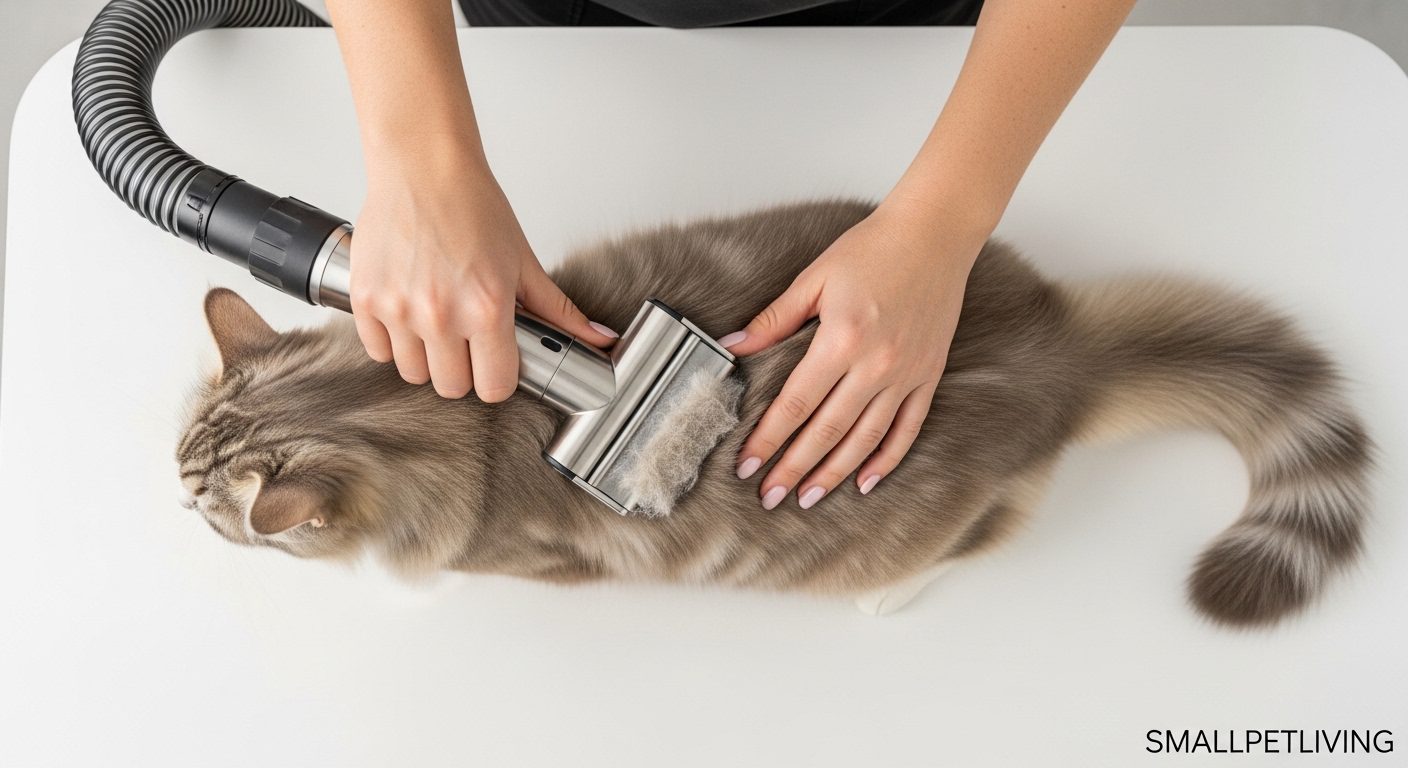
To aggressively reduce cat dander in apartment environments, you must upgrade to a vacuum-assisted grooming kit (such as the Neakasa or Dyson Pet Grooming attachments).
- The Engineering: These sophisticated tools feature a deshedding stainless-steel comb that is directly connected to a quiet, high-suction HEPA vacuum canister. As you gently pull the comb through your cat’s undercoat, removing dead fur and skin flakes, the vacuum instantly sucks the particulate matter directly into a sealed bin.
- The Routine: Implement this high-performance grooming session twice a week. Because the machine captures 99% of the biological matter before it ever touches your apartment air, your cleaning time is drastically minimized.
2. Micellar Wipes and Enzymatic Foams (The “Dry Bath”)
Cats are notoriously averse to traditional water baths, and forcing them into a bathtub in a small apartment often results in severe stress for the animal and a wet, chaotic mess in your bathroom. Fortunately, veterinary dermatology has evolved.
Neutralizing the Fel d 1 Protein
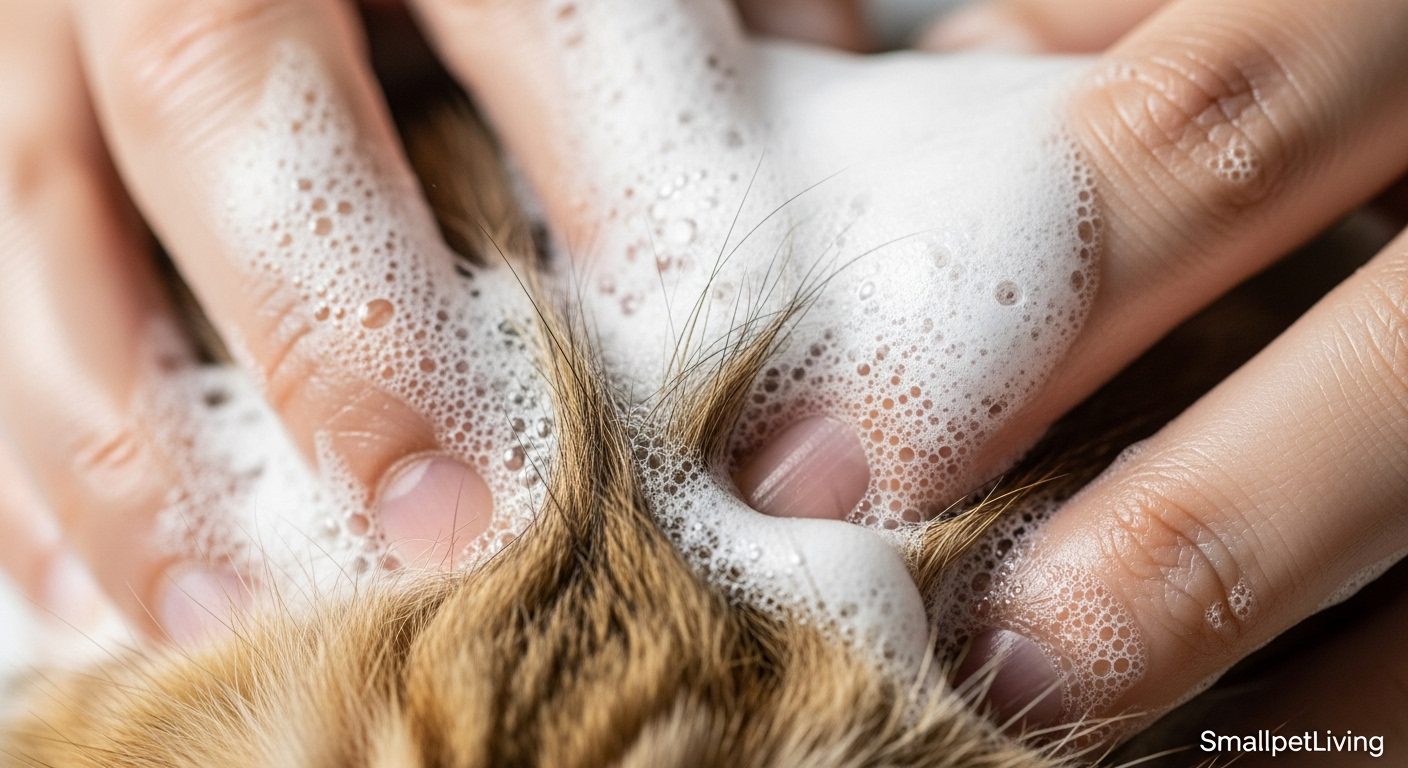
You can effectively mimic the results of a deep clean using waterless, bio-enzymatic grooming foams or hypoallergenic micellar wipes.
- The Protocol: Once a week, apply a generous pump of dander-reducing grooming foam (look for products containing natural aloe and oatmeal, avoiding heavy artificial fragrances) directly into your hands. Massage it deeply into your cat’s coat, reaching the skin level where the sebaceous glands reside.
- The Result: The foam breaks down the dried saliva and lifts the Fel d 1 proteins from the hair shafts. Wipe the cat down with a damp microfiber towel to remove the loosened dander. This localized, stress-free chemical intervention is one of the most brilliant ways to reduce cat dander in apartment living without the trauma of running water.
3. Atmospheric Scrubbing: Medical-Grade HEPA Filtration
Even with meticulous grooming, some microscopic dander will inevitably become airborne. If you have sealed your windows to block out city noise or extreme weather, those particles will continuously circulate through your HVAC system.
The 360-Degree Air Lock
As we highlighted in our advanced guide on how to keep an apartment from smelling like a cat, an air purifier is not an option; it is a structural necessity.
- The Specification: You must utilize a True HEPA (High-Efficiency Particulate Air) filter, which is certified to capture 99.97% of particles as small as 0.3 microns. Dander particles are extremely light and float for hours; therefore, you need a purifier with a high CADR (Clean Air Delivery Rate) running 24/7.
- The HVAC Hack: If your luxury apartment has central air conditioning, locate your intake vent. Replace the cheap fiberglass building filter with a high-rated MERV 11 or MERV 13 pleated filter. This turns your entire apartment’s HVAC system into a secondary dander-trapping machine.
4. Dietary Sebum Control: Engineering the Coat from Within
A cat with dry, flaky skin will produce exponentially more dander than a cat with a healthy, supple dermal layer. The secret to learning how to reduce cat dander in apartment spaces often starts in their food bowl.
The Omega-3 Intervention
Many commercial dry foods are severely lacking in essential fatty acids. If a cat’s skin barrier is compromised, it overproduces sebum (oil) to compensate, leading to greasy fur and excessive flaking.
- The Nutritional Fix: Transition your feline to a premium diet rich in Omega-3 and Omega-6 fatty acids. As detailed in our comprehensive guide on low-shedding cat food for urban living, incorporating wild-caught salmon oil or specific veterinary dermatological diets will dramatically strengthen the skin’s lipid barrier. Within 4 to 6 weeks of this dietary upgrade, you will notice a severe reduction in airborne flakes.
5. Architectural Surface Management: Soft vs. Hard Materials
In a compact urban space, the textures you choose for your interior design directly impact your allergen load. Dander acts like biological velcro, clinging aggressively to porous surfaces.
The Furniture Protocol
If you want to effortlessly reduce cat dander in apartment environments, you must manage your soft textiles.
- Textile Choices: Avoid heavy chenille, corduroy, or deep-pile velvet sofas. Instead, opt for tightly woven synthetic blends, treated leather, or high-end microfibers that allow you to wipe dander away instantly.
- The Anti-Static Strategy: Static electricity in dry, climate-controlled apartments acts as a magnet for dander. Lightly mist your fabric curtains and rugs with a pet-safe, anti-static spray once a week to prevent the Fel d 1 proteins from anchoring to the fibers.
6. Microfiber and Electrostatic Cleaning Techniques
Traditional cotton dusters or standard brooms merely agitate dander, launching it from the floor back into the air where you breathe it in. This defeats the entire purpose of cleaning a small space.
The “Trap and Lock” Method
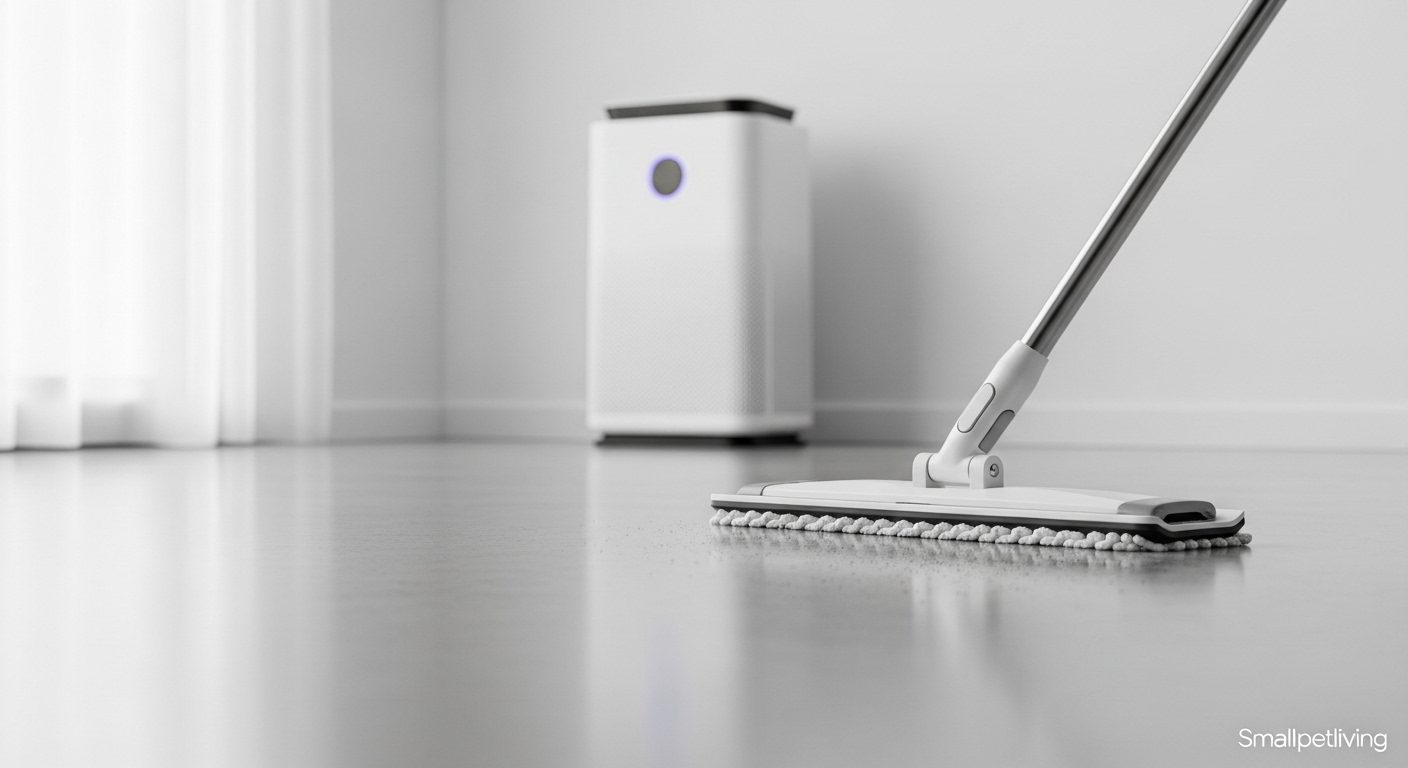
- Floor Management: For hardwood, polished concrete, or luxury vinyl tile, exclusively use electrostatic dry mops (like a Swiffer Sweeper) or slightly damp microfiber pads. These materials generate a microscopic static charge that magnetically attracts and locks the lightweight dander to the pad.
- Vertical Spaces: Remember to wipe down your minimalist cat wall furniture. Because cats spend hours sleeping on elevated shelves, these architectural additions become concentrated dander zones. A weekly wipe-down with a damp microfiber cloth ensures the “invisible cat tree” remains clinically clean.
7. Strategic Hydration: The Wet Food Mandate
Cats are notoriously poor drinkers. In the wild, they consume the majority of their necessary moisture directly from their prey. In an apartment setting, a diet consisting entirely of dry kibble leaves the cat chronically dehydrated.
The Moisture Connection to Dander
Systemic dehydration directly leads to dry, fragile skin that sheds epithelial cells (dander) at an accelerated rate.
- The Solution: To fundamentally reduce cat dander in apartment homes, you must increase their water intake. Introduce high-quality, grain-free wet food into their daily routine. Furthermore, place a sophisticated, ceramic or stainless steel pet water fountain away from their food bowl. The sound and movement of running water tap into their predatory instincts, encouraging them to drink more frequently and keeping their skin deeply hydrated from the inside out.
The Breathable Urban Sanctuary
Mastering the techniques to reduce cat dander in apartment environments elevates your living space from a standard pet-friendly room to a pristine, high-performance sanctuary. By understanding the clinical biology of the Fel d 1 protein and attacking it through vacuum-assisted grooming, medical-grade HEPA filtration, and targeted dietary improvements, you completely neutralize the invisible threat to your air quality. You never have to compromise your aesthetic standards or your respiratory health to enjoy the profound companionship of a feline. With disciplined application of these strategies, your luxury urban home will remain as remarkably fresh and breathable as it is brilliantly designed.
Frequently Asked Questions (FAQ)
Q: Will shaving my cat stop the dander problem in my apartment? A: No. This is a massive misconception. Shaving a cat removes the fur, but it does absolutely nothing to stop the sebaceous and salivary glands from producing the Fel d 1 protein. In fact, without the fur to trap it, the dander can flake off directly into the air even faster. Professional deshedding is effective; full shaving is not.
Q: Are there truly hypoallergenic cat breeds for small apartments? A: No cat is 100% hypoallergenic. However, certain breeds produce significantly lower levels of the Fel d 1 protein or have single-layer coats that distribute less dander. If you are highly sensitive, review our specific guide on small cat breeds for apartments to find companions like the Siberian, Sphynx, or Russian Blue, which are better suited for allergy sufferers.
Q: Can I use human anti-dandruff shampoo on my cat? A: Absolutely never. Human shampoos, especially medicated anti-dandruff formulas, contain harsh chemicals, synthetic fragrances, and pH levels that are highly toxic to felines. Using them can cause severe chemical burns and systemic poisoning when the cat attempts to lick the residue off their fur. Always use strictly veterinary-approved formulas.
Q: Do humidifiers help reduce cat dander in a climate-controlled apartment? A: Yes, but with a strict caveat. Central heating during urban winters creates severely dry air, causing your cat’s skin to flake more rapidly and allowing microscopic dander to stay airborne much longer. A smart humidifier maintaining 40% to 50% indoor humidity helps weigh down the particulate matter so your vacuum can actually catch it. However, exceeding 50% humidity can encourage dust mites, so utilizing a device with a built-in hygrometer for precision is key.
Q: Can I rely on a robot vacuum to manage pet dander while I am at work? A: A robot vacuum is excellent for daily visible hair management, but it is not a complete dander solution. Many standard automated vacuums lack True HEPA filtration; they suck up the fur but exhaust the microscopic Fel d 1 proteins straight back into your breathing air. If you use one, you must ensure it is a premium model with a fully sealed HEPA system, and it should always be paired with your weekly electrostatic wet mopping routine.
Q: Do allergen-neutralizing fabric sprays actually work on luxury furniture? A: Yes, high-quality tannic acid or specialized bio-enzymatic allergen sprays can be highly effective. Unlike cheap air fresheners that just mask odors, these clinical sprays work by chemically denaturing the Fel d 1 protein structure on contact, rendering it harmless to your immune system. They are an excellent supplementary tool for treating thick rugs, fabric window perches, or heavy curtains between deep cleanings.
Q: How often should I wash my cat’s bedding, and what temperature is required? A: To effectively destroy the sticky Fel d 1 protein and remove accumulated dander, cat beds, blankets, and fabric hammocks must be washed once a week. You must use a hot water cycle (at least 140°F or 60°C) alongside a hypoallergenic, unscented pet-safe detergent. Standard cold-water washes are insufficient and will leave the stubborn proteins intact on the fabric fibers.
Q: Does cleaning my apartment’s HVAC intake vents really make a difference? A: In a sealed high-rise apartment, it is absolutely critical. Airborne dander is naturally drawn toward the intake vents of your central air system. If the metal grill is covered in a layer of dust and dander, it acts as a biological distribution hub, continuously blowing proteins back into your living space. Vacuum the exterior grates weekly and replace the internal pleated filter every 30 to 60 days without fail.
You Might Also Like
- 7 Proven Ways to Calm Apartment Cat Separation Anxiety
- How to Keep an Apartment From Smelling Like a Cat
- 7 Stunning Minimalist Cat Wall Furniture Ideas
- How to Set Up a Cat-Friendly Studio Apartment
About Smallpetliving
Smallpetliving is the premier digital authority for high-end urban pet ownership. We specialize in providing evidence-based behavioral strategies, architectural-friendly gear, and advanced management protocols tailored specifically for high-density, limited-square-footage environments. Our mission is to bridge the gap between luxury metropolitan living and world-class animal welfare, ensuring both you and your pet live an uncompromising, healthy life.