Residing in a luxury high-rise or a modern metropolitan condominium offers an unparalleled standard of living. You enjoy sweeping city views, state-of-the-art security, and a curated urban lifestyle. However, this vertical existence introduces a unique and terrifying vulnerability: the logistics of navigating a sudden crisis. When a fire alarm pierces the silence at 3:00 AM, or a severe weather event causes a sudden grid blackout, the reality of living twenty stories above the street sets in. For a pet owner, the stakes are exponentially higher. Mastering the protocols for an apartment pet emergency evacuation is not just a responsible choice; it is an absolute necessity for survival.
At Smallpetliving, we understand that in a moment of panic, you will default to your highest level of preparation. You cannot rely on elevators, and you cannot afford to waste precious minutes searching for a terrified cat under a bed or struggling to leash a panicked dog. A successful high-rise evacuation requires military-grade foresight, the right ergonomic gear, and deep behavioral conditioning. This comprehensive guide will transition you from anxious to fully prepared, providing seven lifesaving strategies, structural protocols, and the exact emergency inventory required to execute a flawless apartment pet emergency evacuation when seconds matter most.
The Physics and Reality of High-Rise Emergencies
To prepare effectively, we must first understand the unique dynamics of vertical emergencies. According to safety data and emergency preparedness guidelines from the National Fire Protection Association (NFPA), apartment fires and carbon monoxide leaks spread rapidly through shared ventilation systems and structural voids.
During an active alarm, standard building protocols mandate the immediate shutdown of all passenger elevators to prevent smoke inhalation and mechanical trapping. This leaves you with only one exit route: the concrete stairwells. Navigating a narrow, echoing, brightly lit stairwell alongside dozens of panicked neighbors, blaring sirens, and flashing strobe lights is an intense sensory overload. For a cat or a dog, this environment is utterly terrifying. If you are holding a struggling animal in your arms, you risk dropping them, or worse, losing your footing and sustaining a severe injury on the concrete stairs. Therefore, a successful apartment pet emergency evacuation demands hands-free transportation and meticulous structural planning.
1. The Tactical Pet “Go-Bag”: The 72-Hour Survival Kit
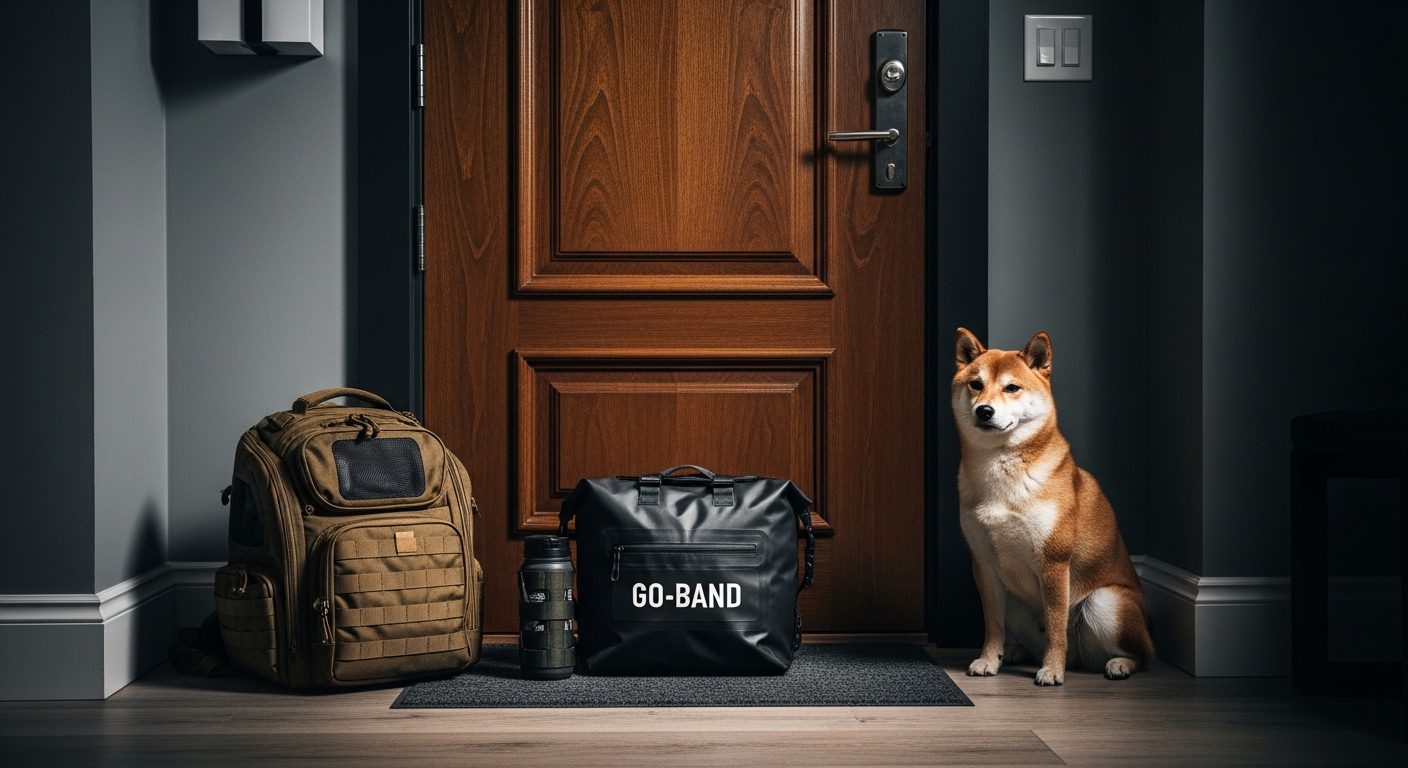
In a true emergency, you will have less than three minutes to exit your unit. You do not have time to gather supplies. Your pet’s emergency kit, often referred to as a “Go-Bag,” must be pre-packed, structurally sound, and stored immediately next to your apartment’s front door.
The Essential Inventory
A proper evacuation bag is not just a ziplock of kibble. It must sustain your pet for a minimum of 72 hours in a temporary shelter or a hotel.
- Nutrition & Hydration: Pack 72 hours’ worth of dry kibble or vacuum-sealed wet food pouches (cans are heavy and require openers). Include three liters of bottled water and a collapsible, lightweight silicone travel bowl.
- Medical & Identification: Place a hard copy of your pet’s vaccination records, a list of current medications, and a high-resolution printed photo of you with your pet (to prove ownership if separated) inside a waterproof, fire-resistant document sleeve.
- Sanitation: For dogs, include heavy-duty waste bags and antibacterial wipes. For cats, pack a disposable, foldable cardboard litter box and a small, sealed bag of lightweight Tofu or silica litter.
2. Hands-Free Transportation: The Backpack Carrier Mandate
Carrying a hard plastic crate down thirty flights of stairs while trying to hold a handrail and open heavy fire doors is a physical impossibility for most individuals. For a seamless apartment pet emergency evacuation, you must upgrade your containment hardware.
Ergonomics of the Descent
- For Cats and Small Dogs (Under 20 lbs): You must invest in a high-quality, structured pet backpack. Look for brands that utilize aerospace-grade mesh for maximum ventilation and feature rigid internal frames so the bag does not collapse on the animal. A backpack leaves both of your hands entirely free to grip the stairwell railing and use your smartphone flashlight.
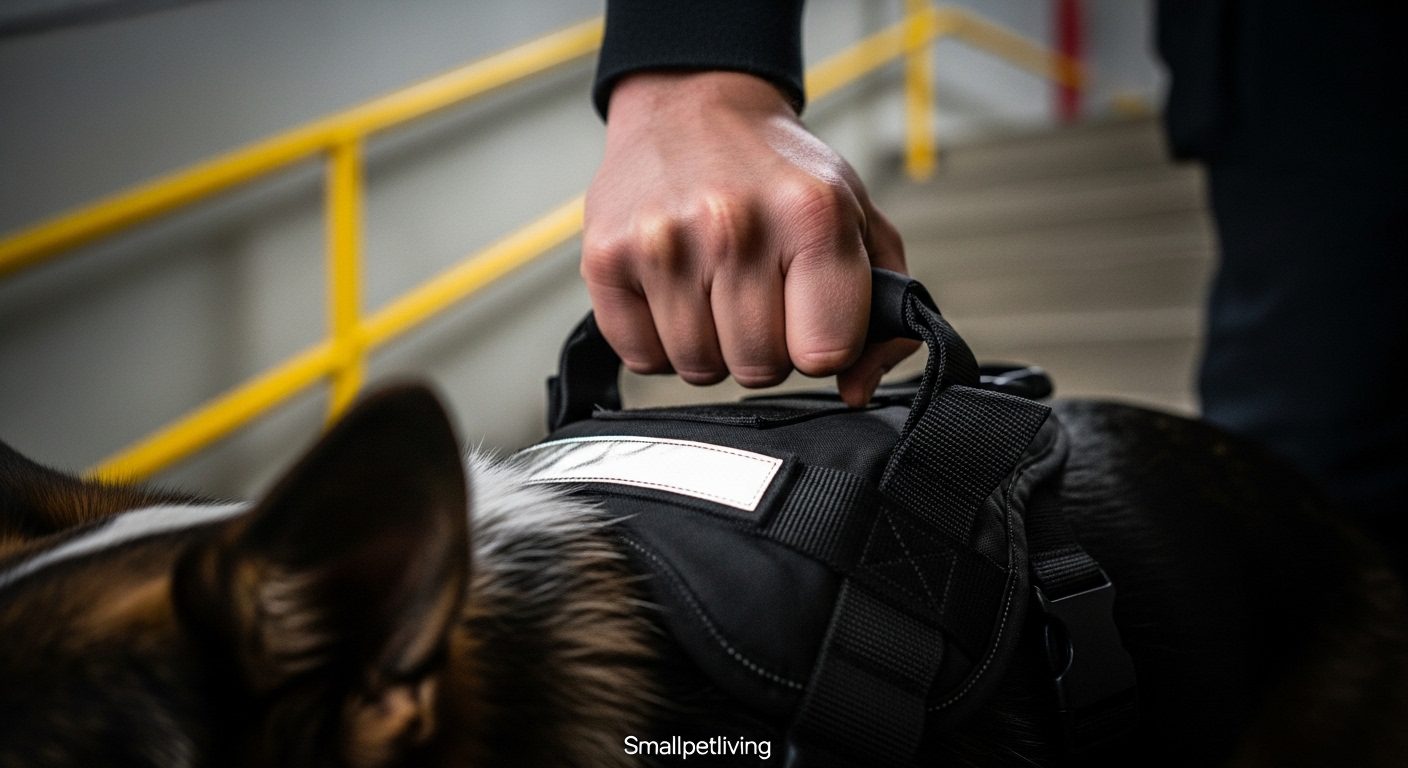
- For Medium to Large Dogs: If the dog is too heavy to carry, they must walk. However, you must use a heavy-duty, reflective tactical harness equipped with a sturdy top handle, paired with a short “traffic leash” (12 to 18 inches long). A standard 6-foot leash is a lethal tripping hazard in a crowded, chaotic stairwell. The top handle allows you to physically lift and guide the dog over debris or maneuver them tightly past panicked neighbors.
3. Sensory Desensitization: Training for the Alarm
The loudest, most terrifying aspect of an apartment pet emergency evacuation is the alarm itself. Modern high-rise strobe alarms operate at decibel levels designed to wake humans from deep sleep, which can cause acute acoustic trauma and sheer panic in pets.
The “Fire Drill” Protocol
You cannot wait for a real emergency to find out how your pet reacts to the alarm. You must proactively desensitize them to the sensory triggers.
- Audio Conditioning: Find a high-quality recording of a commercial fire alarm on YouTube. Play it on your phone at the absolute lowest volume setting while feeding your pet their highest-value treats (e.g., boiled chicken or premium salmon paste).
- Gradual Exposure: Over the course of four weeks, slowly increase the volume by 5% every few days, continuing to offer high-value rewards. The goal is to rewire their brain to associate the terrifying noise with positive reinforcement.
- The Carrier Drill: Practice placing your cat or dog into their emergency backpack or harness while the alarm sound is playing. Reward them heavily once secured. This muscle memory will save your life when the real alarm sounds at midnight.

4. Rescue Decals and Microchip Redundancy
What happens if a fire or a gas leak occurs while you are at the office, miles away from your high-rise? First responders need immediate, clear information to save the lives inside your unit.
Communication at the Door
- The Firefighter Decal: Place a highly visible, reflective “Pet Rescue Sticker” on the bottom third of your front door (firefighters crawl low to avoid smoke). Use a permanent industrial marker to clearly write the exact number and species of pets inside (e.g., “1 Cat, 1 Dog”).
- The Evacuated Signal: Keep a secondary sticker or a heavy red marker on the inside of your door. If you successfully evacuate your apartment with your pets, quickly cross out the sticker or write “EVACUATED.” This prevents firefighters from wasting critical, life-threatening minutes searching a burning, empty apartment.
- Microchip Verification: An apartment pet emergency evacuation often leads to chaos at ground level, where pets can slip away. Ensure your pet’s microchip is actively registered with your current cell phone number and an out-of-state emergency contact.
5. Acute Chemical Calming for High-Stress Events
In a genuine crisis, behavioral training might momentarily fail in the face of adrenaline and smoke. Having chemical and olfactory backups is a vital layer of your emergency strategy.
The Tactical First Aid Kit
- Pheromone Saturation: Keep a bottle of synthetic pheromone spray (Feliway for cats, Adaptil for dogs) directly inside your Go-Bag. The moment the alarm sounds, spray the inside of the backpack carrier or the dog’s harness. This provides immediate, scientifically proven olfactory reassurance.
- Veterinary Interventions: If your building schedules routine, mandatory fire alarm testing, consult your veterinarian about prescription interventions. For pets with extreme noise phobias, a prescribed, carefully dosed medication like Gabapentin or Trazodone administered two hours prior to the drill can prevent a catastrophic panic attack and make the practice evacuation infinitely smoother.
6. The “Buddy System” and Floor Floorplans
In luxury condominiums, residents often keep to themselves, heavily guarding their privacy. However, isolation is your worst enemy during a high-rise crisis.
Building Your Emergency Network
Identify at least one trustworthy neighbor who lives on your exact floor or the floor immediately below you. Exchange phone numbers and consider swapping spare keys. If you are stuck at work during an emergency, a neighbor who is already in the building and understands your apartment pet emergency evacuation protocol can grab your pet’s carrier and bring them to safety. Furthermore, you must memorize the floorplan. In heavy smoke, visibility drops to zero. You must know exactly how many doors and steps it takes to reach the emergency stairwell from your front door while blindfolded.

7. Identifying Pet-Friendly Evacuation Zones
Successfully navigating the stairwell is only phase one. Once you reach the street level, you must have a pre-planned destination.
The Aftermath Logistics
During large-scale urban emergencies (like hurricanes or major grid failures), human shelters often strictly prohibit pets due to health codes and space limitations.
- The Solution: Research and save the addresses of three pet-friendly hotels located in different directions from your apartment building. Additionally, identify the nearest 24-hour emergency veterinary hospital. Save these locations as offline maps on your smartphone. When you execute an apartment pet emergency evacuation, standing on the sidewalk wondering where to go next exposes your pet to further trauma and extreme weather. Have the destination locked in before the crisis ever occurs.
Empowered Preparedness
Mastering an apartment pet emergency evacuation is the ultimate testament to your dedication as a pet owner. It requires acknowledging uncomfortable realities and investing in proactive, structural solutions. By building a comprehensive 72-hour Go-Bag, upgrading to hands-free tactical carriers, and conditioning your pet to sensory triggers, you transform panic into precision. You are no longer hoping for the best; you are engineered to survive the worst. Implementing these seven lifesaving strategies ensures that when the sirens sound, you and your companion will navigate the crisis with confidence, safety, and absolute resilience.
Frequently Asked Questions (FAQ)
Q: Can I use the elevator during a fire alarm if I have a large dog? A: Absolutely never. Standard high-rise fire protocols automatically recall all elevators to the ground floor the moment an alarm is triggered. Attempting to use an elevator during a fire risks becoming trapped in a smoke-filled shaft. You must use the concrete emergency stairwells, regardless of your pet’s size.
Q: How do I evacuate multiple cats as a single owner? A: Carrying two hard crates is impossible. The most effective solution is a dual-compartment pet stroller that converts into backpacks, or wearing one cat in a front-mounted carrier and the second cat in a structured backpack. You must ensure both hands remain free to open heavy fire doors.
Q: Are rescue window stickers actually effective for high-rise firefighters? A: Window stickers are useless if you live above the 5th floor, as ladder trucks cannot easily read them or reach them. The only effective placement in a high-rise is on your main hallway door, positioned low to the ground where crawling firefighters can see it through thick smoke.
Q: How frequently should I update my pet’s emergency go-bag? A: You must perform a complete audit of the Go-Bag every 6 months. Kibble goes rancid, wet food pouches expire, and medications lose their efficacy. A good practice is to tie this audit to Daylight Saving Time when you change your smoke detector batteries.
Q: What is the best way to carry a large, injured dog down high-rise stairs? A: If your dog is over 50 lbs and injured, you cannot carry them in your arms safely. Keep a soft, heavy-duty nylon rescue sling (often called a mobility sling or rescue stretcher) in your apartment. This allows two people to carry the dog safely, or allows one person to bear the dog’s weight over their shoulders like a fireman’s carry.
Q: My cat hides under the bed the second the alarm goes off. What do I do? A: This is a fatal habit. You must train your cat to view their carrier as their primary safe space. Leave the carrier out 24/7 in the living room with comfortable bedding and treats inside. If they hide under the bed during an emergency, you lose critical minutes trying to extract them.
Q: Should I muzzle my dog during an evacuation? A: Yes, if they are reactive. A stairwell is crowded, noisy, and stressful. Even the friendliest dog can bite out of pure fear when a stranger bumps into them in a dark, echoing space. A soft basket muzzle inside your Go-Bag ensures everyone’s safety and prevents your dog from being deemed aggressive by first responders.
Q: How do I find a pet-friendly emergency shelter in my city? A: Do not wait for a disaster. Contact your local Office of Emergency Management or the Red Cross today. In the US, the PETS Act requires states to accommodate pets in disaster planning, but specific shelter locations vary wildly. Keep a printed list of designated pet-friendly shelters in your Go-Bag.
You Might Also Like
- 7 Proven Ways to Calm Apartment Cat Separation Anxiety
- 7 Essential High-Rise Cat Safety Strategies
- How to Set Up a Cat-Friendly Studio Apartment
About Smallpetliving
Smallpetliving is the premier digital authority for high-end urban pet ownership. We specialize in providing evidence-based safety strategies, architectural-friendly gear, and advanced management protocols tailored specifically for high-density, high-rise environments. Our mission is to bridge the gap between luxury metropolitan living and world-class animal welfare, ensuring both you and your pet are safe, secure, and thriving.