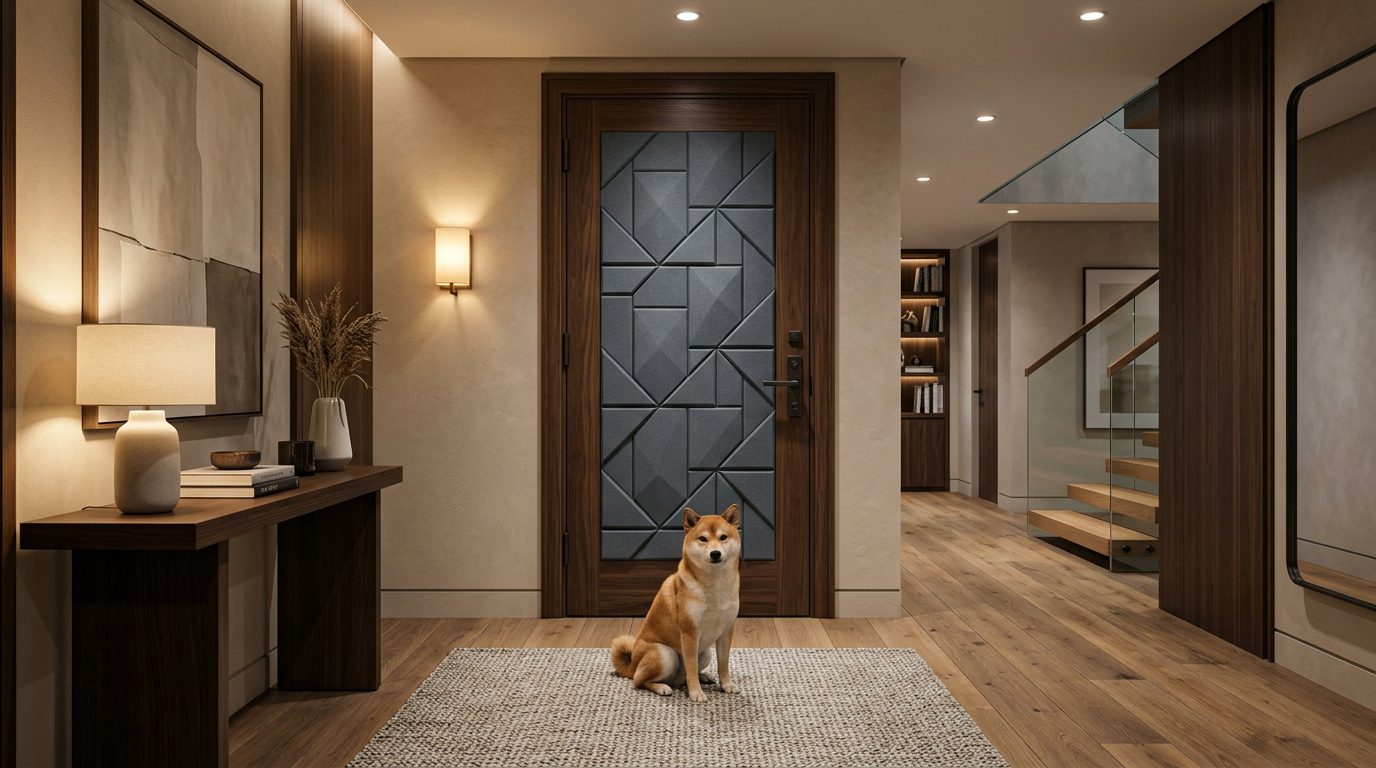
Living in a luxury high-rise apartment offers an unmatched metropolitan lifestyle, but it comes with an unwritten contract of communal silence. For a dog owner, nothing induces pure, concentrated anxiety quite like returning home to find an aggressive noise complaint slipped under your door.
When a dog suffers from separation anxiety or is triggered by the sounds of the hallway elevator, they instinctively rush to the front door—the primary acoustic weak point of your entire apartment. Their barks echo down the corridor, piercing through thin walls and instantly disturbing your neighbors. If you want to protect your tenancy, avoid exorbitant Homeowner Association (HOA) fines, and maintain your peace of mind, learning how to effectively soundproof apartment door dog barking issues is an absolute urban emergency.
At Smallpetliving, we understand that you cannot simply replace a structural building door or drill heavy construction materials into a property you may be renting. You need solutions that are architecturally sophisticated, non-destructive, and clinically effective. Standard obedience training takes months to rewire a dog’s brain, but your neighbor’s patience will expire in days. You must immediately engineer an acoustic barrier. This comprehensive, highly technical guide will break down the exact physics of sound transmission and provide you with five brilliant, implementable solutions to drastically reduce the decibel level escaping your luxury home, saving your lease and your neighborly relationships.
The Physics of Noise: Airborne vs. Structure-Borne
To stop a dog’s bark from traveling, you must first understand how sound moves through a building. Slapping a few foam egg-carton panels onto your door will accomplish absolutely nothing against the sharp, high-frequency sound waves of a canine vocalization.
In acoustic engineering, according to the architectural standards established by ASTM International, the effectiveness of a barrier is measured by its Sound Transmission Class (STC) rating. The higher the STC number, the better the material blocks sound. Dog barks travel primarily through two mechanisms:
- Airborne Noise: Sound waves literally travel through the air. If light can pass through a gap in your door, airborne sound can pass through it with zero resistance.
- Impact/Structure-Borne Noise: When your dog jumps against the door while barking, the kinetic energy vibrates the physical material of the door, turning the door itself into a giant speaker that broadcasts the sound into the hallway.
To successfully soundproof apartment door dog barking, you must simultaneously seal every microscopic air gap and add massive, heavy density to the door to stop it from vibrating.
1. The Air-Gap Seal: Acoustic Weatherstripping and Sweeps
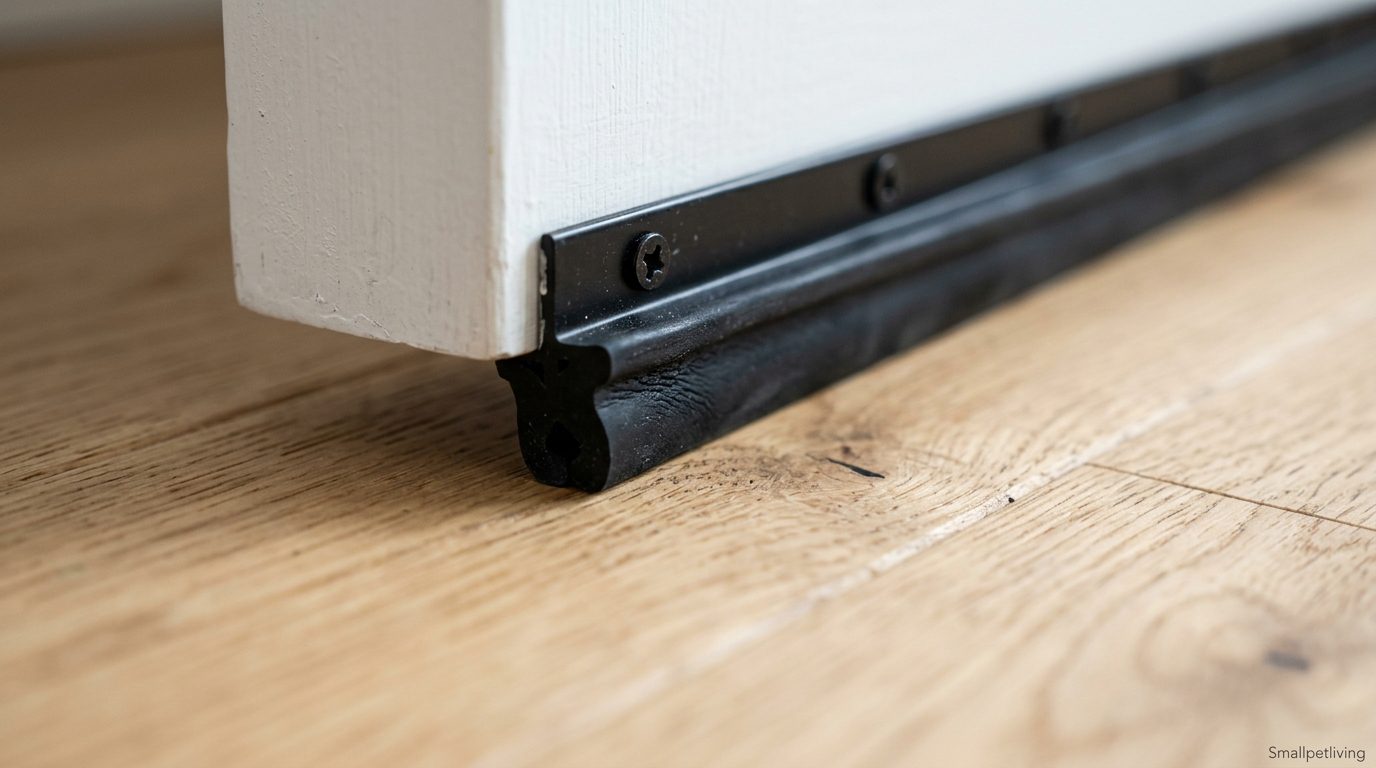
The vast majority of noise escaping your apartment is leaking through the perimeter of the front door. Even a heavy, solid-core wooden door is rendered acoustically useless if there is a half-inch gap between the bottom of the door and the hardwood floor.
Sealing the Perimeter
Your first and most critical step is to make the door airtight.
- Acoustic Door Sweeps: Install an industrial-grade, heavy-duty silicone or neoprene door sweep at the bottom edge. Unlike cheap brush sweeps that allow air to flow through the bristles, a dense silicone sweep creates a firm, airtight seal against the threshold. If you are renting and cannot use screws, opt for industrial adhesive models.
- Perimeter Weatherstripping: Apply high-density foam or V-strip weatherstripping entirely around the door frame (the jambs and the header). When the door closes and latches, it should firmly compress this foam, completely sealing the air gaps. If you have done this correctly, you should not hear the hallway elevator ding from inside your apartment.
2. Mass Loaded Vinyl (MLV): The Heavyweight Champion
If sealing the air gaps is not enough because the door itself is hollow or structurally thin, you must add “mass.” In acoustic engineering, mass is the only true way to block high-decibel sound waves.
The Invisible Barrier
The industry standard for adding extreme mass to a thin surface without taking up space is Mass Loaded Vinyl (MLV).
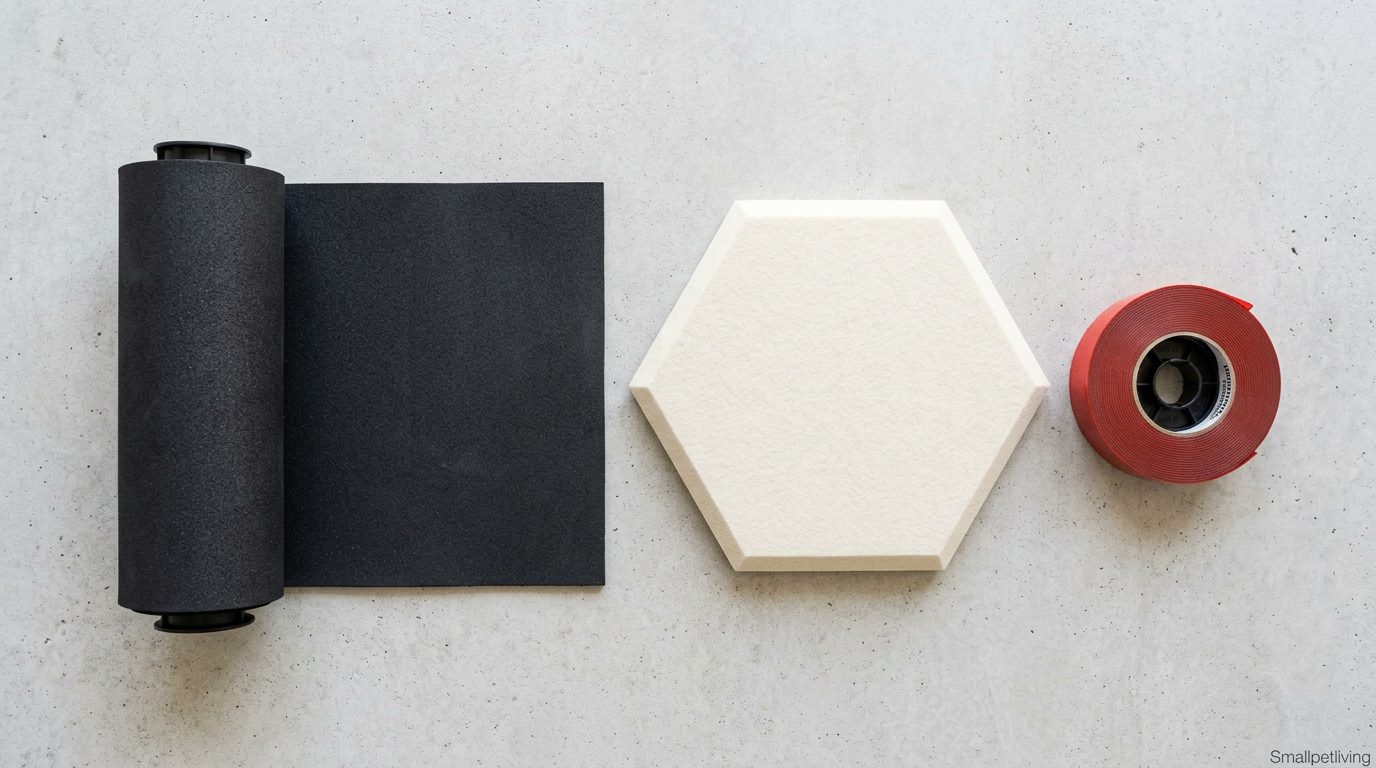
- The Material: MLV is a dense, heavy, flexible rubber-like material infused with metal particles (usually barium sulfate). A single layer of 1lb MLV adds an immense STC rating to a door, effectively stopping the sharp frequencies of a terrier’s yap or a hound’s baying.
- The Installation: Cut a sheet of MLV to the exact dimensions of your door. You can attach it using heavy-duty double-sided acoustic tape or command strips for a renter-friendly solution. While MLV is incredibly effective to soundproof apartment door dog barking, it is visually unappealing (usually plain black). You must cover it with a secondary aesthetic layer to maintain your luxury apartment design.
3. Aesthetic High-Density Acoustic Panels
To cover the ugly MLV layer—or to use as a standalone solution if your door is already heavy—you must utilize acoustic panels. However, you must avoid cheap, porous studio foam, which only absorbs echoes inside a room and does nothing to block sound from leaving it.
Architectural Soundproofing
- Polyester Fiber Panels: Invest in high-density, rigid polyester fiber acoustic panels. These panels are engineered to absorb the kinetic energy of the bark and deflect the sound waves.
- The Design Integration: The brilliant aspect of modern polyester panels is that they are designed for high-end interior architecture. They come in beautiful, muted tones (slate, cream, navy) and feature beveled edges. You can arrange them in stunning geometric patterns across the back of your front door using removable adhesive squares. They look like a deliberate, expensive piece of modern art while serving as a massive acoustic dampener.
4. The Acoustic Soundproofing Curtain (Theater Drapes)
If altering the physical door is strictly prohibited by a draconian landlord, or if you need an additional layer of extreme sound deflection, you must engineer an acoustic vestibule.
The Heavy Drape Solution
This is a highly popular and architecturally elegant solution for luxury urban lofts.
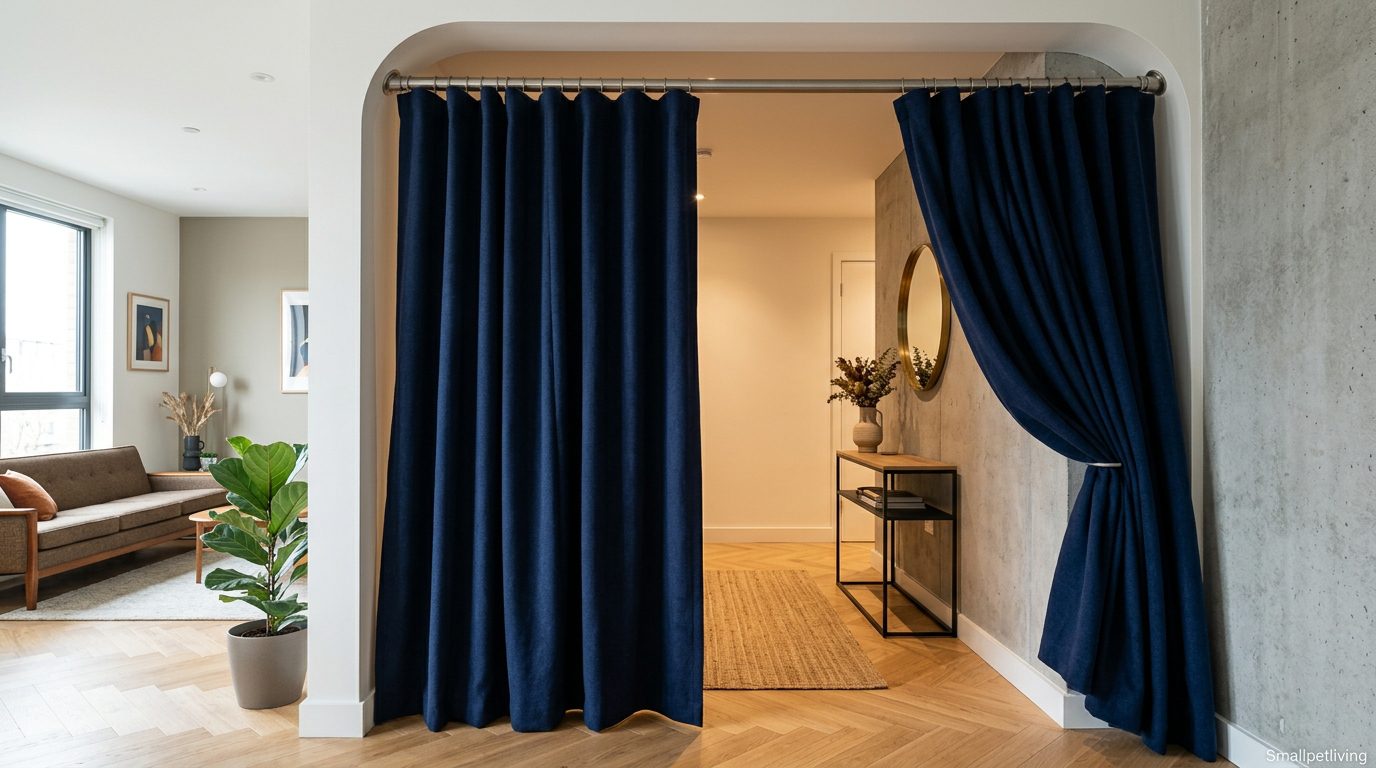
- The Setup: Install a heavy-duty, commercial-grade tension rod in the hallway alcove directly in front of your main door. Hang a specialized, multi-layered acoustic soundproofing curtain (often used in recording studios or home theaters). These curtains are incredibly heavy—often weighing 15 to 20 pounds—and contain a dense inner core of sound-blocking material.
- The Execution: When you leave for work, simply pull the heavy drape closed across the entryway. This creates an air-trapping acoustic chamber between the curtain and the front door. The curtain absorbs the initial shockwave of the dog’s bark, and the door blocks whatever minimal sound makes it through.
5. Ambient Masking and Behavioral Redirection
Acoustic engineering addresses the symptom (the sound escaping). To truly soundproof apartment door dog barking holistically, you must also address the trigger (the dog hearing hallway noises). Dogs bark at the door because they hear neighbors walking by, which triggers their territorial instinct.
The Sonic Shield
- White Noise Deflection: Place a high-quality, continuous white noise machine or an air purifier running on its highest setting directly next to the front door. The constant, broad-spectrum “whoosh” sound creates an acoustic mask, effectively drowning out the subtle hallway noises (keys jiggling, footsteps) that trigger your dog’s reactive barking in the first place.
- Architectural Redirection: Never allow your dog to free-roam near the front door when you are away. Use a heavy, aesthetic pet gate to restrict their access to the entryway. By moving them into a bedroom or living room at the back of the apartment, you add another 30 feet of distance and several interior walls between their bark and the hallway.
Securing Your Peace and Tenancy
Mastering the techniques to soundproof apartment door dog barking issues is the ultimate intersection of acoustic engineering and responsible urban pet ownership. You cannot control your dog’s immediate emotional reactions to hallway triggers, but you have absolute control over your apartment’s structural acoustics. By meticulously sealing the perimeter air gaps, adding dense mass with MLV and geometric acoustic panels, and deploying heavy theatrical drapes, you effectively trap the noise inside your unit. Implementing these brilliant solutions ensures that your luxury apartment remains a secure, silent sanctuary, completely protecting you from neighborly disputes, HOA fines, and the profound stress of urban noise complaints.
Frequently Asked Questions (FAQ)
Q: Will egg-carton foam from the internet stop my dog’s barking from annoying the neighbors? A: Absolutely not. This is the biggest misconception in soundproofing. Cheap acoustic foam is designed strictly for “sound treatment”—meaning it stops echoes from bouncing around inside your room (like in a podcast studio). It lacks the heavy mass required to block sound waves from traveling through a solid door.
Q: Can I get evicted if my dog barks during the day in a luxury apartment? A: Yes. Most luxury high-rises and condos have strict “nuisance clauses” in their lease agreements or HOA bylaws. Repeated, documented noise complaints regarding a barking dog can absolutely result in severe fines and, eventually, eviction proceedings. Immediate acoustic mitigation is vital.
Q: Does placing a heavy rug near the door help with the noise? A: Yes, it provides marginal help. A thick, plush rug placed directly in the entryway helps absorb some of the sharp, high-frequency sound waves bouncing off the hard floor before they hit the door. However, it will not stop the airborne noise leaking under the door sweep.
Q: Are acoustic door blankets effective? A: High-end acoustic door blankets (often made with fiberglass or mass-loaded vinyl cores) are highly effective. They feature grommets and can be hung over the door using heavy-duty hooks. While they are functionally brilliant, they often look industrial and may clash with a minimalist luxury aesthetic.
Q: My dog scratches the door while barking. Will panels survive this? A: Polyester fiber acoustic panels are quite dense, but a large, frantic dog can eventually tear them. If your dog suffers from severe separation anxiety and engages in destructive scratching, you must prioritize covering the bottom half of the door with a durable, scratch-resistant polycarbonate shield over the soundproofing materials.
Q: Is it safe to leave a white noise machine running 10 hours a day for my dog? A: Yes, it is perfectly safe and highly recommended by veterinary behaviorists. Ensure the machine is not playing at a deafening volume (keep it around 50 to 60 decibels). The continuous sound provides immense psychological comfort by masking unpredictable, triggering urban noises.
Q: Do draft dodgers (fabric tubes under the door) work as well as a silicone sweep? A: No. Fabric draft dodgers are designed to stop cold air, not sound. They are highly porous and sound waves easily pass through the fabric and stuffing. You must use a dense, solid material like silicone or heavy rubber that creates an actual physical seal against the floor.
Q: How do I know if my front door has a hollow or solid core? A: Simply knock on it. A solid core door sounds dense, heavy, and dead, like knocking on a thick tree trunk. A hollow core door will sound light, echoey, and drum-like. If your luxury apartment has a hollow core door, adding Mass Loaded Vinyl (MLV) is an absolute necessity to achieve any level of soundproofing.
ou Might Also Like
- 7 Best Pet Friendly Fabrics for Luxury Sofas
- 7 Proven Ways to Manage Apartment Dog Separation Anxiety
- 7 Best Space-Saving Dog Crates for Small Apartments
- 7 Proven Anti-Bark Training Strategies for Apartment Dogs
About Smallpetliving
Smallpetliving is the premier digital authority for high-end urban pet ownership. We specialize in providing evidence-based safety strategies, architectural-friendly gear, and advanced management protocols tailored specifically for high-density, high-rise environments. Our mission is to bridge the gap between luxury metropolitan interior design and world-class animal welfare, ensuring your home remains a pristine, uncompromising sanctuary.