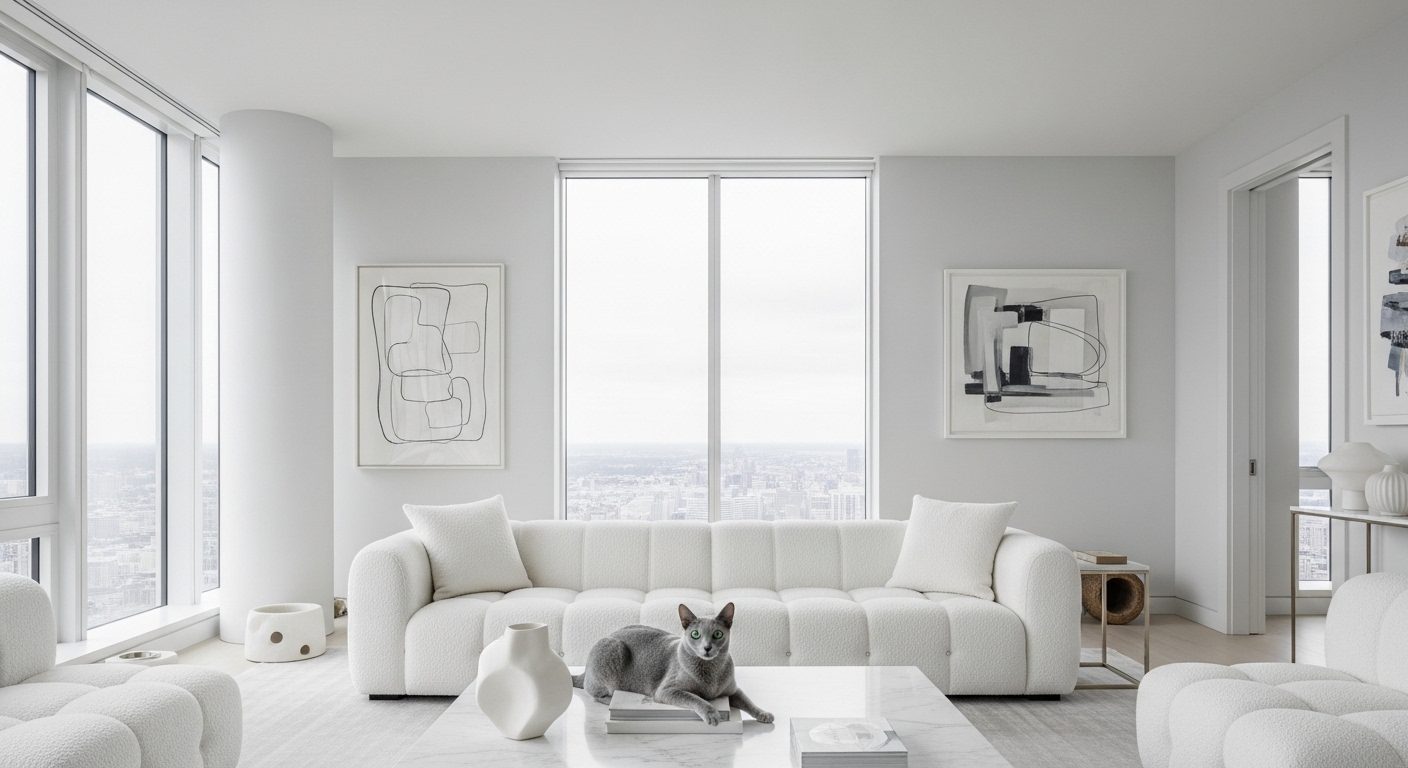
Mastering how to keep an apartment from smelling like a cat is the ultimate litmus test for the discerning urban pet owner. In a sprawling suburban estate with multiple levels and cross-ventilation, a litter box can be easily managed in a distant mudroom or a ventilated basement. However, in the shared, pressurized atmosphere of a luxury high-rise or a meticulously curated studio apartment, every cubic foot of air counts. When modern, energy-efficient windows seal the indoor environment tight to maintain temperature, organic odors—specifically the sharp, pervasive scent of feline ammonia—can quickly compromise your home’s aesthetic prestige and your social comfort.
At Smallpetliving, we operate under the belief that your passion for feline companionship should never be betrayed by an olfactory signature when guests walk through your front door. A truly elite “scentless sanctuary” is not achieved by masking odors with synthetic aerosols, chemical plug-ins, or heavy scented candles. These act merely as a temporary perfume over a permanent problem and can actually cause respiratory distress for your pet.
Instead, a fresh home is achieved through a combination of molecular science, automated engineering, and a disciplined hygiene protocol. This comprehensive guide provides the literal solutions and step-by-step instructions necessary to ensure your urban home remains a pristine, inviting environment, regardless of its compact square footage.
The Molecular Science of Feline Odor: Know Your Enemy
To effectively solve the problem of how to keep an apartment from smelling like a cat, we must first understand the chemistry of what we are fighting. Felines are descendants of desert-dwelling ancestors, meaning their kidneys are evolutionarily engineered to be highly efficient at water conservation. Consequently, their urine is extremely concentrated.
According to veterinary researchers at the Cornell Feline Health Center, the primary culprit is not just urea, but a unique amino acid called Felinine. When exposed to oxygen and bacteria outside the body, felinine degrades into pungent sulfur-containing compounds called mercaptans—the exact same molecular family found in skunk spray.
In a confined apartment space, these gaseous molecules don’t just hover in the air; they bind to porous surfaces. They sink into silk rugs, unsealed hardwood crevices, and velvet upholstery. Without a technical intervention that stops this chemical breakdown at the source, these scents become part of the apartment’s permanent “architectural memory.”
1. The Substrate Revolution: Abandoning Clay for Bio-Technology
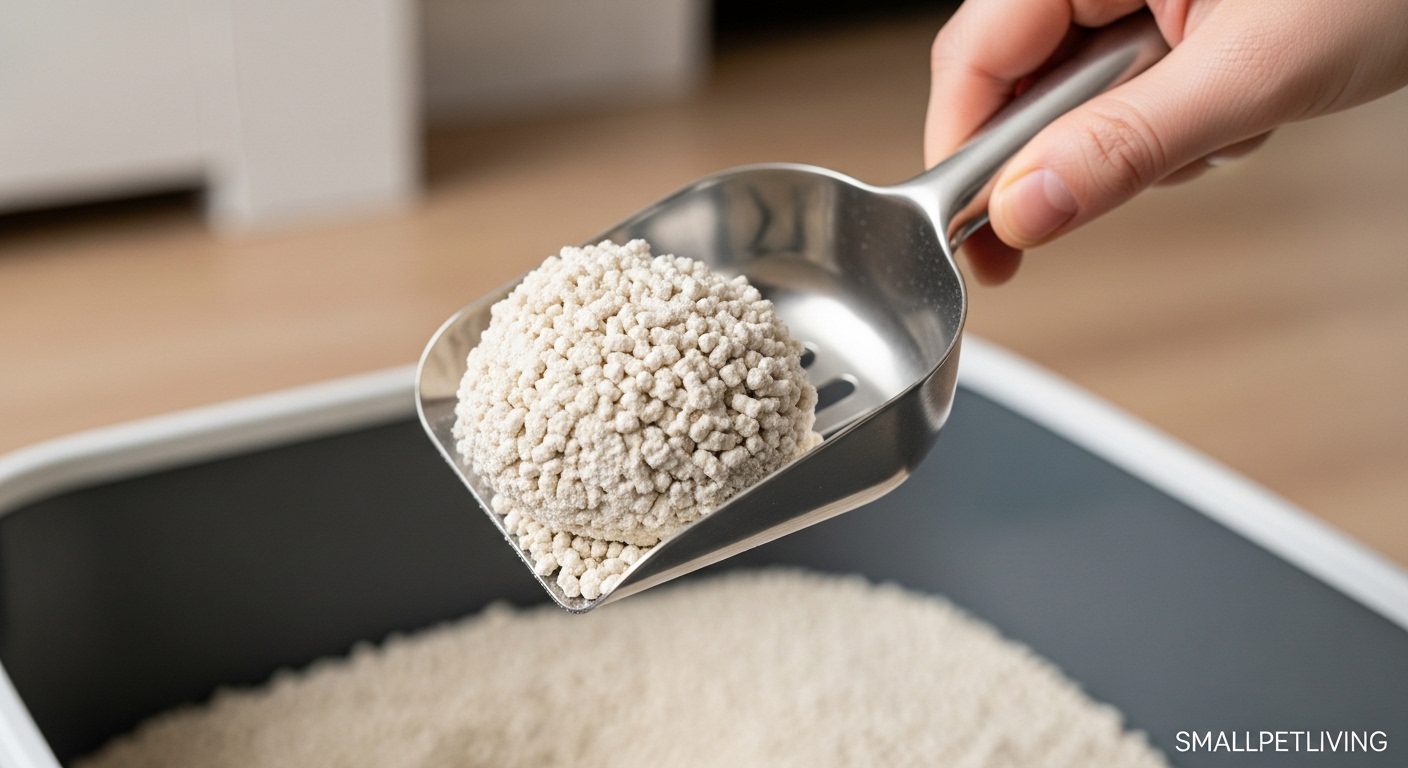
The most fundamental shift in managing urban feline hygiene is moving away from low-grade, traditional clay litter. Clay is heavy, dusty, and often fails to neutralize ammonia at the molecular level, instead creating “sludge” at the bottom of the pan that breeds bacteria.
The Solution: Engineered Plant-Based Aggregates
Modern feline science has introduced substrates with superior absorption-to-volume ratios, specifically designed for small spaces.
- Tofu (Soy Fiber): These engineered pellets are highly absorbent and create instant, tight clumps. The capillary action of the soy fiber traps the urea and felinine molecules rapidly before they can aerosolize into your apartment.
- Cassava & Corn: These natural starches offer exceptional “clump strength,” ensuring that no urine-soaked fragments break off during scooping to stay behind and rot in the box.
The High-Rise Transition Protocol
Cats are creatures of texture. A sudden change can cause litter box aversion.
- Phase 1 (Days 1-5): Create a layer of the new bio-litter at the bottom of the box, covered by 2 inches of their old clay litter.
- Phase 2 (Days 6-10): Mix the two substrates 50/50. This is the critical scent-acceptance phase.
- Phase 3 (Day 11+): 100% new substrate. By this point, the apartment’s ambient ammonia levels should have dropped significantly, and the “dust clouds” from clay will be a thing of the past.
2. Automated Waste Management: The “Air-Gap” Strategy
In a small apartment, even the best litter cannot prevent odor if waste sits exposed to the air for 10 hours while you are at work. The “scoop once a day” mentality is insufficient for a luxury standard of living.
- The Solution: Invest in a premium, enclosed self-cleaning litter robot (e.g., Litter-Robot 4 or PuraMax).
- The Engineering: These devices utilize sensors to detect when the cat has left the unit. Minutes later, a rotating cycle sifts the waste from the clean litter and deposits it into a sealed, carbon-filtered drawer below.
Step-by-Step Installation for Odor Control
- The Intake Rule: Never place an automated unit near a main HVAC return vent. This will pull any escaping micro-odors during the cleaning cycle into the central air system and distribute them throughout the entire apartment.
- The Double-Carbon Hack: Most automatic units come with a thin standard carbon filter. We strongly recommend adding a secondary, thicker “Universal Activated Carbon Pad” to the waste drawer. This creates a dual-layer “air-gap” that ensures ammonia gas is neutralized before it can leak from the drawer into the room.
- The Foundation: Place the unit on a large, non-porous silicone mat. This prevents “tracking” of litter granules onto your expensive rugs or near your small dog accessories for tight spaces, keeping the hygiene zone contained.
3. Active Atmospheric Scrubbing: HEPA and Carbon Filtration
Even with perfect litter box hygiene, microscopic dander and Volatile Organic Compounds (VOCs) will escape into the air. A standard plug-in air freshener only adds more chemical weight to the atmosphere without removing the offending molecules.
- The Solution: A high-end standalone air purifier equipped with both a True HEPA filter and a Heavy Activated Carbon layer.
Literal Instructions for Urban Air Hygiene
- Understanding CADR: Ignore the “room size” marketing on the box. Look for the Clean Air Delivery Rate (CADR) number. In a small apartment with a cat, you need a unit with a CADR of at least 200+ to ensure a minimum of 5 Air Changes Per Hour (ACH).
- Strategic Positioning: Place the purifier 3 to 5 feet away from the cat’s litter area. The goal is to capture the gas molecules the moment they leave the enclosure area, creating a “clean air bubble” around the zone.
- Maintenance Protocol: Vacuum the pre-filter weekly to remove fur. Replace the carbon filter precisely on schedule (usually every 3-4 months). Once the carbon is saturated, it stops absorbing odors completely. This step is vital for maintaining the air quality we discuss in our guides on low-shedding cat breeds.
4. Architectural Containment: The Vented Enclosure Strategy
Leaving a litter box exposed in a bathroom corner or hallway is a tactical error in a small floor plan. It allows odor to diffuse 360 degrees freely.
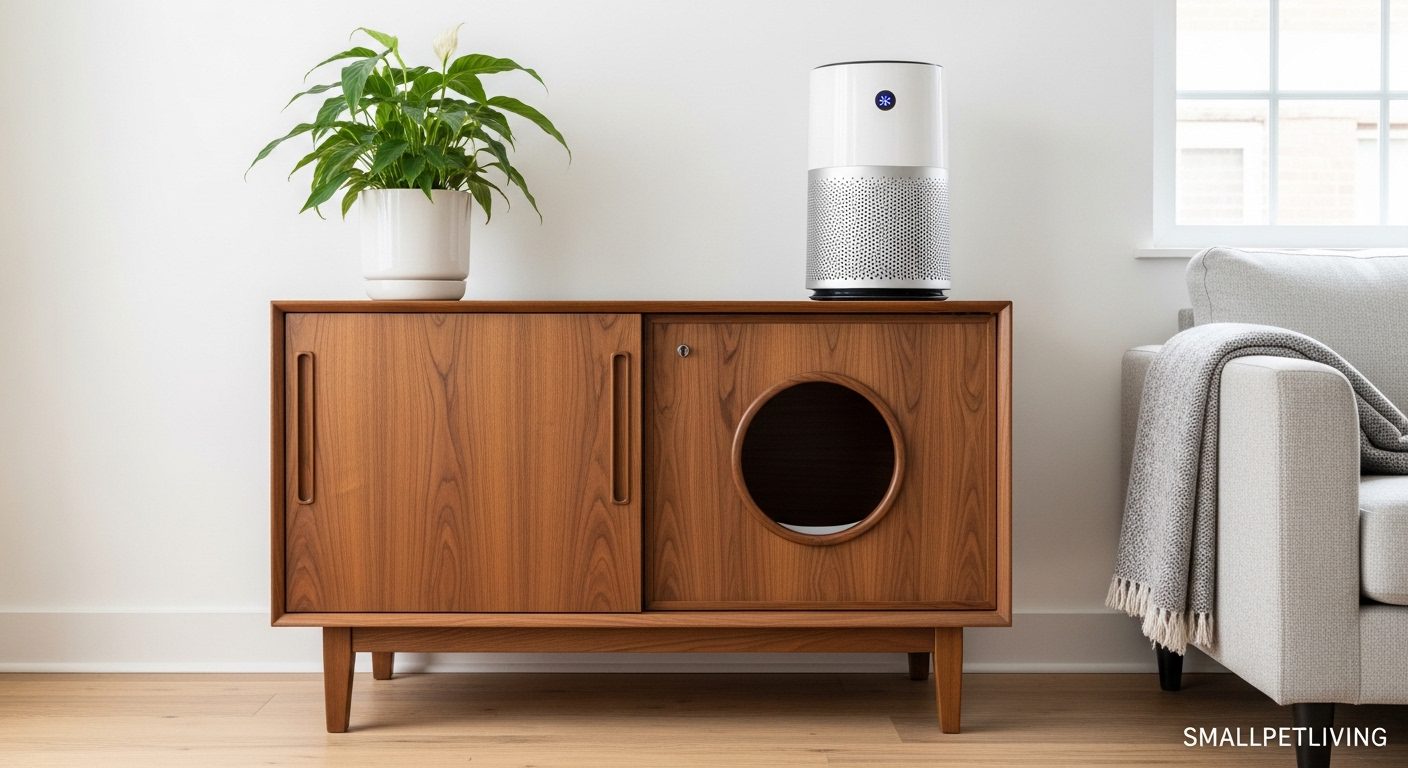
- The Solution: Utilize furniture-integrated litter enclosures that mimic high-end credenzas or benches.
- Structural Instruction: Choose an enclosure made of high-pressure laminate (HPL) or marine-grade plywood. Avoid porous, untreated particle board, which will eventually absorb the smell of urine and become impossible to clean.
- The Air Flow Hack: Ensure the enclosure has dedicated ventilation slots. For advanced odor control, install a small, ultra-quiet USB computer fan over the vent to create negative pressure, gently pulling air into the cabinet and forcing it through a carbon filter sheet before it exits into the room.
5. The 7-Step Enzymatic Deep Cleaning Protocol (The Reset)
Standard household cleaners like bleach, multi-surface sprays, or anything containing ammonia are catastrophic for feline hygiene. According to the International Association of Animal Behavior Consultants (IAABC), cleaning a cat’s urine spot with an ammonia-based product actually mimics the scent of another animal’s urine. The cat perceives this as a rival territorial mark and is biologically driven to re-mark the exact same spot.
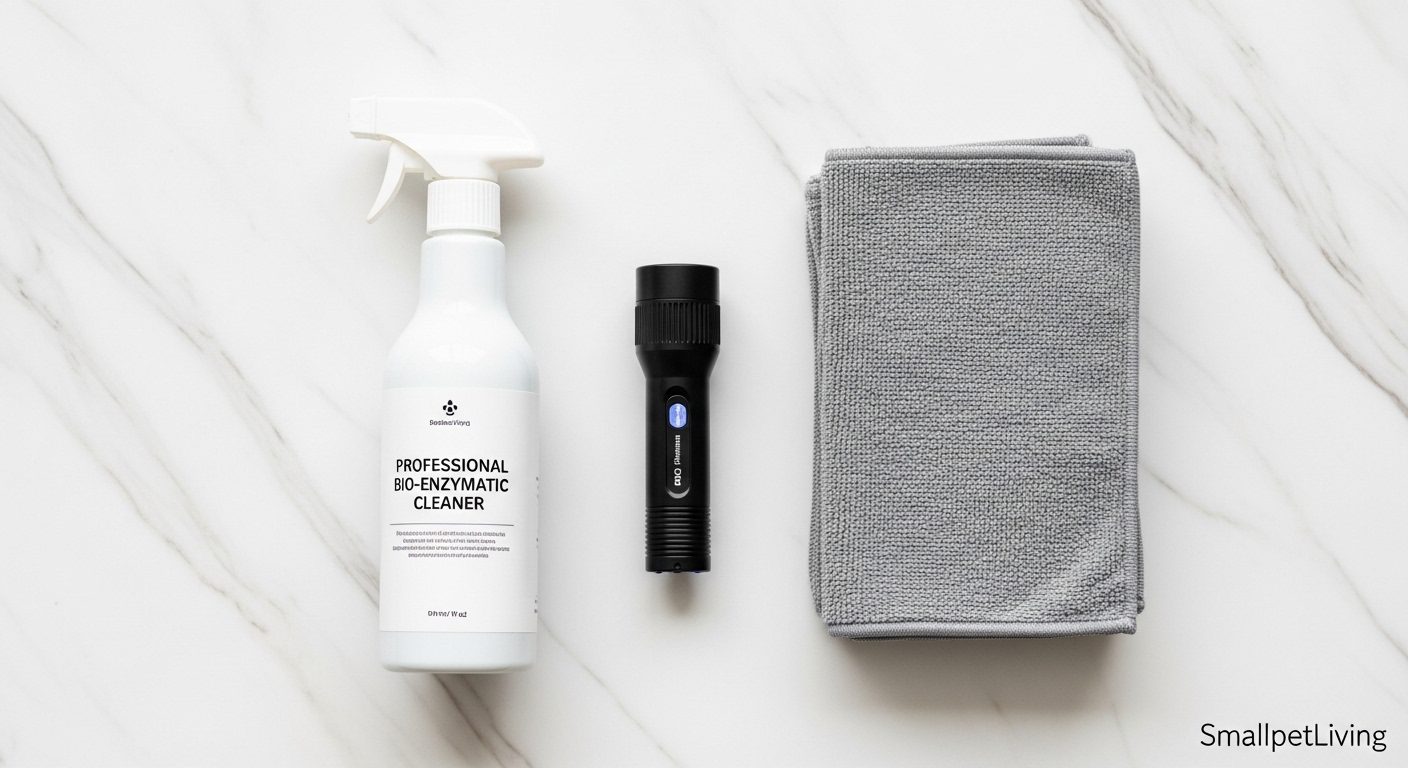
You must use bio-enzymatic cleaners that contain live bacteria cultivated to literally “eat” uric acid crystals.
The Saturday Deep-Clean Solution:
- Evacuation: Remove the litter box and the cat from the area entirely.
- Dander Removal: Use a HEPA-filter vacuum to remove dust and fur from the floor and baseboards around the box location.
- The Saturate: Spray the empty litter box and the surrounding floor (including walls up to 12 inches high) heavily with a high-quality enzymatic cleaner.
- The Dwell Time (Crucial): Do not wipe immediately. Let the cleaner sit wet for at least 15 minutes. The enzymes need time to break down the proteins at a molecular level.
- The Blot: Use clean microfiber cloths to blot (not rub) the area dry.
- The UV Audit: Once dry, use a UV blacklight flashlight to inspect the area in the dark. Any glowing green/yellow spots indicate remaining uric acid crystals that need a second treatment.
- The Seal: If your floors are hardwood, ensure the polyurethane sealant is intact. If the seal is worn, urine can seep into the wood grain, creating a permanent odor source that requires sanding to remove.
Engineering the Scentless Sanctuary
Mastering how to keep an apartment from smelling like a cat is an act of both deep affection and precise engineering. By upgrading your substrate to advanced bio-fibers, investing in automated evacuation technology, and maintaining a strict, scientifically-backed enzymatic cleaning protocol, you transform your home into a pristine urban sanctuary. You do not have to compromise your standard of living to enjoy the company of a feline. With the right science, premium tools, and a disciplined approach, your apartment will always remain as inviting as it is stylish.
Frequently Asked Questions (FAQ) about US Urban Living
Q: Can I just use baking soda? A: Baking soda is a mild deodorizer that neutralizes acids, but it does not stop the chemical breakdown of urea into ammonia. It is a temporary band-aid, not a solution for a high-end apartment. It also does nothing for clumping.
Q: Is Tofu litter safe for US high-rise plumbing? A: Most Tofu and corn-based litters are labeled “flushable.” However, in older city high-rises, we recommend caution. Flush only single clumps at a time. If you have any doubt about your building’s pipe age, bag it and trash it. A plumbing bill is more expensive than litter bags.
Q: Why does my apartment still smell right after the cleaning lady leaves? A: She may be using the same mop or vacuum in the bathroom that she used near the litter box area, cross-contaminating the scent. Ensure dedicated cleaning tools are used for the “pet zone.”
Q: Are essential oil diffusers safe for odor control? A: At Smallpetliving, we strictly advise against most essential oils (especially tea tree, eucalyptus, and citrus) near cats. They can be toxic and cause liver failure if inhaled chronically. Stick to HEPA filtration.
You Might Also Like
- 7 Essential High-Rise Cat Safety Strategies
- How to Set Up a Cat-Friendly Studio Apartment
- Quiet Cat Toys for Thin-Wall Apartments
- 7 Small Cat Breeds for Apartments
About Smallpetliving
Smallpetliving is the premier digital authority for high-end urban pet ownership. We specialize in providing evidence-based strategies, architectural-friendly gear, and behavioral protocols tailored for high-density, limited-square-footage environments. Our mission is to bridge the gap between luxury metropolitan living and world-class animal welfare.