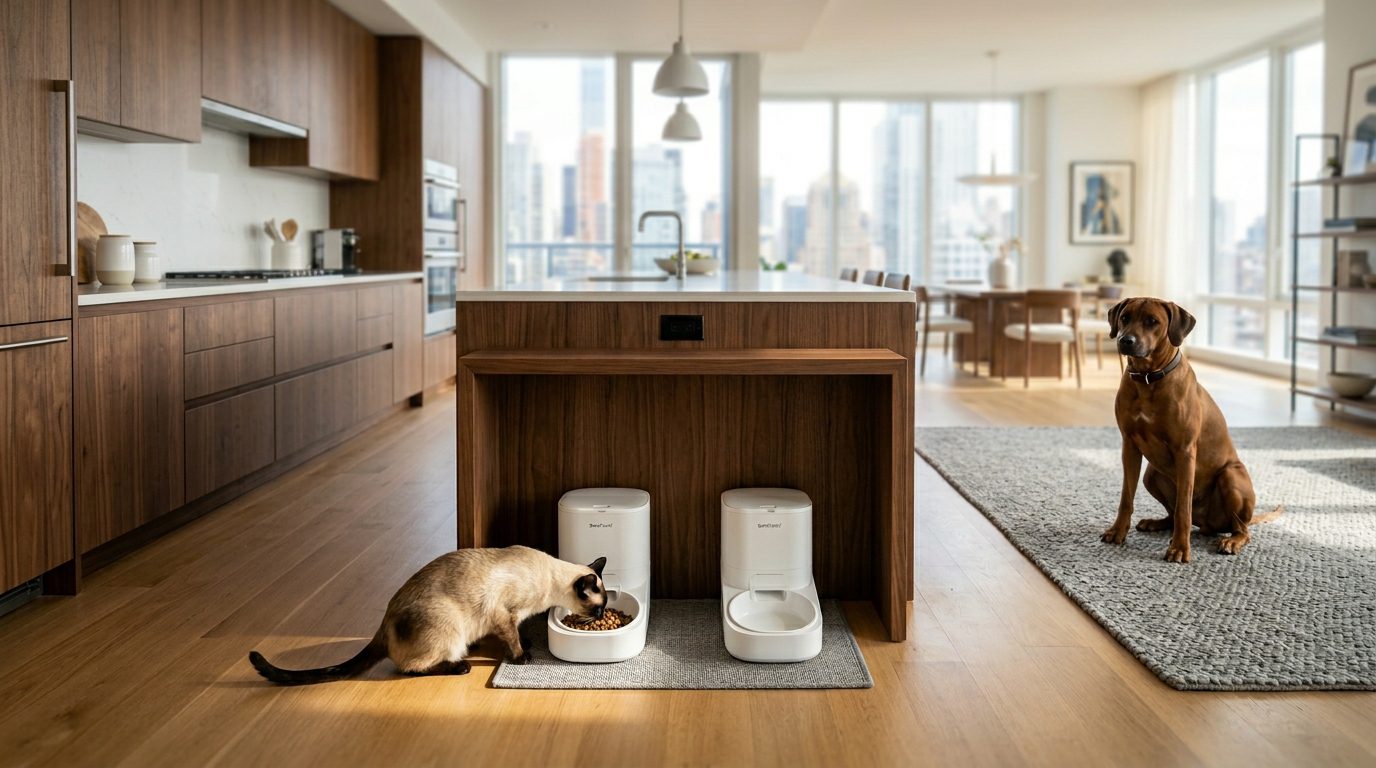
The quintessential allure of luxury apartment living—high ceilings, polished floors, and sleek, minimalist surfaces—is often dynamically challenged when the household expands to include multiple animal companions. The daily feeding routine in a multi-pet high-rise environment can swiftly devolve into coordinated chaos.
You are likely familiar with the scenario: one greedy canine constantly intimidating a submissive feline, a cat with severe food allergies attempting to steal specialized kibble from a senior pet, or the agonizing challenge of administering prescription medication mixed with food that must not be consumed by anyone else. In a compact urban space without separate rooms for feeding, these daily battles introduce profound stress. Mastering the selection of the best microchip pet feeders multi pet home environment requires shifting from standard bowls to selective-access technology.
At Smallpetliving, we know that loving your pets does not mean tolerating dietary dysfunction. We view pet feeding through the lens of architectural engineering and medical management. Microchip technology is not a mere luxury gadget; it is the definitive solution to “the food thief,” protecting both your pets’ specific health requirements and your expensive furniture from the messes of territorial eating. A selective feeder creates a micro-gated community for your pet’s nutritional needs. This comprehensive guide details the behavioral and medical science behind microchip technology, reveals 6 elite selective-access solutions designed specifically for small, luxury apartments, and provides advanced protocols for managing wet food and tech synchronization.
The Medical Case for Selective Feeding (E-E-A-T)
To appreciate the medical necessity of selective feeding technology, we must look beyond behavioral convenience to clinical reality. In a multi-pet apartment, allowing a “free-feeding buffet” is clinically irresponsible, as shared bowls obscure vital diagnostic data.
According to veterinary protocols from the American Veterinary Medical Association (AVMA) on weight management and shared households, ensuring each animal consumes their designated diet—and only their designated diet—is paramount, particularly when managing chronic conditions like kidney disease, diabetes, or severe food allergies.
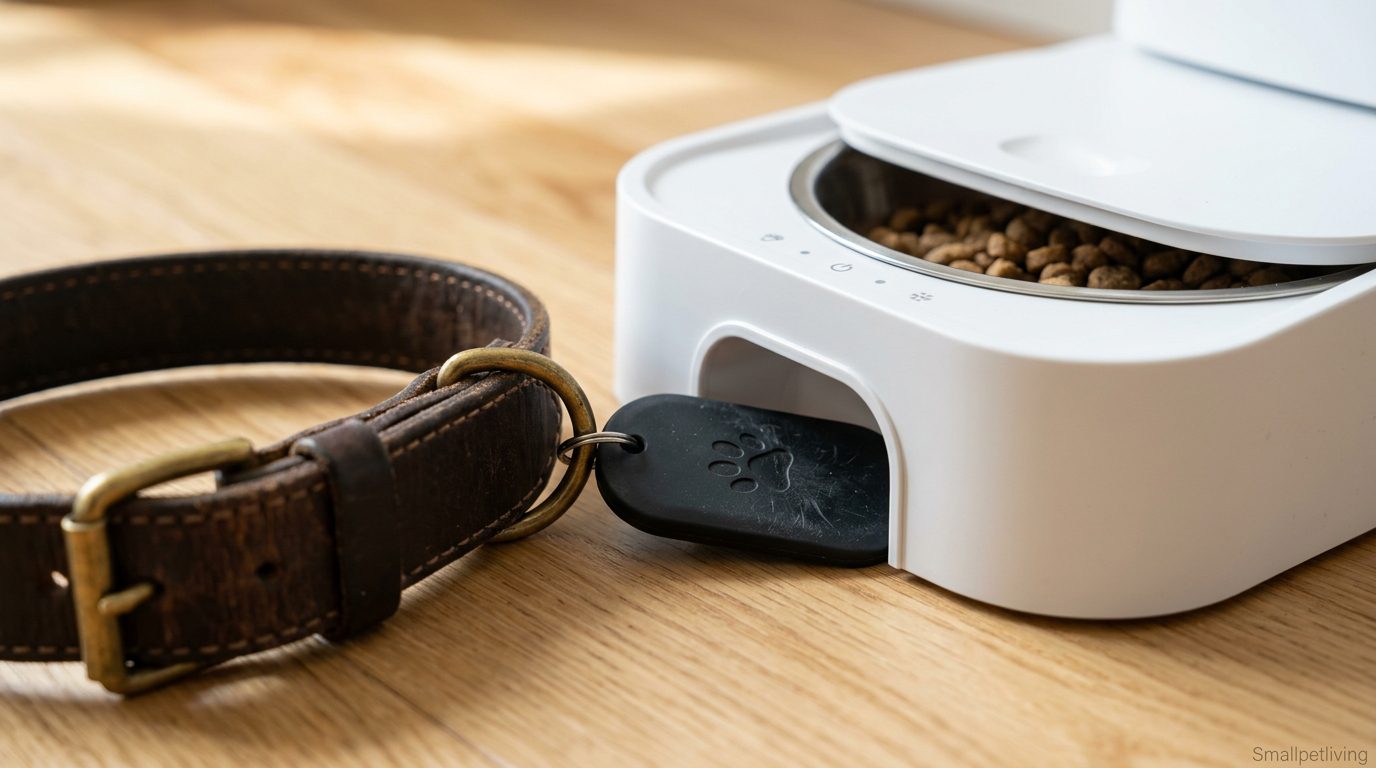
A standard selective feeder using microchip or RFID (Radio Frequency Identification) technology solves this by only opening the sealed lid when the authorized animal’s unique implanted microchip (or included collar tag) is scanned by the feeder’s archway sensor. This level of selective access prevents “cross-feeding,” ensuring that prescription food is exclusively consumed by the correct animal, preventing costly health relapses, and neutralizing mealtime intimidation. If you want to prevent pet obesity in small apartments, this technology is mandatory.
1. The Full Smart Ecosystem: Selective Potion Control
If you have already invested in an aesthetic pet temperature monitor or a luxury aesthetic pet camera, your ultimate selective feeder must possess connective intelligence.
The Connective Strategy
When searching for the best microchip pet feeders multi pet home solution that integrates with your high-tech lifestyle, look for models that utilize a central Hub and a smartphone app (e.g., SureFeed Connect).
- Beyond Access Control: These elite devices don’t just block food thieves; they measure the exact weight of food dispensed to the gram. The connected app tracks precisely when your pet eats and exactly how many grams they consume during each micro-meal.
- Early Warning System: By analyzing long-term consumption trends, the technology alerts you to subtle changes in appetite—often the very first clinical sign of underlying illness in felines—empowering you to seek veterinary care before a symptom becomes a crisis.
2. Microchip vs. RFID Collar Tag: The Durability Debate
Textile engineering has revolutionized pet-friendly fabrics for luxury sofas, and similarly, material science has improved how feeders interface with your pet. You must choose between the feeder reading the implanted microchip or a separate collar tag.
The Access Protocol
- Implanted Microchip: This is the ideal fail-safe. Standard select-access feeders can be programmed to read the common ISO 15-digit microchips already implanted in your pet by your veterinarian. They can never “lose” their key.
- RFID Collar Tag: For pets that are not microchipped, or if their implanted chip has migrated and cannot be easily scanned by the feeder’s archway, heavy-duty natural rubber RFID collar tags are included. These are water-resistant and aesthetic, but they can be lost. Always have several back-up tags if relying on this method in a luxury multi-pet home.
3. Mastering the Wet Food Challenge: Smell & Pests
In the confined air environment typical of high-rise urban lofts, the odor of exposed wet food is visually and olfactorily intrusive. Furthermore, open wet food is a magnet for flies and bacterial growth.
The Sealed Bowl Imperative
For those who feed both wet and dry food, the best microchip pet feeders multi pet home solution must contain a sealed lid.
- The Odor-Lock: High-end selective feeders feature a thick, integrated silicone seal along the rim of the bowl. When the lid closes and rests on this lip, it creates an airtight chamber. This locks in moisture, preventing the expensive prescription pâté from drying out into unappetizing leather, and—more importantly for apartment aesthetics—completely locks in the odor. It also serves as a critical defense against pests like flies, maintaining a pristine and sterile urban kitchen.
4. Vertical Space Management: Apartment Crate Integration
Vertical space is the defining constraint of the modern urban pet habitat. You must deploy architectural solutions that utilize every square foot strategically.
The Containment Hack
- Zonal Feeding: As we discussed in our architectural accessory guide, your space-saving crate can be repurposed as a designated “feeding zone.” By installing a battery-powered, non-connective microchip feeder inside the crate, you create an intimate, enclosed safe room where the submissive pet can graze peacefully throughout the day, completely protected from territorial intimidation. Ensure the crate is large enough that the archway sensor of the feeder isn’t constantly triggered by minor movements.
5. Renter-Friendly Non-Drill Power Solutions
If you are renting a high-end condo, you do not want an automatic feeder with a heavy industrial power cord drapes across your hardwood floors or requiring invasive wall mounting.
The Power Mandate
- Battery Primary: Elite selective feeders (like the standard SureFeed or Closer Pets MiBowl) must be designed as 100% battery-operated primary units. Look for models that utilize 4 C-cell or D-cell batteries, as these offer significant longevity, often lasting 6 to 9 months before requiring replacement.
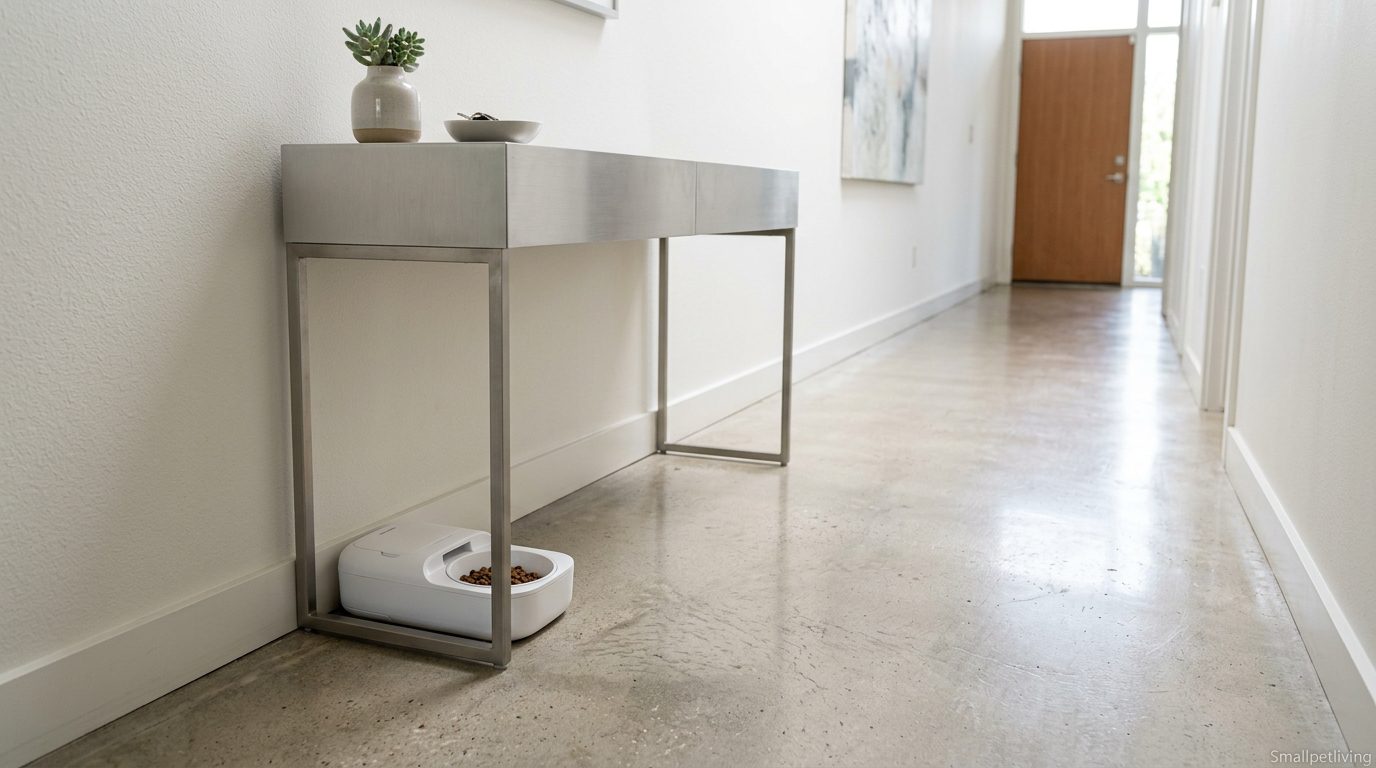
- The Benefit: Eliminating the dependency on a wall outlet allows you to place the selective feeders anywhere in your apartment—under a modern console table, on a low-profile bookshelf, or tucked into a kitchen island nook—maintaining a minimalist, wire-free environment without violating your lease or HOA bylaws.
6. Training and Desensitization Protocols for Timid Pets
If you have a very skittish, senior, or anxious cat, the noise and movement of a motorized selective feeder lid can cause significant stress, leading to food aversion and dangerous weight loss.
The Gradual Transition
- Training Modes: When selecting from the best microchip pet feeders multi pet home market, prioritize devices that include a dedicated “Training Mode.”
- The Process: This protocol works in gradual stages. In Stage 1, the lid remains fully open all the time. After a few days, Stage 2 closes the lid only halfway. Stage 3 closes it 75%. This slow, predictable, and desensitizing transition allows the timid pet to acclimatize to the physical noise of the motorized gear and the visual movement of the sliding lid, eventually learning that the sound signifies exclusive access to their food.
Engineering Peace of Mind
Integrating a monitor into your urban home is the definitive resolution of the modern pet owner’s paradox. It is the tactical decision to neutralize the emotional burden of separation without surrendering the architectural sophistication of your environment. By understanding the behavioral mandate of clear vocal redirection and selecting from the 8 elite design profiles, you gain objective, real-time control over your pet’s environment. This technology bridges the gap, ensuring that while you are navigating your metropolitan life, your companion remains connected, secure, and thriving within the quiet, elegant sanctuary you have created.
Frequently Asked Questions (FAQ)
Q: If I have two cats, do I need to buy two separate microchip feeders? A: If they are on different diets or one is a known food thief, yes, you unconditionally need two separate units to achieve clinical separation. If they are on the exact same diet, you can technically program one feeder to recognize both chips. However, in a compact multi-pet apartment, standard grazing behavior will likely result in a submissive cat being pushed off the single feeder, causing stress. Two units are optimal for peace.
Q: Can a non-microchipped pet, like a dog, break into a cat’s microchip feeder? A: This is a major concern. High-quality selective feeders (like the SureFeed) are designed with a heavy, structured archway and a robust, sealed rear section that prevents a dog from reaching around the back. However, if you have a massive, highly determined, and destructive dog, they can eventually crush the plastic lid with sheer force. If you have a severe food-bully dog, you must combine the selective feeder with an aesthetic pet gate to prevent physical intimidation.
Q: Will the feeder’s battery life decrease if my apartment Wi-Fi fails? A: If you have a Smart/Connect model that relies on a Hub, a Wi-Fi outage can put stress on the system as the device attempts to constantly reconnect to the network, potentially increasing battery drain. It is vital to ensure your Hub is connected via an Ethernet cable directly to your router to minimize signal dropout and protect battery integrity.
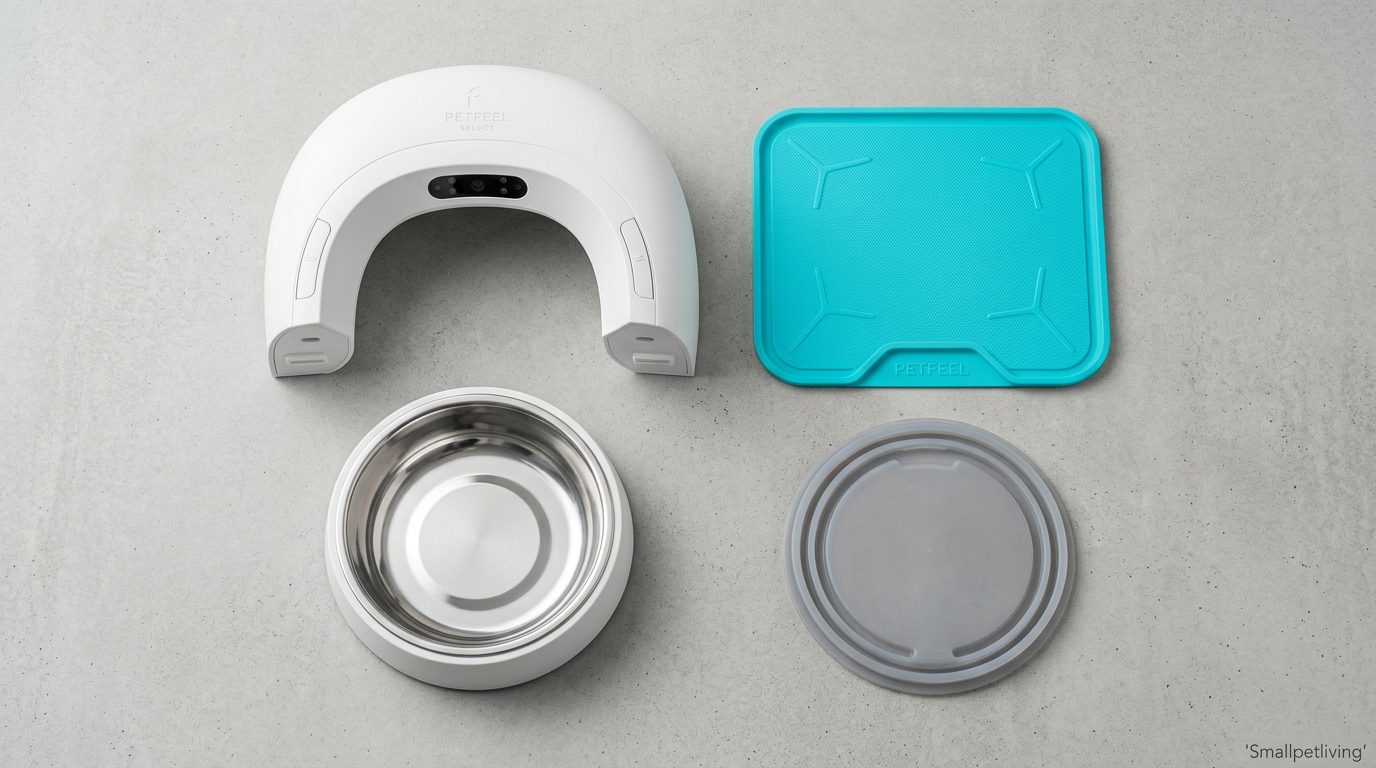
Q: Are these selective feeders easy to clean in a small apartment kitchen? A: You must verify this. Small space hygiene is vital. The best microchip pet feeders multi pet home solution must contain a completely removable, dishwasher-safe interior bowl (or highly durable silicone mats). Because the main unit contains batteries and electronics, it cannot be submerged; look for sleek designs that are easy to wipe down with a damp cloth without many crevices where kibble dust can collect.
Q: My pet is terrified of the sliding lid noise. What do I do? A: Utilize the dedicated Training Mode. If the movement still spooks them, the desensitization must go slower. Try leaving the feeder entirely open but turned off for two weeks, placing their high-value treats directly inside. Once they are happily using it, activate the slowest Training Mode. Patience is the ultimate tool for sensitive apartment cats.
Q: What is the ideal location to place multiple selective feeders in a small apartment? A: Do not place them directly next to each other, as this creates a localized hotspot of territorial stress and “feeder guarding.” Instead, integrate them into different micro-zones using existing furniture. Place one under a minimalist desk in the bedroom, and another under a side console table in the living room. Distributing the resources is key to apartment harmony.
Q: Will my pet’s microchip migrate and stop working with the feeder? A: Microchip migration is rare but scientifically documented. High-end selective feeders utilize a large, high-sensitivity antenna integrated into the entire archway of the device to maximize the likelihood of a successful scan, even if the chip has shifted. If the implanted chip truly fails to read, you must utilize the heavy-duty, included RFID collar tag as the reliable back-up key.
Q: Do these selective feeders keep wet food truly fresh in the summer? A: The sealed lid and bowl (Choice #3) lock in moisture and lock out flies. However, they are not actively refrigerated. If your apartment gets extremely hot (a risk you must manage with a pet temperature monitor), wet food will still spoil quickly. In severe summer heat, combine the sealed selective feeder with a thin, reusable ice pack placed beneath the bowl insert to provide active ambient cooling.
You Might Also Like
- Pet Friendly Fabrics for Luxury Sofas
- Soundproof Apartment Door Dog Barking: 5 Brilliant Solutions
- Pet Temperature Monitor for Apartment Living
- 7 Essential High-Rise Cat Safety Strategies
About Smallpetliving
Smallpetliving is the premier digital authority for high-end urban pet ownership. We specialize in providing evidence-based safety strategies, architectural-friendly gear, and advanced management protocols tailored specifically for high-density, high-rise environments. Our mission is to bridge the gap between luxury metropolitan interior design and world-class animal welfare, ensuring your home remains a pristine, uncompromising sanctuary.