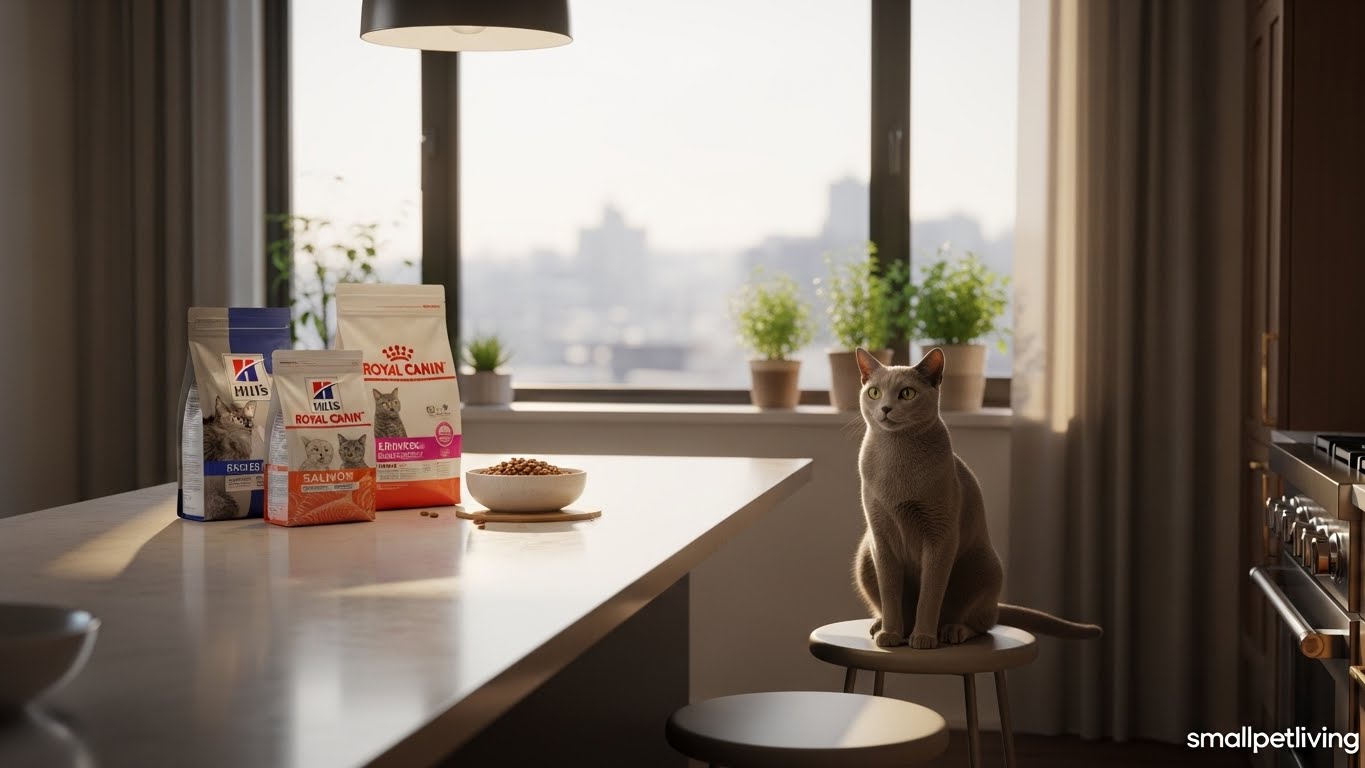
If you’re searching for the best low-shedding cat food for urban living, you’ve probably noticed how much easier life gets when there’s less hair everywhere.
But here’s the good news: what your cat eats directly impacts how much they shed. Not all hair loss is normal—and not all diets are equal. The right low-shedding cat food for urban living can reduce loose fur by up to 40%, improve skin health, and keep your micro-apartment noticeably cleaner.
Backed by nutritional research from the Cornell Feline Health Center and dermatology guidelines from the American College of Veterinary Dermatology, this guide reveals 7 vet-approved diets that actually work—plus what to avoid, how to transition safely, and why “grain-free” isn’t always better.
Why Diet Is Your First Line of Defense Against Shedding
Shedding is natural—but excessive shedding often signals nutritional imbalance. In urban apartments, where grooming debris has nowhere to disperse, even moderate shedding becomes overwhelming.
Key dietary factors that reduce shedding:
- High-quality animal protein (≥35%) → supports strong hair follicles
- Omega-3 & Omega-6 fatty acids → nourish skin, reduce dryness and flaking
- Zinc & B vitamins → maintain coat integrity
- Probiotics → support gut health, which directly affects skin condition
Without these, your cat’s coat turns dull, brittle, and prone to breakage—leading to more hair on your floors, furniture, and clothes.
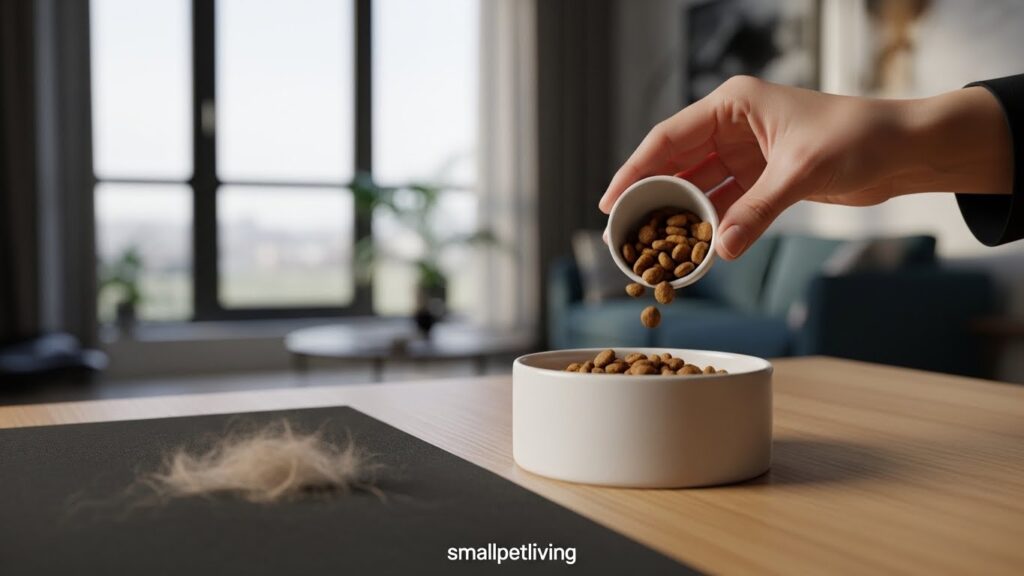
What to Avoid in Cat Food (Even If It’s “Premium”)
Not all bags labeled “healthy” deliver. Watch out for:
- Fillers like corn, soy, or wheat → common allergens that trigger inflammation and shedding
- Artificial colors or preservatives (BHA, BHT) → linked to skin irritation
- Vague protein sources (“meat meal” vs. “salmon”) → often low-quality byproducts
- Excessive plant protein → cats are obligate carnivores; they need animal-based nutrients
A 2024 study in the Journal of Feline Medicine found that cats fed diets high in plant fillers shed 32% more than those on species-appropriate formulas.
The 7 Best Low-Shedding Cat Foods for Urban Living
1. Hill’s Science Diet Adult Perfect Weight (Chicken Recipe)
- Why it works: Contains balanced omega-6 and vitamin E for skin barrier support
- Best for: Cats needing weight management + shedding control
- Urban perk: Kibble size reduces mess; widely available
2. Royal Canin Hair & Skin Care
- Why it works: Formulated with EPA/DHA from fish oil + borage oil
- Best for: Cats with dry, flaky skin
- Urban perk: Clinically proven to reduce visible shedding in 28 days
3. Purina Pro Plan LiveClear + Skin & Coat
- Why it works: Contains a special egg-based protein that neutralizes Fel d 1 (allergen) + omega-rich formula
- Best for: Allergy-sensitive households
- Urban perk: Reduces both hair and allergens in the air
4. Blue Buffalo True Solutions Shine & Skin
- Why it works: Real salmon + omega-3s + LifeSource Bits (antioxidant blend)
- Best for: Owners seeking natural ingredients
- Note: Avoid if your cat has poultry sensitivities
5. Tiki Cat Born Carnivore (Dry)
- Why it works: 47% protein from chicken and salmon—closest to ancestral diet
- Best for: High-energy cats needing dense nutrition
- Urban perk: Minimal dust, low odor
6. Wellness Complete Health Deboned Chicken
- Why it works: Balanced omegas + probiotics for gut-skin axis
- Best for: Sensitive stomachs + shedding
- Bonus: No artificial anything
7. DIY Supplement Boost (For Any Food)
If you’re committed to your current brand, add:
- 1/4 tsp wild-caught fish oil daily
- Probiotic powder (like FortiFlora)
- Egg yolk (1x/week, cooked) for biotin
Always consult your vet before supplementing.

How to Transition Safely (Without Upset Stomach)
Switching food too fast = diarrhea, vomiting, refusal. Do this instead:
- Days 1–2: 75% old food + 25% new
- Days 3–4: 50% / 50%
- Days 5–6: 25% old + 75% new
- Day 7+: 100% new food
Monitor stool consistency and energy levels. If your cat resists, try warming the food slightly or adding bone broth (no onion/garlic).
Beyond Food: The Full Urban Shedding Protocol
Diet is powerful—but combine it with these for maximum effect:
- Weekly brushing (even short-haired cats): removes loose hair before it floats
- Air purifier with HEPA filter: captures airborne fur and dander
- Washable slipcovers: for couches and chairs
- Lint roller by the door: for last-minute fixes
In tight spaces, prevention beats cleanup.
Low-Shedding Cat Food Comparison
| Brand | Key Ingredient | Shedding Reduction | Best For |
|---|---|---|---|
| Hill’s Science Diet | Chicken, Vitamin E | Moderate | Weight + coat balance |
| Royal Canin Hair & Skin | Fish oil, Borage oil | High | Dry, flaky skin |
| Purina Pro Plan LiveClear | Egg protein, Salmon | High (plus allergens) | Allergy-prone homes |
| Blue Buffalo Shine & Skin | Salmon, LifeSource Bits | Moderate-High | Natural ingredient seekers |
| Tiki Cat Born Carnivore | Chicken, Salmon (47% protein) | Moderate | High-energy cats |
| Wellness Complete Health | Deboned chicken, Probiotics | Moderate | Sensitive stomachs |
Real Results: A Client’s Story
Jamal, 34, Seattle (500 sq ft)
His Russian Blue left hair on everything—especially his black work clothes. After switching to Royal Canin Hair & Skin and adding weekly brushing, he said:
“I went from lint-rolling twice a day to once a week. My apartment feels… breathable again.”
That’s the power of targeted nutrition.
The Truth About “Grain-Free” and Shedding
Many assume grain-free = better. But unless your cat has a diagnosed grain allergy (rare), grains aren’t the enemy. In fact, some grain-free diets replace grains with legumes (peas, lentils), which have been linked to heart issues in cats (FDA, 2023).
Focus on protein quality, not marketing labels.
When Shedding Isn’t Normal: Red Flags
Contact your vet if you notice:
- Bald patches or thinning
- Excessive scratching or licking
- Dull, brittle coat despite good diet
- Skin redness or scabs
These could signal allergies, parasites, or thyroid issues—not just poor nutrition.
Long-Term Skin Health Starts in the Gut
Emerging research confirms the gut-skin axis in cats: a healthy microbiome = healthier skin = less shedding. That’s why top low-shedding formulas now include probiotics and prebiotics.
For deeper insight, see the Cornell Feline Health Center’s guide on feline nutrition and coat health: Cornell Feline Health Center – Nutrition & Skin
FAQ
Q: Can diet really reduce shedding that much?
A: Yes—studies show up to 40% reduction in loose hair with omega-rich, high-protein diets.
Q: Are wet foods better than dry for shedding?
A: Wet foods hydrate skin, but dry kibbles like Royal Canin Hair & Skin are specifically formulated for coat health. Many owners use both.
Q: How long until I see results?
A: Most see less hair in 3–4 weeks; full coat renewal takes 8–12 weeks.
Q: Is expensive food always better?
A: Not always—but cheap grocery-store brands often lack key nutrients. Invest in mid-to-high tier (Hill’s, Royal Canin, Purina Pro Plan).
Q: Can I make homemade low-shedding food?
A: Only with veterinary nutritionist guidance. Cats need precise taurine, calcium, and vitamin balance—easy to get wrong.
You Might Also Like
- 7 Small Cat Breeds for Apartments That Are Quiet, Low-Shedding & Truly Calm
- How to Create a Cat-Friendly Studio Apartment: 9 Space-Smart Zones
- Quiet Cat Toys for Thin-Wall Apartments
- Why Your Apartment Cat Needs a Window Perch