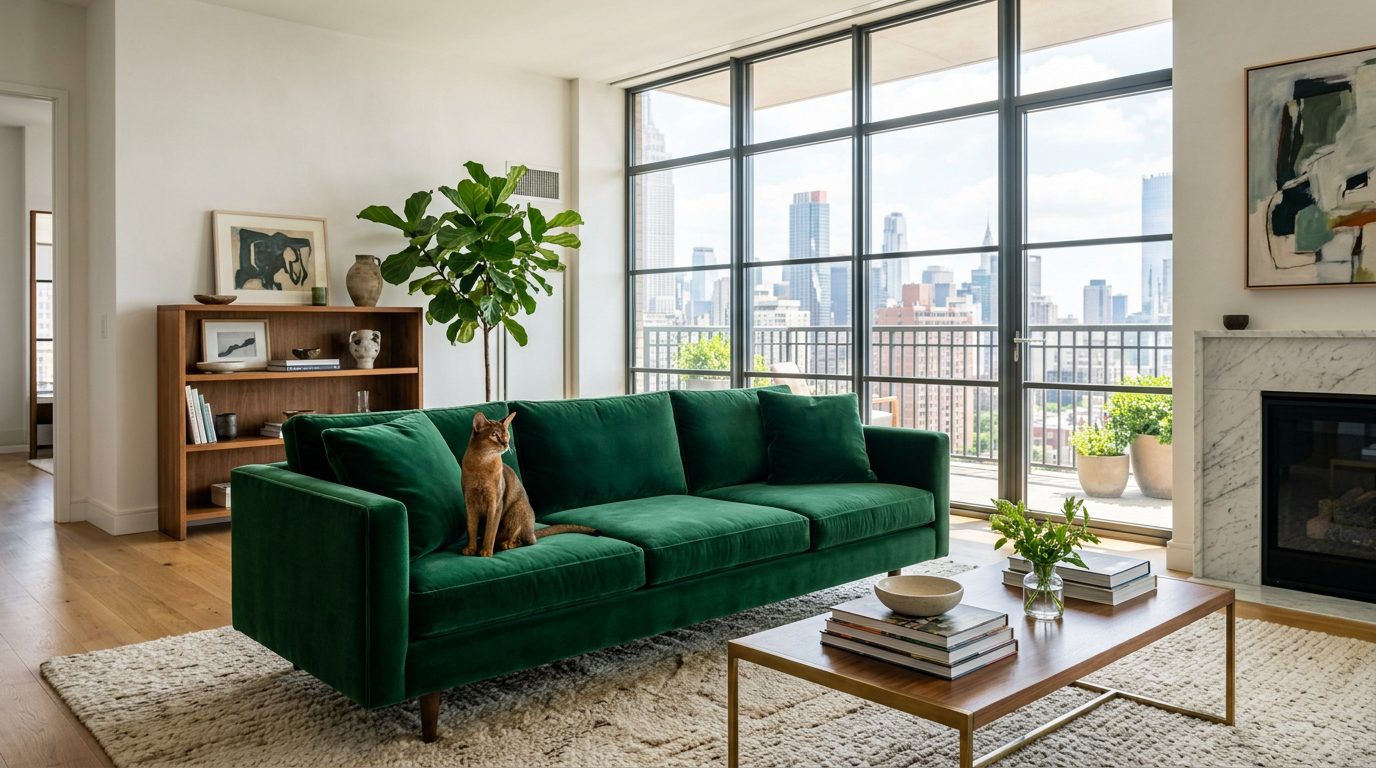
The centerpiece of any meticulously curated luxury apartment is the living room sofa. It anchors the space, dictates the architectural flow, and serves as the ultimate expression of your personal aesthetic. However, when you share your high-end urban home with a dog or a cat, this expensive investment instantly becomes a high-risk battleground. The nightmare of muddy paw prints on pristine white upholstery, the agonizing sound of feline claws catching on woven threads, and the stubborn cling of pet dander can turn interior design into a source of daily anxiety. Bridging the gap between an uncompromising design vision and the chaotic reality of animal ownership requires an advanced understanding of the pet friendly fabrics for luxury sofas.
At Smallpetliving, we reject the outdated notion that pet owners must settle for ugly, plastic-covered furniture or cheap, disposable futons. You do not have to sacrifice elegance for durability. The modern textile industry has revolutionized upholstery through molecular engineering, creating high-performance fabrics that repel liquids, resist claw punctures, and feel incredibly luxurious to the touch. This comprehensive, highly technical guide will demystify the science of upholstery durability, reveal the seven most stunning fabric choices for your modern metropolitan home, and explicitly list the trending textiles you must absolutely banish from your living room.
The Science of Durability: The Wyzenbeek Rating
Before you fall in love with a fabric swatch at a high-end furniture showroom, you must look at the technical specifications printed on the back of the tag. True luxury is rooted in scientific performance. In the interior design industry, a fabric’s durability is measured by its abrasion resistance, commonly tested using the Wyzenbeek Method.
The Wyzenbeek test mechanically rubs a piece of heavy canvas across the test fabric over and over again until the fabric shows noticeable wear or two yarn threads break. Each back-and-forth motion is called a “double rub.”
- A standard residential fabric typically scores around 15,000 double rubs.
- To survive the daily impact of a dog jumping onto the cushions or a cat aggressively nesting, you must exclusively source pet friendly fabrics for luxury sofas that possess a Wyzenbeek rating of at least 50,000 to 100,000 double rubs. This crosses into commercial-grade durability, ensuring your investment will withstand years of heavy, clawed traffic without thinning or pilling.
1. Performance Velvet: The Ultimate Claw Defense
There is a pervasive myth that velvet is too delicate for a home with pets. In reality, commercial-grade performance velvet is arguably the most resilient and architecturally striking fabric you can choose for a luxury apartment.
The “No-Loop” Advantage
The primary reason cats destroy furniture is that they love to hook their claws into the woven loops of a textile (like tweed or linen) to stretch their shoulder muscles.
- The Engineering: Velvet is woven on a special loom that weaves two pieces of fabric simultaneously, which are then cut apart to create a dense, upright “pile.” Because there are literally no loops of thread on the surface of the fabric, a cat’s claw cannot catch or hook into it. If they try to scratch it, their claws simply glide harmlessly off the dense surface.
- The Aesthetic: Performance velvet (woven from synthetic polyesters rather than delicate cotton or silk) offers a rich, matte luster that elevates any mid-century or modern minimalist sofa. Liquid spills bead up on the surface, allowing you to wipe them away before they penetrate the cushion.
2. Crypton® Super Fabrics: Molecular-Level Protection
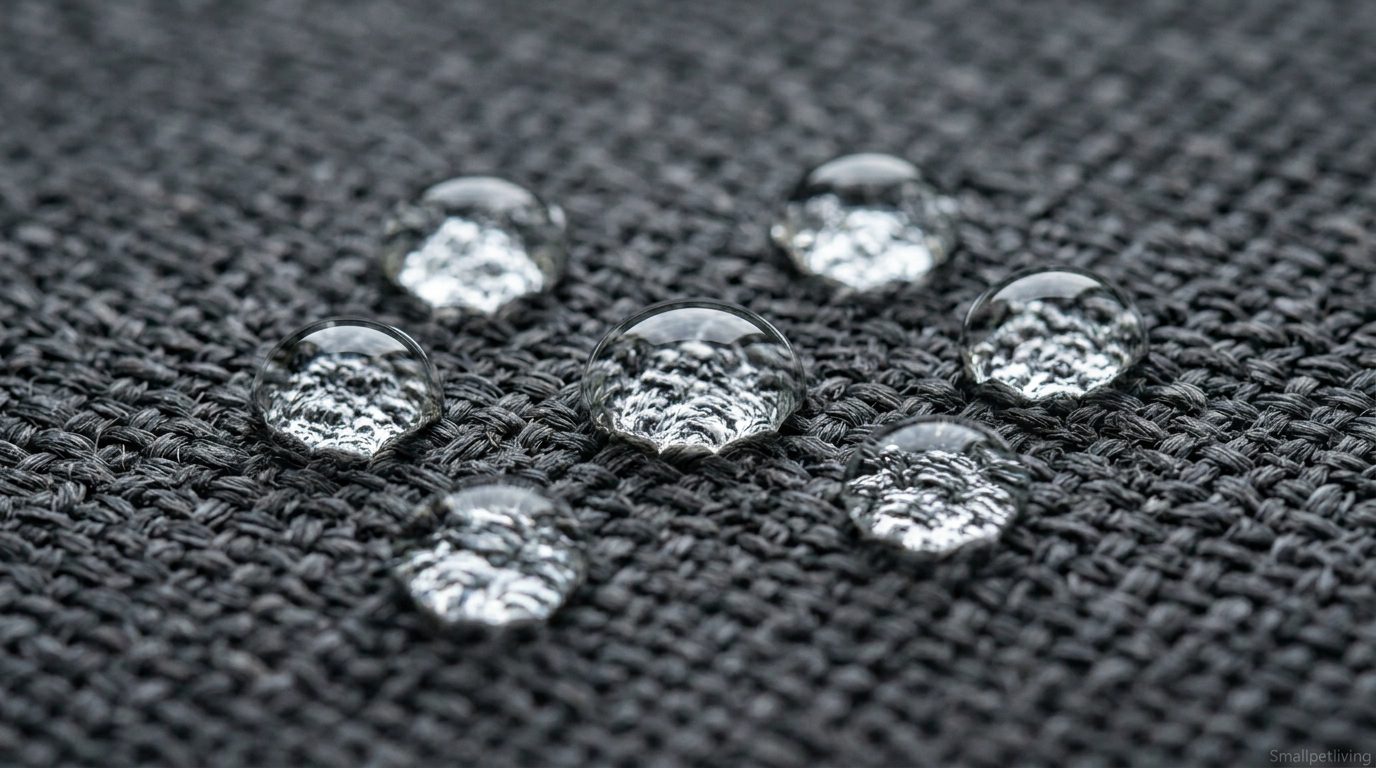
If your primary concern is muddy paws from rainy city walks, canine drool, or the dreaded pet accident, you must look toward advanced textile technology. Crypton is not just a fabric; it is a patented chemical engineering process.
The Impenetrable Barrier
- The Science: Unlike standard stain-repellent sprays (like Scotchgard) that simply coat the top of a fabric and wear off over a few months, Crypton fabrics are immersed in a proprietary liquid treatment and baked at high temperatures. This permanently seals every single fiber at the molecular level and creates an integrated moisture barrier backing.
- The Result: It is mathematically impossible for liquid to penetrate through a Crypton fabric into the foam cushion below. Furthermore, the fabric has built-in silver ion technology, which actively prevents the growth of odor-causing bacteria and mold—a critical feature we highlighted in our guide on how to keep an apartment from smelling like a cat. It is the absolute gold standard for pet friendly fabrics for luxury sofas.
3. Top-Grain Leather: The “Patina” Approach
Leather is a classic, sophisticated choice for high-end urban lofts. However, navigating the leather market requires caution, as not all hides are created equal when it comes to sharp claws.
Pigmented vs. Aniline Leather
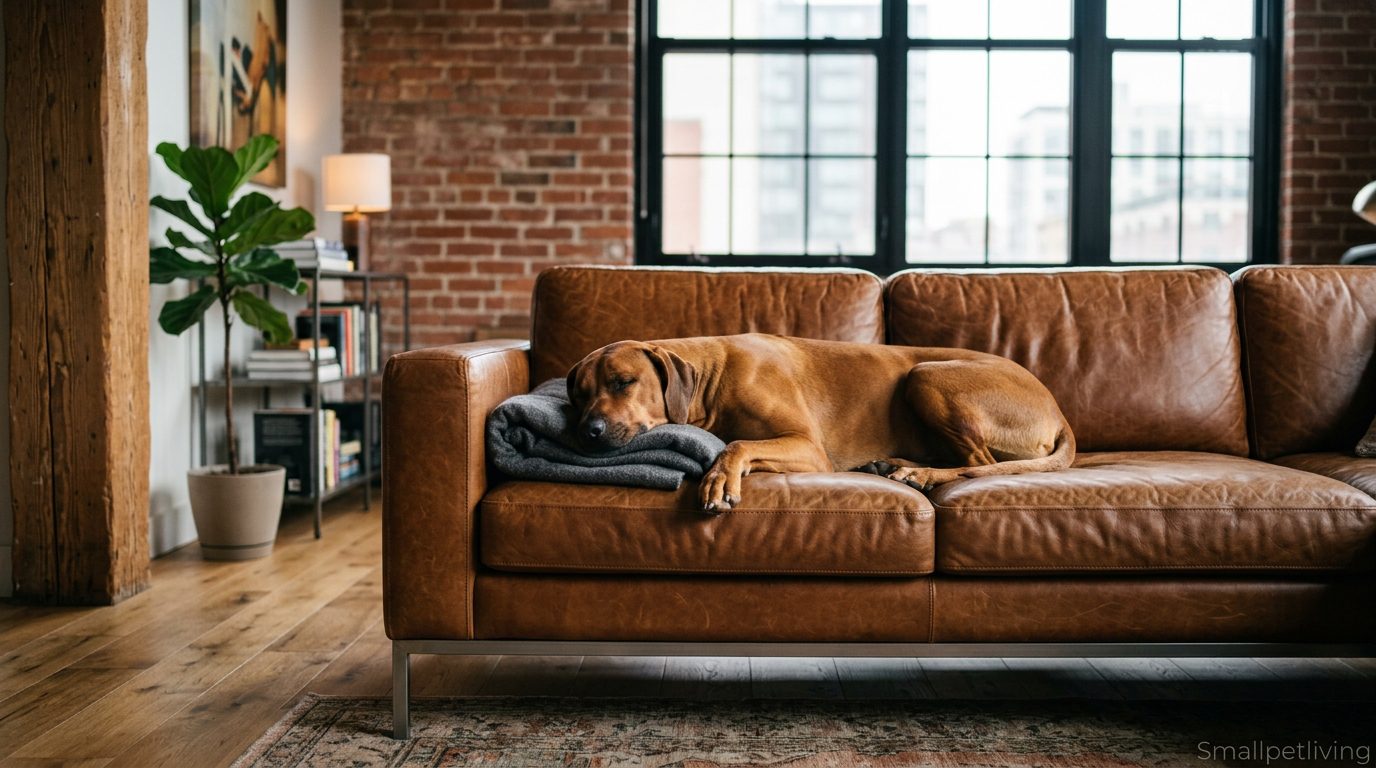
- The Strategy: If you have dogs, high-quality, top-grain pigmented leather is an exceptional choice. The pigment coating offers a strong defense against scratches, and the surface does not harbor pet dander, making it brilliant for allergy sufferers (pairing perfectly with your medical-grade HEPA filtration). Mud and drool can be wiped off instantly with a damp cloth.
- The Caveat: If you have cats, leather is risky. A cat jumping off a leather sofa can easily leave deep, visible puncture marks. If you choose leather, you must embrace the “patina” aesthetic—understanding that minor scratches will blend into the hide over time, adding rugged, vintage character to the furniture rather than ruining it.
4. Tight-Weave Microfiber (Ultrasuede)
If you desire the aesthetic of natural suede but require military-grade durability, high-end microfiber (often branded as Ultrasuede or Alcantara) is a flawless solution.
The Synthetic Shield
- The Construction: Microfiber is composed of synthetic threads (usually polyester and polyamide) that are finer than a human hair and woven incredibly tightly together.
- The Defense: This hyper-dense weave makes it exceptionally difficult for pet hair to weave its way into the fabric; instead, the hair simply sits on top, allowing you to effortlessly remove it with a lint roller or your vacuum’s upholstery attachment. Like velvet, the lack of a loose weave makes it highly resistant to feline scratching. It is soft, temperature-neutral, and incredibly resilient.
5. Heavy-Duty Canvas and Denim
For apartments that lean towards a more relaxed, industrial, or modern farmhouse aesthetic, heavy cotton canvas or tailored denim offers immense structural integrity.
The Washable Armor
- The Durability: These fabrics are woven tightly and feature a highly durable, flat surface. While they are not inherently liquid-repellent like Crypton, their tight weave provides excellent resistance against scratching and tearing from large dogs.
- The Slipcover Hack: The true luxury of canvas lies in high-end, custom-tailored slipcovers. If a major accident occurs, you can completely remove the heavy canvas cover and place it in a commercial washing machine, returning your sofa to a pristine, sterile state within hours.
The “Do Not Buy” List: Fabrics That Guarantee Disaster
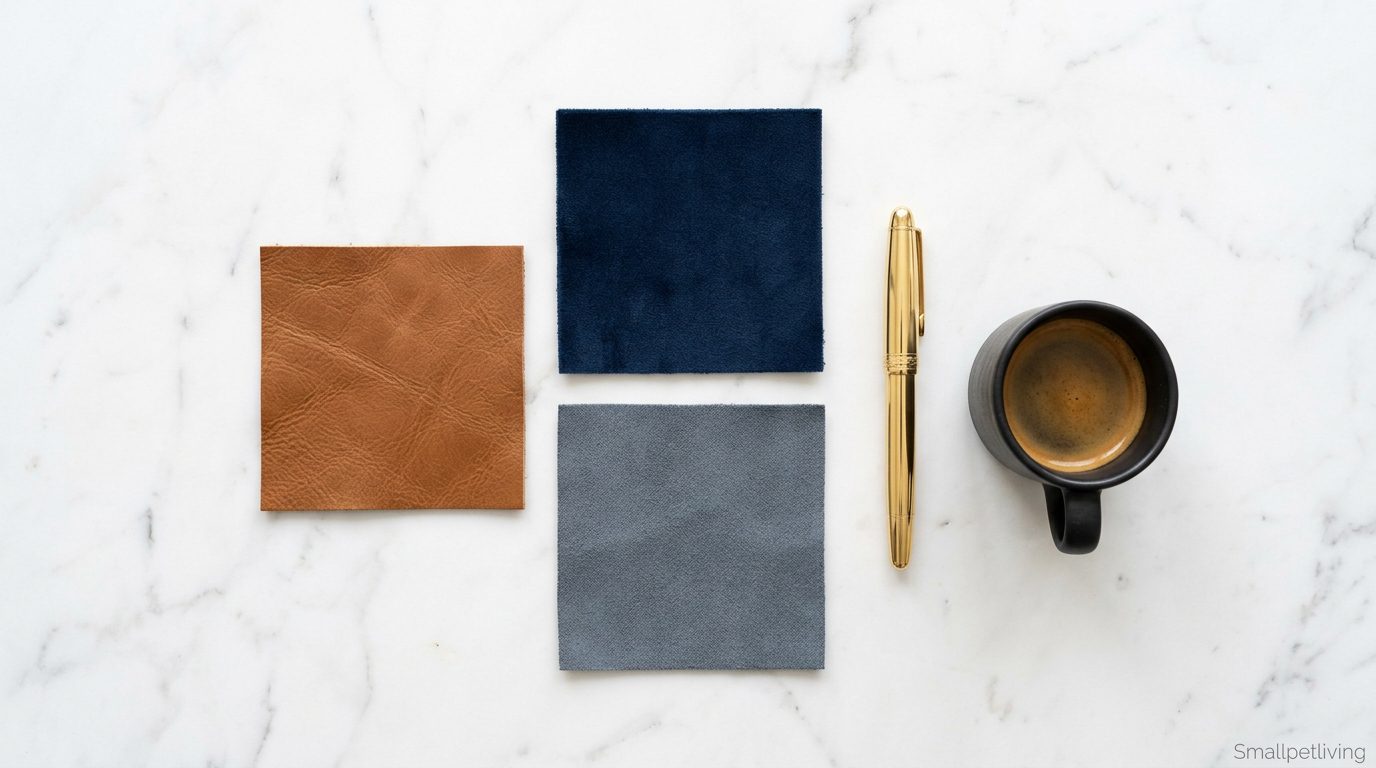
Just as important as knowing which pet friendly fabrics for luxury sofas to choose is knowing exactly which trending textiles to avoid at all costs. Bringing these fabrics into a pet-owning home is a rapid destruction waiting to happen.
1. Chenille and Tweed
These fabrics are highly textured and feature thousands of tiny, loose loops of yarn. To a cat, a chenille or tweed sofa is indistinguishable from a giant, expensive scratching post. Furthermore, dog hair weaves itself so deeply into the coarse texture of tweed that it becomes virtually impossible to extract, even with an industrial vacuum.
2. Silk, Linen, and Viscose
While linen offers a gorgeous, relaxed aesthetic for a minimalist apartment, it wrinkles instantly, stains permanently, and has a very low Wyzenbeek rating (it tears easily under the stress of dog claws). Silk and viscose (artificial silk) are incredibly delicate and will be ruined by a single drop of canine drool or a muddy paw pad.
Strategic Layering: Protecting What You Already Own
If you have already purchased an expensive, non-performance sofa and cannot replace it, you must employ strategic, high-end layering to protect your investment without resorting to cheap plastic covers.
The Aesthetic Shield
- Weighted Throw Blankets: Invest in heavy, luxurious faux-fur or weighted thick-knit throw blankets. Drape these strategically over the seat cushions where your pet is most likely to jump. The weight prevents the dog from easily digging them out of the way, and they can be thrown into the wash weekly.
- Botanical Deterrents: For cats attempting to scratch the corners of your existing sofa, apply a high-quality, invisible, and odorless (to humans) botanical deterrent spray. Pair this with the immediate installation of a sleek, architectural scratching post placed directly next to the sofa corner to redirect their natural instinct.
Uncompromising Urban Elegance
Selecting the pet friendly fabrics for luxury sofas is the definitive step in harmonizing a sophisticated interior design vision with the realities of urban pet ownership. By prioritizing the molecular engineering of Crypton, the loop-free claw defense of performance velvet, or the tight-weave resilience of luxury microfiber, you eliminate the daily anxiety of property destruction. You no longer have to gate off your living room or cover your expensive investments in unsightly protective layers. Armed with an understanding of Wyzenbeek ratings and technical weaves, you can confidently curate a stunning, high-end metropolitan apartment that serves as a beautiful, durable sanctuary for both you and your companion.
Frequently Asked Questions (FAQ)
Q: Is Bouclé fabric safe for cats and dogs? A: Absolutely not. Bouclé is currently one of the biggest trends in luxury interior design, known for its nubby, fleece-like texture. However, it is a nightmare for pet owners. The looped yarns are irresistible for cats to claw, and the highly textured surface acts as a magnet for trapped dog hair and dirt.
Q: Can I apply a stain-repellent spray to my existing linen sofa to make it pet-friendly? A: Aftermarket sprays (like Scotchgard) provide a temporary, superficial layer of protection that gives you a few extra seconds to wipe up a spill before it sets. However, they do not change the fundamental weave of the linen, meaning the fabric will still be easily punctured by claws and will wear down quickly under heavy pet traffic.
Q: What color sofa is best for hiding pet hair? A: Do not try to match your sofa to your pet’s fur—this severely limits your design options. Instead, choose a fabric with a subtle “heathered” or multi-tonal look. A fabric that features two or three closely related thread colors (like a charcoal grey with subtle silver threads) hides stray hairs and minor smudges exponentially better than a flat, solid, monochromatic color.
Q: Are leather sofas cold in the winter and sticky in the summer for my dog? A: Top-grain, high-quality leather breathes and adapts to the ambient room temperature reasonably well. However, in a heavily sunlit apartment, dark leather can become hot. Always ensure your apartment’s climate control is active, a strategy vital for preventing heatstroke as discussed in our future guides on urban pet tech.
Q: How do I stop my cat from scratching my new performance velvet sofa? A: While performance velvet prevents the cat’s claws from doing damage, the act of them trying can still be annoying. You must provide a more attractive alternative. Place a tall, sturdy, sisal-wrapped scratching post immediately adjacent to the armrest of the sofa. Reward the cat heavily with high-value treats every time they use the post instead of the velvet.
Q: Does microfiber/Ultrasuede attract static electricity and pet hair? A: In the dry, heavily heated air of winter apartments, synthetic microfiber can develop a static charge. To prevent this, lightly mist the sofa once a week with a pet-safe, anti-static fabric spray. This neutralizes the charge, allowing you to easily brush or vacuum the pet hair off the surface.
Q: What is the difference between “commercial grade” and “residential grade” fabrics? A: Commercial-grade fabrics are engineered for high-traffic environments like hotel lobbies, restaurants, and offices. They typically possess a Wyzenbeek rating of 50,000 to 100,000+ double rubs and often include chemical stain barriers. Residential fabrics prioritize softness and delicate textures over extreme durability. For urban pet owners, commercial-grade is the standard.
Q: Can a dog’s nails puncture Crypton fabric? A: Crypton is incredibly durable, but it is not Kevlar. A large dog (like a Labrador or German Shepherd) with sharp, untrimmed nails jumping off the sofa with immense force can eventually damage the fibers. This is why strict nail trimming protocols are essential to protect both your fabrics and your hardwood floors.
You Might Also Like
- 7 Essential Ways to Protect Dog Joints on Hardwood Floors
- 7 Brilliant Ways to Reduce Cat Dander in Apartment Spaces
- Prevent Pet Obesity in Small Apartments
- 5 Best Space-Saving Dog Crates for Small Apartments
About Smallpetliving
Smallpetliving is the premier digital authority for high-end urban pet ownership. We specialize in providing evidence-based safety strategies, architectural-friendly gear, and advanced management protocols tailored specifically for high-density, high-rise environments. Our mission is to bridge the gap between luxury metropolitan interior design and world-class animal welfare, ensuring your home remains a pristine, uncompromising sanctuary.