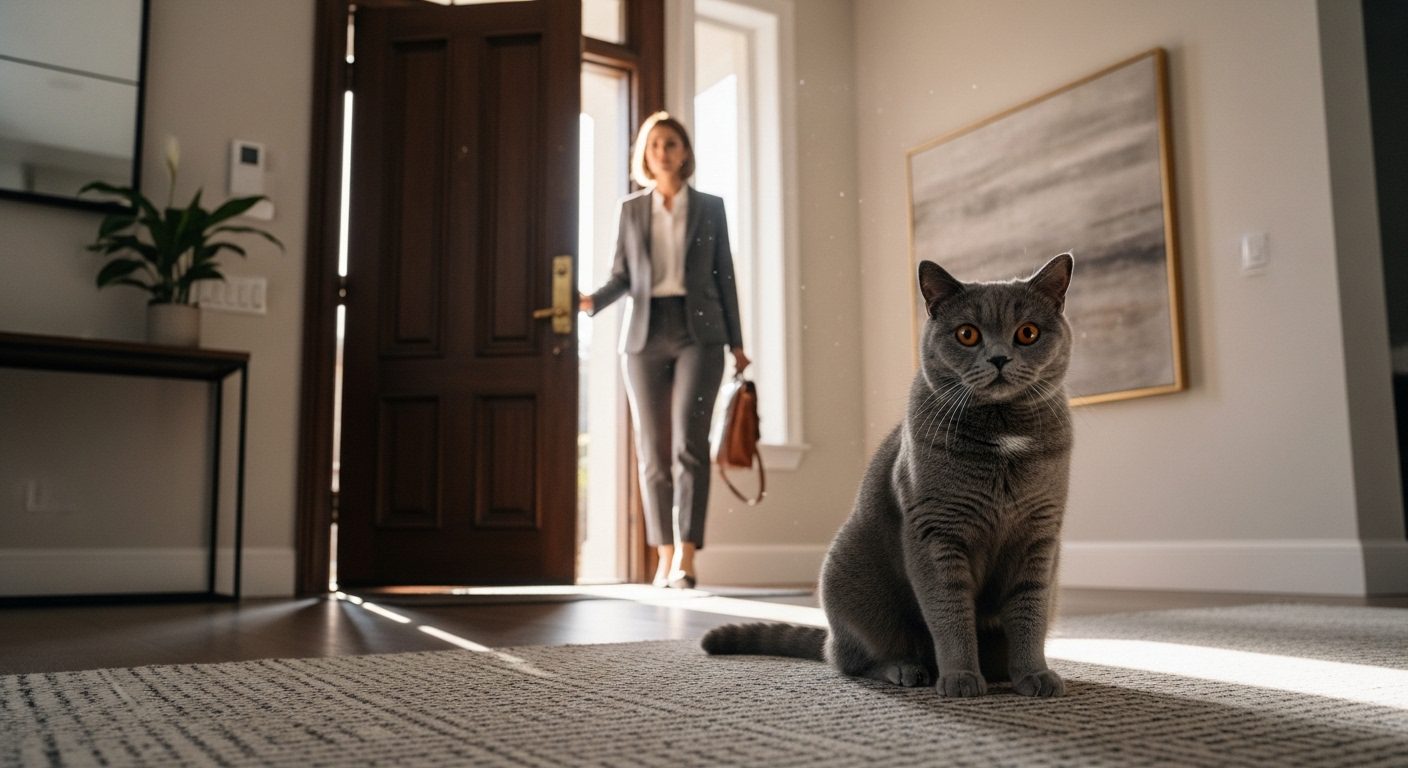
For the modern urban professional, living in a luxury high-rise with a feline companion is a deeply rewarding experience. However, it often comes with a hidden emotional cost: the daily guilt of walking out the front door. We have long been sold the myth that cats are entirely aloof, fiercely independent creatures who simply sleep until we return to open a can of food.
Modern veterinary behavioral science has proven this to be unequivocally false. Felines form intense, complex attachment bonds with their primary caregivers. When confined to the static environment of a small apartment, the sudden absence of their human can trigger profound psychological distress.
At Smallpetliving, we know that an elegant, high-end home must also be a mentally healthy one. Apartment cat separation anxiety is a real, clinical condition that can manifest in destructive behaviors, excessive vocalization that angers your neighbors, and severe health issues for the cat. Managing this anxiety requires more than just leaving a bowl of dry kibble on the floor.
It demands a sophisticated approach combining environmental engineering, automated technology, and disciplined behavioral protocols. This comprehensive guide provides you with seven proven, actionable strategies to transform your apartment from a lonely waiting room into a stimulating, anxiety-free sanctuary for your solo cat.
The Clinical Reality of Feline Isolation
Before we can implement solutions, we must learn to recognize the symptoms of feline distress. Unlike dogs, who may visibly panic or destroy a sofa, cats internalize their anxiety, often leading to subtle but damaging behaviors.
According to the behavioral guidelines published by the American Veterinary Medical Association (AVMA), separation anxiety in felines frequently presents as “inappropriate elimination” (urinating outside the litter box, often on the owner’s bed or clothing), compulsive over-grooming resulting in bald patches, and anorexia (refusal to eat while alone). In a high-density apartment building, another major symptom is excessive howling or crying, which can quickly lead to noise complaints from neighbors.
In a compact urban space, a cat cannot simply go outside to patrol a territory or hunt. Their entire world is the square footage of your apartment. When you leave, the environment becomes completely static. To cure apartment cat separation anxiety, we must artificially introduce dynamic, engaging stimuli that activate their natural predatory and foraging instincts while you are at the office.
1. Automated Environmental Enrichment: The Tech Setup
The first line of defense against boredom-induced anxiety is smart technology. You cannot be there to wave a feather wand, but you can automate their hunting cycle.
Staggered Activation
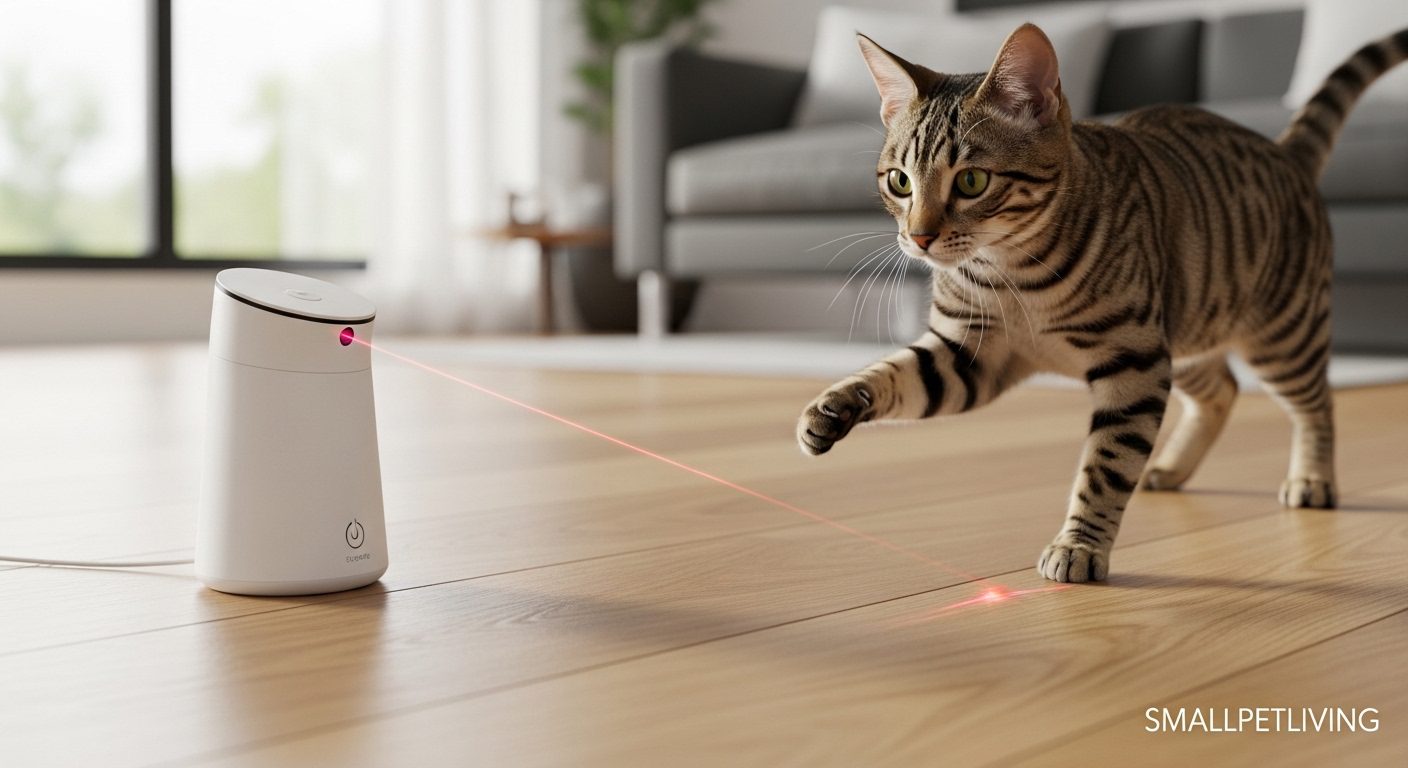
Do not turn all electronic toys on at 8:00 AM when you leave. By 9:00 AM, the cat will be bored again. Instead, invest in “smart” toys that can be programmed via a smartphone app or motion sensors.
- The Execution: Set an automated laser pointer to activate for 10 minutes at 11:00 AM. Program a robotic mouse to deploy from its base station at 2:00 PM. By staggering the activation times, you create an unpredictable environment that mimics the sporadic appearance of prey in the wild, keeping your cat’s mind engaged throughout the long workday.
2. The “Bird TV” Station: Visual Stimulation
A static apartment offers zero visual interest. The easiest way to combat apartment cat separation anxiety is to utilize your city views.
Safe Window Viewing
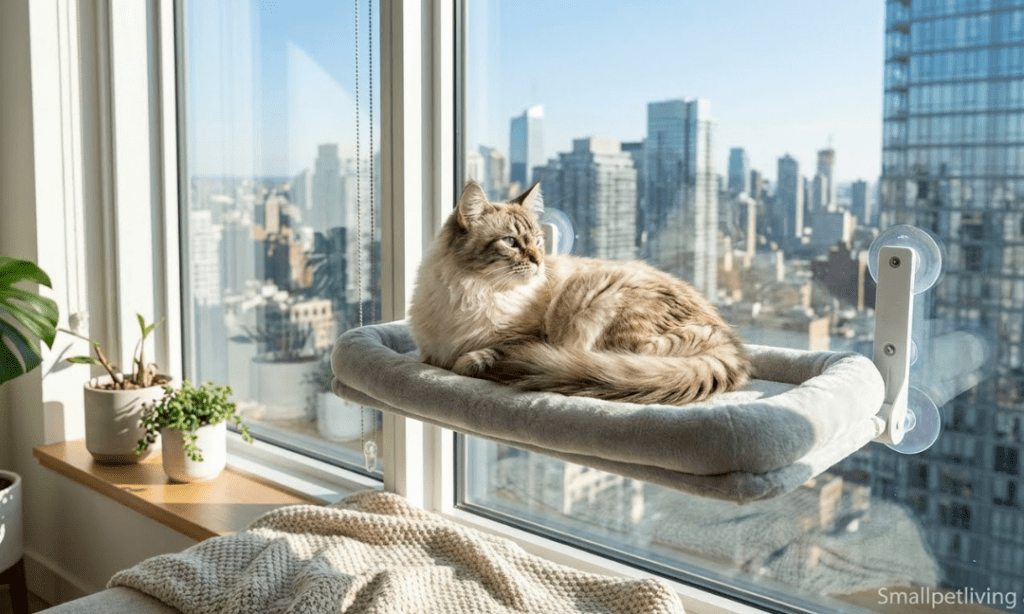
If you live on a higher floor, birds, passing clouds, and city movement are excellent natural distractions. However, you must pair this with absolute security. As discussed in our guide on high-rise cat safety strategies, windows must be heavily reinforced.
- The Execution: Install a premium, architecturally pleasing window perch. To maximize the effectiveness, attach a clear plastic bird feeder to the outside of the window glass (if your building’s HOA allows it). The constant flutter of birds provides hours of intense, focused visual stimulation, completely distracting the cat from your absence.
3. Olfactory Distraction: The Foraging Protocol
Cats have an incredibly advanced olfactory system. In the wild, they spend a large portion of their waking hours tracking scents to find food. In a luxury apartment, food is usually presented in a silver bowl with zero effort required.
The Indoor Hunt
Before you leave for work, hide their daily allotment of dry food or freeze-dried treats around the apartment.
- The Execution: Do not make it easy. Hide a few kibbles on their minimalist cat wall furniture, place some inside a specialized “snuffle mat” or puzzle feeder, and tuck a few behind a door. This forces the cat to use their brain and their nose to “hunt” for their breakfast over several hours. This mental exertion tires them out, leading to deep, restorative sleep rather than anxious pacing.
4. Audio Therapy and White Noise Masking
In thin-walled apartment buildings, hallway noises—the ding of an elevator, a neighbor unlocking their door, or heavy footsteps—can act as severe anxiety triggers. The cat associates these sounds with your potential arrival, causing a spike in adrenaline, followed by disappointment when it isn’t you.
Masking the Triggers
- The Execution: Utilize a high-quality white noise machine placed near the front door to drown out hallway acoustics. Additionally, consider leaving a smart speaker playing species-appropriate music. Research has shown that music composed specifically for felines (such as the work of David Teie, which utilizes frequencies and tempos mimicking feline purring and suckling) significantly lowers their resting heart rate. Classical music, particularly cello sonatas, also provides a calming ambient backdrop.
5. The “Departure and Arrival” Protocol: Modifying Human Behavior
Often, the root cause of apartment cat separation anxiety is the owner’s behavior. We tend to feel guilty when leaving, so we over-compensate with dramatic goodbyes, picking the cat up, kissing them, and speaking in a high-pitched, emotional tone.
The 15-Minute Ignore Rule
This dramatic shift in your energy signals to the cat that a major, potentially negative event is about to occur, spiking their anxiety before you even touch the doorknob.
- The Execution: You must completely desensitize your departure and arrival. For 15 minutes before you leave, do not engage with the cat. Pack your bag, put on your coat, and walk out the door in total silence. When you return home, do not immediately greet the cat. Take off your shoes, put your keys away, wash your hands, and wait for 5 to 10 minutes until the cat is calm before offering a gentle, low-key greeting. This teaches the cat that your coming and going is a mundane, unimportant event.
6. Pheromone Therapy: Chemical Reassurance
When cats rub their cheeks against your furniture, they are leaving behind facial pheromones that mark the territory as safe and familiar. When they are highly anxious, they stop marking, which only increases their insecurity in the space.
Strategic Diffusion
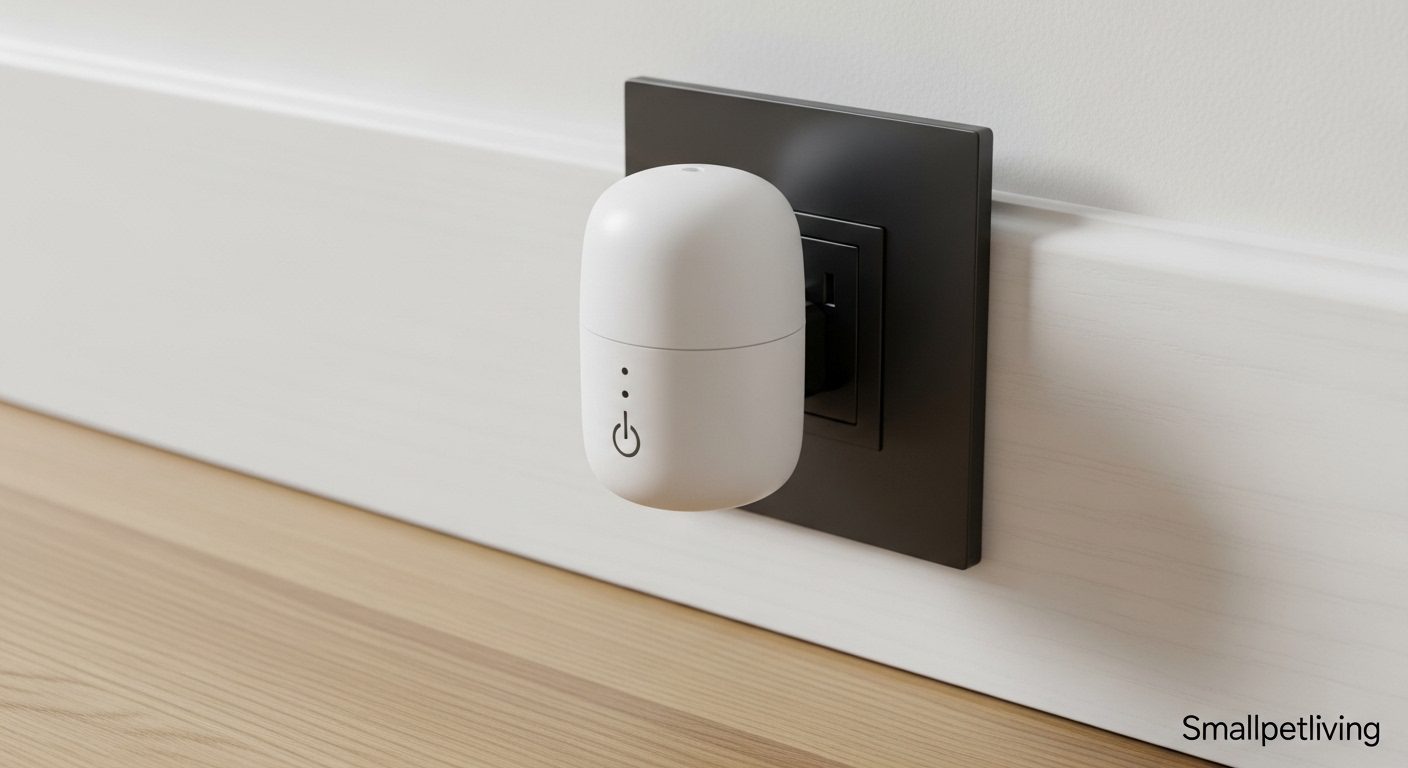
- The Execution: Utilize synthetic feline facial pheromone diffusers (such as Feliway Classic or Optimum). Plug these diffusers into the rooms where the cat spends the most time.
- Apartment Warning: Do not plug the diffuser near an open window or directly next to the HEPA air purifier you use for keeping the apartment from smelling. The purifier will scrub the pheromones from the air before the cat can benefit from them. Place the diffuser at ground level in a calm corner of the living room or bedroom.
7. Disconnecting the Owner from the Food Source
If you are the sole provider of food, your absence equates to a survival threat. A hungry cat is an anxious cat. By automating the feeding process, you remove yourself from the center of their survival equation.
The Automatic Micro-Routine
Cats thrive on strict, predictable routines. The unpredictability of a human’s work schedule or social life causes stress.
- The Execution: Invest in a high-end, Wi-Fi-enabled automatic microchip feeder. Program it to dispense small portions of food 3 to 4 times a day, exactly at the same minute every day. When the cat learns that the “machine” provides the food reliably, regardless of whether you are in the apartment or not, a massive layer of survival anxiety is instantly lifted.
Engineering a Calm Sanctuary
Overcoming apartment cat separation anxiety is entirely possible, but it requires a shift in perspective. You must stop viewing your apartment as just a human home where a cat happens to live, and start viewing it as a shared, dynamic habitat. By implementing staggered automated technology, strict behavioral departure protocols, and strategic olfactory foraging, you empower your cat to be confident, relaxed, and entertained in your absence. Your luxury apartment will remain intact, your neighbors will enjoy the silence, and you can finally walk out the front door without a shred of guilt, knowing your feline companion is thriving.
Frequently Asked Questions (FAQ)
Q: Should I just get a second cat to keep my solo cat company? A: This is a common but risky assumption in small apartments. While a bonded pair can keep each other company, introducing a new, strange cat into a small, confined territory can often create severe territorial aggression and double the stress levels. If you decide to add a second pet, the introduction must be done incredibly slowly over weeks, utilizing physical barriers.
Q: How long is too long to leave an apartment cat alone? A: Even with advanced automated enrichment, an adult cat should not be left completely alone for more than 24 hours. For daily work routines, 8 to 10 hours is manageable if the environment is highly enriched. If you frequently travel overnight, you must hire a professional pet sitter to visit daily for litter box maintenance and social interaction.
Q: Do pet cameras help with separation anxiety? A: They help you more than the cat. Cameras with two-way audio can actually confuse and distress some cats, as they hear your voice but cannot locate you physically. Use cameras for silent monitoring to assess their behavior, but avoid using the microphone feature unless your specific cat responds positively to it.
Q: Why does my cat scratch the sofa only when I am gone? A: Destructive scratching is a common symptom of stress and a way for the cat to deposit scent from their paw pads to reassure themselves. Ensure you have sturdy, vertical scratching posts near the areas they are destroying, and treat the sofa with a natural citrus deterrent spray.
You Might Also Like
- 7 Stunning Minimalist Cat Wall Furniture Ideas
- How to Keep an Apartment From Smelling Like a Cat
- Quiet Cat Toys for Thin-Wall Apartments
- How to Set Up a Cat-Friendly Studio Apartment
About Smallpetliving
Smallpetliving is the premier digital authority for high-end urban pet ownership. We specialize in providing evidence-based behavioral strategies, architectural-friendly gear, and advanced management protocols tailored specifically for high-density, limited-square-footage environments. Our mission is to bridge the gap between luxury metropolitan living and world-class animal welfare, ensuring both you and your pet live an uncompromising, stress-free life.