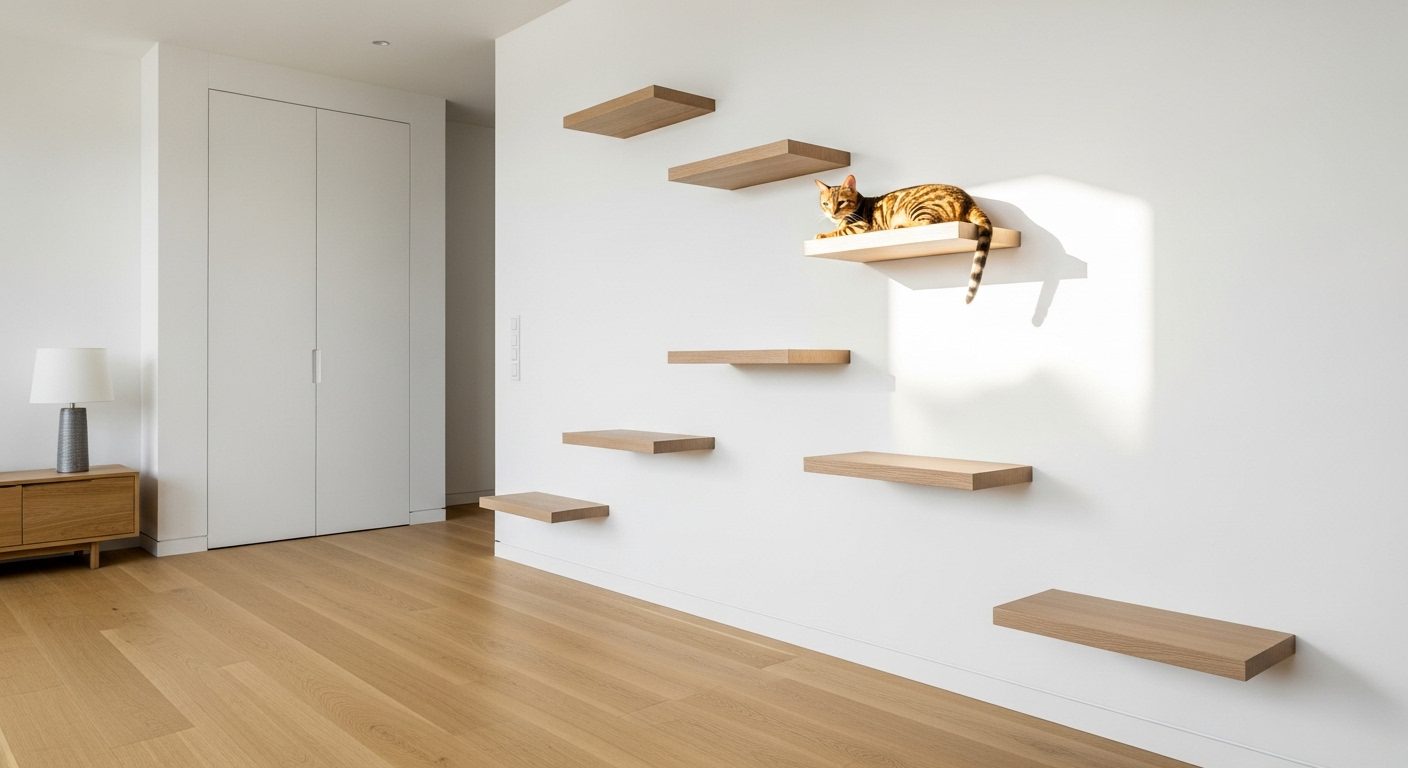
Integrating feline enrichment into a high-end urban home often presents a significant aesthetic dilemma for the modern pet owner. The traditional “cat tree”—typically a bulky, carpet-covered monstrosity in muted beige or aggressive neon colors—is the ultimate design disruptor in a meticulously curated luxury apartment.
For city dwellers who have invested heavily in mid-century modern architecture, Scandinavian minimalism, or sleek industrial lofts, introducing standard pet store furniture into the living room is simply not an option. However, ignoring a cat’s biological need for vertical territory inevitably leads to severe behavioral issues, including stress-induced lethargy, territorial marking, and the destruction of your expensive human furniture.
At Smallpetliving, we believe you should never have to compromise your interior design standards to provide a world-class, stimulating environment for your feline companion. The elegant solution lies in the strategic implementation of minimalist cat wall furniture.
By utilizing architectural-grade floating shelves, transparent acrylics, and structural room integration, you can create what we call the “invisible cat tree.” This approach, widely known in modern architectural circles as high-end “cat-ification,” transforms your blank walls into a functional feline superhighway that looks more like a modern art installation than a pet playground. This comprehensive guide will walk you through seven elite strategies, materials science, and the exact installation protocols required to build a sophisticated vertical sanctuary in your apartment.
The Biological Imperative of Vertical Space: Why Cats Need Height
Before drilling a single hole into your apartment’s drywall, it is crucial to understand why cats have such a profound need to climb. In the wild, felines operate as both apex predators and potential prey for larger animals. Gaining high ground serves a dual evolutionary purpose: it provides a strategic vantage point to survey the environment for potential meals, and it acts as a secure, unreachable refuge from ground-level threats.
According to behavioral experts and veterinary researchers at the Indoor Pet Initiative by Ohio State University, indoor cats without access to vertical territory often suffer from chronic environmental stress. In a compact apartment, the floor is a high-traffic, unpredictable zone shared with humans, guests, and perhaps other pets. Providing minimalist cat wall furniture literally elevates your cat above this daily chaos. When a cat rests on a shelf seven feet in the air, their brain registers absolute safety. This perceived security causes a massive reduction in cortisol (the stress hormone), leading to a calmer, more affectionate, and physically healthier pet.
1. The Floating Hardwood Staircase: Natural Wood Integration
The foundation of any invisible cat tree is the floating shelf. Instead of buying pre-made, flimsy pet steps that often look cheap and wobble under weight, you can utilize architectural-grade floating shelves designed for human homes.
Materials Science: Oak vs. Pine
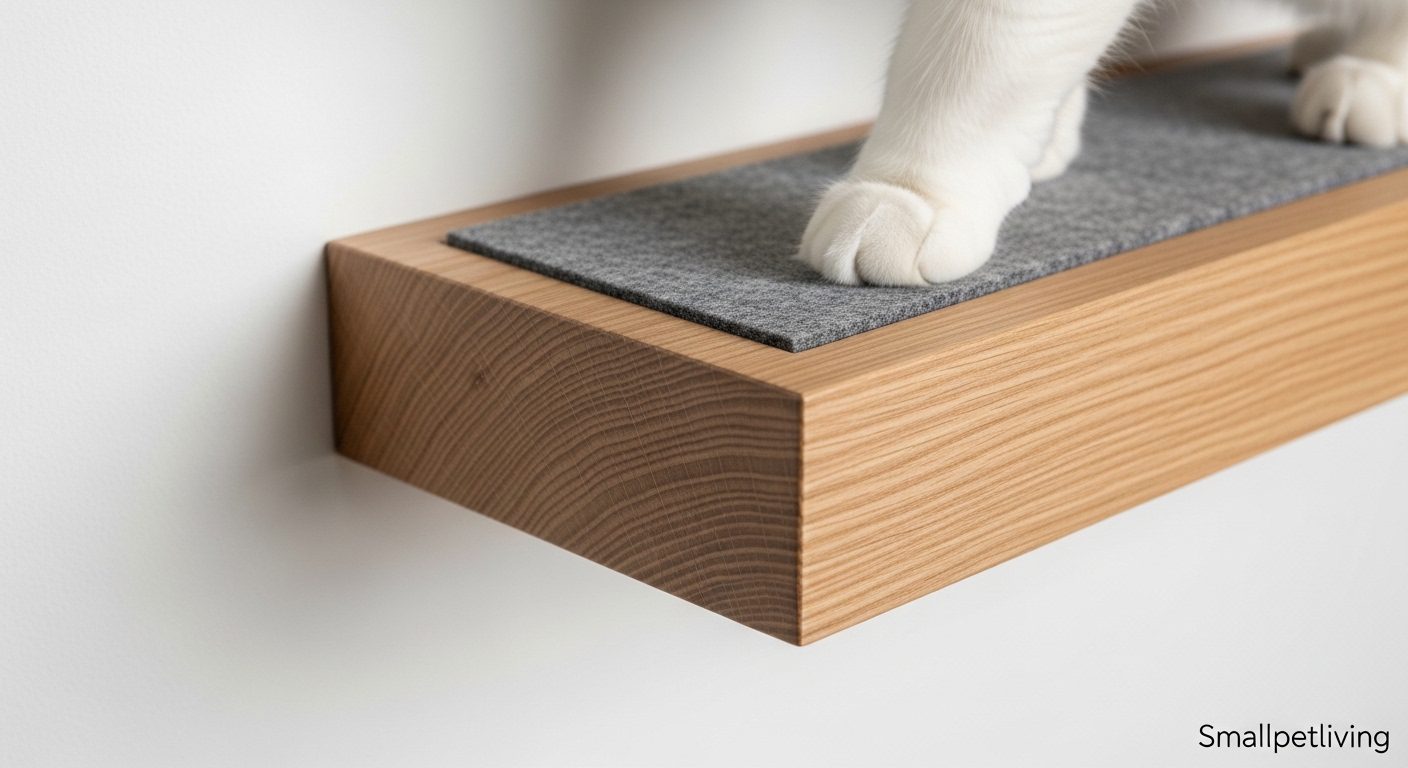
When selecting wooden minimalist cat wall furniture, material density matters. Avoid cheap pine or MDF (Medium-Density Fiberboard) if it will bear the brunt of jumping claws. Pine is a soft wood; a heavy cat launching off a pine shelf will quickly gauge the wood and loosen the wall anchors over time. Opt for hardwoods like White Oak, Walnut, or Teak. These woods offer superior tensile strength and naturally match luxury flooring and media consoles.
The Safety Modification (The Inlay Hack)
Polished hardwood is incredibly sleek but extremely slippery for feline paw pads, which lack grip on varnished surfaces. This can lead to dangerous falls. To maintain the luxury aesthetic while ensuring absolute grip, work with a local carpenter to route a shallow, 3-millimeter groove into the top surface of the shelf. Inlay a piece of commercial-grade, neutral-toned felt, cork, or tightly woven sisal. This provides the necessary traction without the visual bulk of traditional wrapped carpet.
2. Transparent Acrylic Loungers: Achieving Zero Visual Weight
In smaller studio apartments or units with narrow hallways, adding multiple dark wooden shelves can make the walls feel crowded, heavy, and claustrophobic.
The Illusion of Empty Space
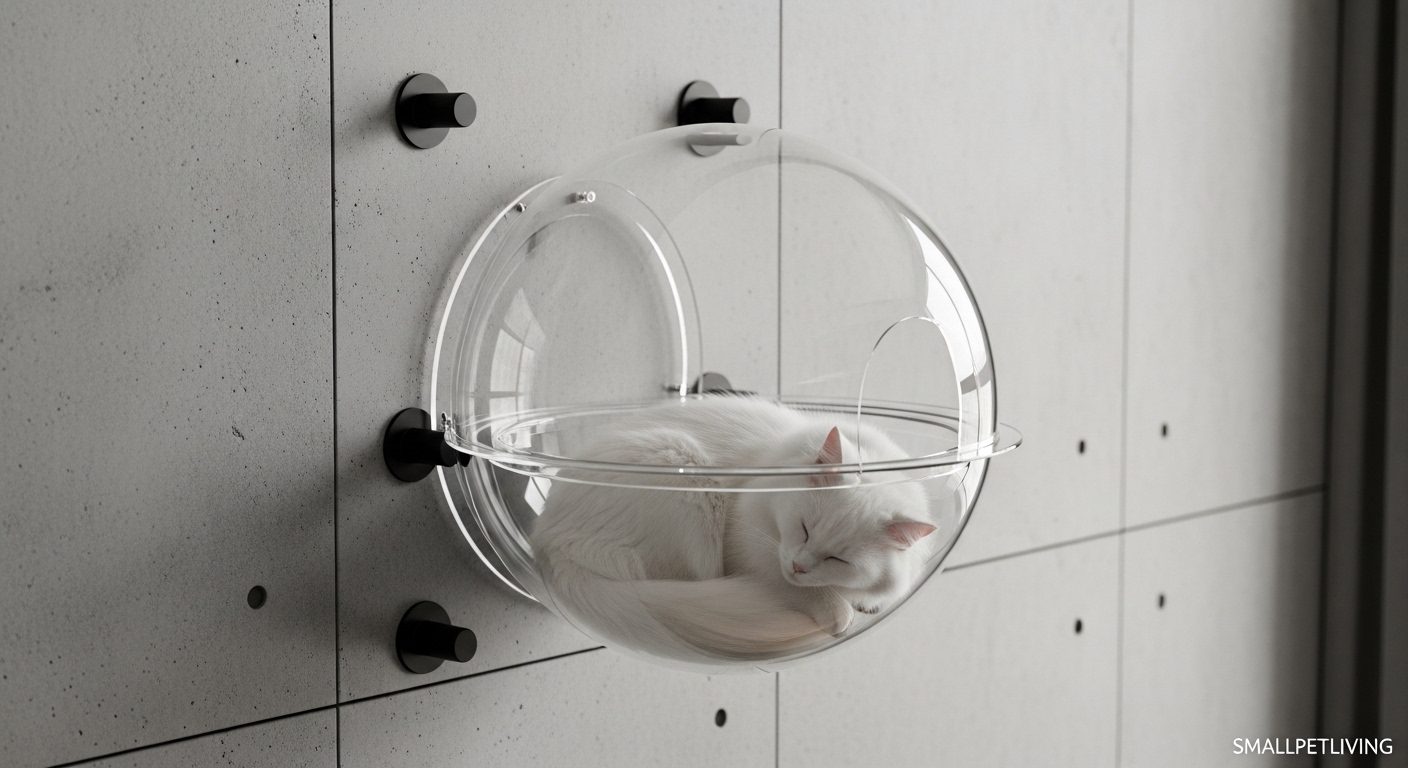
The solution is to utilize clear acrylic (Lucite) wall mounts and hemispherical lounging bowls. Acrylic provides zero visual weight. It allows natural sunlight and your apartment’s LED lighting to pass through it completely, effectively making the furniture “disappear” into the wall from a distance. As a charming bonus, looking up from the sofa provides a delightful view of your cat’s curled-up paws and belly pressed against the clear dome.
Design Execution and Specifications
When selecting acrylic minimalist cat wall furniture, thickness is a matter of safety. Ensure the acrylic material is at least 8mm to 10mm thick to prevent bowing or cracking under the dynamic impact weight of a jumping cat. Mount these clear domes using sleek, brushed nickel, brass, or matte black standoff hardware to give the installation a refined, industrial-chic finish that mirrors high-end architectural fixtures.
3. The Architectural Ceiling Track: Utilizing the Top 12 Inches
Most urban apartments, even those with limited square footage, leave the top 12 to 18 inches of wall space near the ceiling completely unused. This “dead zone” is actually the most valuable real estate for a feline.
Building the Perimeter Highway
Install a continuous, narrow walkway (8 to 10 inches deep) just below the ceiling line, functioning almost like a secondary, functional crown molding. Use customized solid wood planks painted in the exact shade and finish of your apartment walls. By color-matching the walkway to the wall paint (e.g., matte white on matte white), the structure camouflages perfectly into the architecture.
This perimeter track allows your cat to circumnavigate the entire living room without ever touching the floor. This strategy is highly effective if you also own one of the 10 best low-energy small dog breeds for apartments, as it gives the cat a dedicated, dog-free territory, completely eliminating inter-species tension in small spaces.
4. Bookshelf Integration: Hacking Existing Luxury Furniture
You do not always need to build a dedicated, standalone cat wall. Often, the most seamless minimalist cat wall furniture is the luxury furniture you already own and use daily.
The Modular Modification
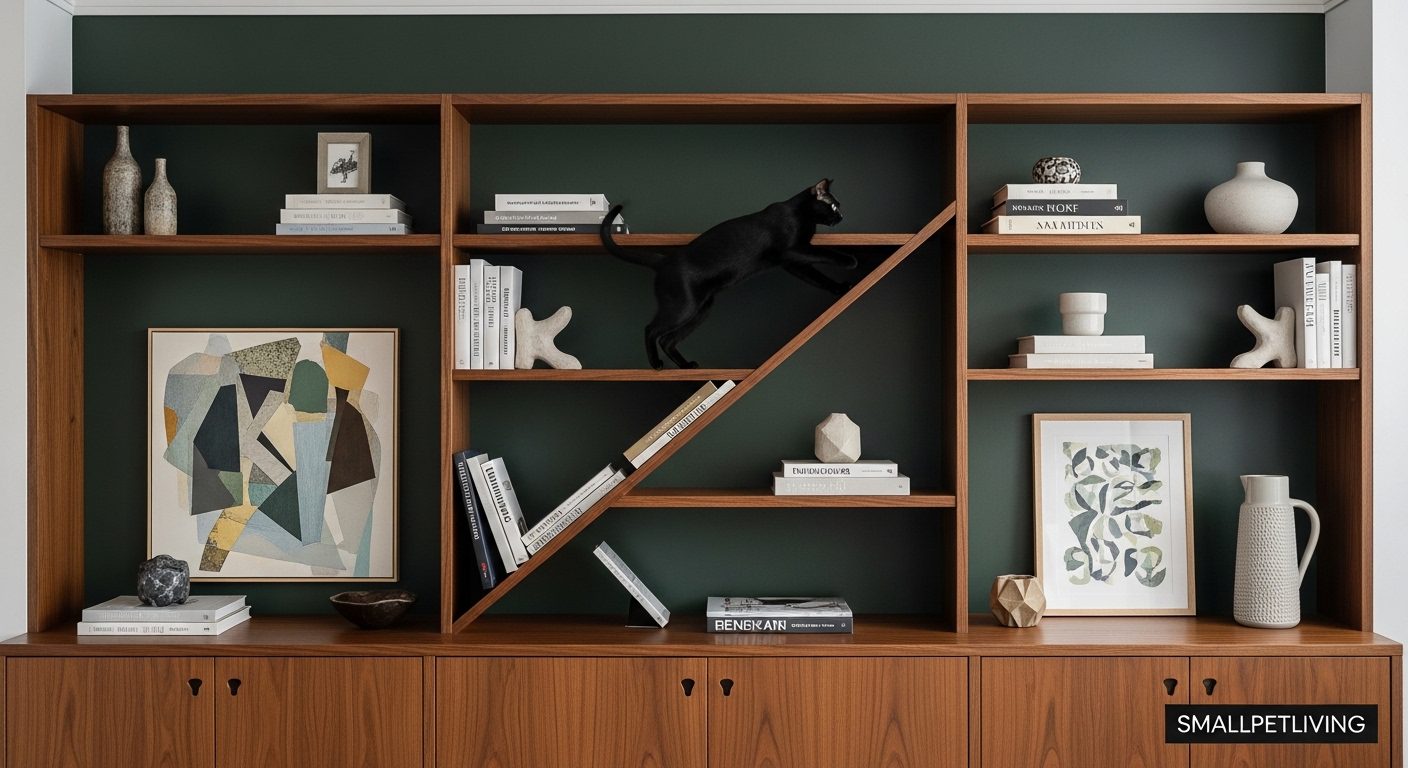
If you own high-end, modular shelving units (like a Vitsoe 606, a String Furniture system, or a custom built-in walnut bookcase), you can modify it to include feline pathways. Leave specific, staggered shelves entirely empty of books, vases, and fragile decor.
Line these designated “landing pads” with a minimalist, non-slip silicone or felt mat. Create a “staircase” effect by leaving these empty spaces in a zigzag pattern from the bottom to the top of the unit. Crucial Safety Note: You must ensure the bookcase is heavily anchored directly into the wall studs. A 15-pound cat leaping onto the top shelf generates significant kinetic force, which can easily tip an unanchored bookshelf, causing catastrophic damage.
5. The Suspended Fabric Hammock: Soft Geometric Accents
Modern minimalist apartments can sometimes feel too stark or cold due to an abundance of hard architectural lines, glass, and polished concrete. Contrasting these hard lines with soft, suspended fabrics adds necessary warmth and texture to the room.
The Aesthetic Suspension
Install wall-mounted cat hammocks utilizing heavy-duty cotton canvas, marine-grade linen, or sustainably sourced vegan leather, tightly suspended between two metal or wooden wall brackets. Choose fabric colors that directly complement your human furniture—like your sofa, throw pillows, or heavy curtains. A charcoal grey linen hammock suspended on matte black brackets looks like a deliberate, high-end design choice rather than a pet accessory. Because the fabric sags slightly under the cat’s weight, it cradles them perfectly, providing ergonomic support for deep, restorative sleep.
6. Spacing Engineering: The Biomechanics of the “Down Route”
The single biggest mistake amateur DIYers make when installing minimalist cat wall furniture is failing to calculate feline biomechanics. Cats are spectacular, powerful climbers when moving vertically upwards. However, due to the inward-curving shape of their claws, they are notoriously bad at climbing down.
The “Drop Zone” Rule Backed by Science
You must engineer a clear, easy descending route. According to the American Association of Feline Practitioners (AAFP), forcing a cat to jump straight down from significant heights repeatedly can cause severe orthopedic trauma, joint pain, and early-onset arthritis over the years.
Mathematical Spacing Instructions
- Vertical Ascending Gaps: The vertical distance between steps going up should not exceed 12 to 16 inches for an average adult cat.
- Horizontal Gaps: The lateral distance for horizontal jumping should be between 18 and 24 inches.
- The Descending Ramp: Ensure the shelves are spaced closer together on the way down, or ensure that the final “step down” lands on a soft, elevated surface, such as the back of your sofa, a designated upholstered ottoman, or a padded bench.
7. Professional Installation Protocols: Anchoring to Luxury Drywall
A falling shelf is a catastrophic event for both your cat’s physical safety and your expensive drywall. Proper, industrial-grade installation is non-negotiable when dealing with dynamic weight.
The Hardware Reality
In many modern high-rises and luxury developments, walls are constructed with metal studs (rather than traditional wood) or double-layered acoustic drywall designed for soundproofing. Standard plastic wall plugs are useless and dangerous in these environments.
Step-by-Step Elite Anchoring:
- Locate the Studs: Use a high-quality magnetic stud finder. You must anchor at least one side of every shelf bracket directly into a structural stud (wood or metal).
- Toggle Bolts for Drywall: If a shelf bracket falls between studs and must be anchored into hollow drywall, use heavy-duty metal “Toggle Bolts” (such as Snaptoggles). These expand flat and wide behind the drywall and can hold up to 100 lbs of dynamic, moving weight per bolt.
- Absolute Leveling: Use a professional laser level during installation. A shelf that tilts even slightly downward (a mere 2 degrees) will make your cat feel incredibly insecure, and their survival instincts will cause them to refuse to use the expensive furniture you just installed.
The Renters Dilemma: No-Drill Alternatives for Leased Apartments
If your lease strictly prohibits drilling heavy anchors into the walls, you can still achieve a minimalist aesthetic without losing your security deposit. Tension-mounted floor-to-ceiling poles offer a brilliant workaround. These sleek, minimalist poles (often made of brushed aluminum or painted steel) wedge tightly between the floor and the ceiling using a spring-loaded or screw-tension mechanism. You can then attach minimalist wooden steps or acrylic bowls directly to the pole. It creates a stunning, modern spiral staircase effect that requires zero drilling and leaves no trace when you move out.
Elevating Feline Architecture
Implementing minimalist cat wall furniture is the ultimate expression of sophisticated, mindful pet ownership. By abandoning the ugly, space-consuming carpet trees of the past, you reclaim your valuable floor real estate and elevate your home’s entire aesthetic profile. More importantly, you provide your feline companion with the crucial, stress-relieving vertical territory they biologically crave. Through smart engineering, transparent materials, and seamless architectural integration, your apartment remains a stunning showcase of urban design, while simultaneously serving as a high-performance, enriching sanctuary for your cat.
Frequently Asked Questions (FAQ)
Q: My cat is older and not very agile. Can I still use wall furniture? A: Absolutely. For senior cats, you simply adjust the engineering. Keep the maximum height lower (perhaps peaking at 3 to 4 feet) and reduce the jumping distance between shelves to a mere 8 inches. Creating a continuous “ramp” effect with grip tape, rather than a separated “staircase,” is ideal for aging joints and allows them to enjoy elevated views safely.
Q: How do I clean acrylic wall bowls without ruining them? A: Acrylic scratches very easily. Never use abrasive sponges or ammonia-based glass cleaners (like Windex), which will cause the plastic to turn permanently cloudy and brittle. Use a clean microfiber cloth and a specialized plastic polish, or simply warm water and mild dish soap. This gentle maintenance aligns with the safe cleaning protocols we discussed in our guide on how to keep an apartment from smelling like a cat.
Q: How do I get my cat to actually use the new wall furniture once it is installed? A: Never force a cat onto a high shelf. Instead, rely on positive reinforcement and scent association. Place their favorite high-value treats, or sprinkle a small amount of organic catnip, on the lowest shelves. Once they realize the shelves are stable and lead to a great, safe vantage point, their natural territorial instincts will take over, and they will begin to explore higher.
You Might Also Like
- How to Keep an Apartment From Smelling Like a Cat
- 7 Essential High-Rise Cat Safety Strategies
- How to Set Up a Cat-Friendly Studio Apartment
- 5 Reasons Your Apartment Cat Needs a Window Perch
About Smallpetliving
Smallpetliving is the premier digital resource for upscale urban pet ownership. We specialize in evidence-based strategies, high-end architectural pet gear, and behavioral protocols tailored for high-density, limited-space environments. Our mission is to ensure that city dwellers never have to choose between a sophisticated, meticulously designed home and the safety and well-being of their pets. We bridge the gap between elite metropolitan interior design and world-class animal welfare.