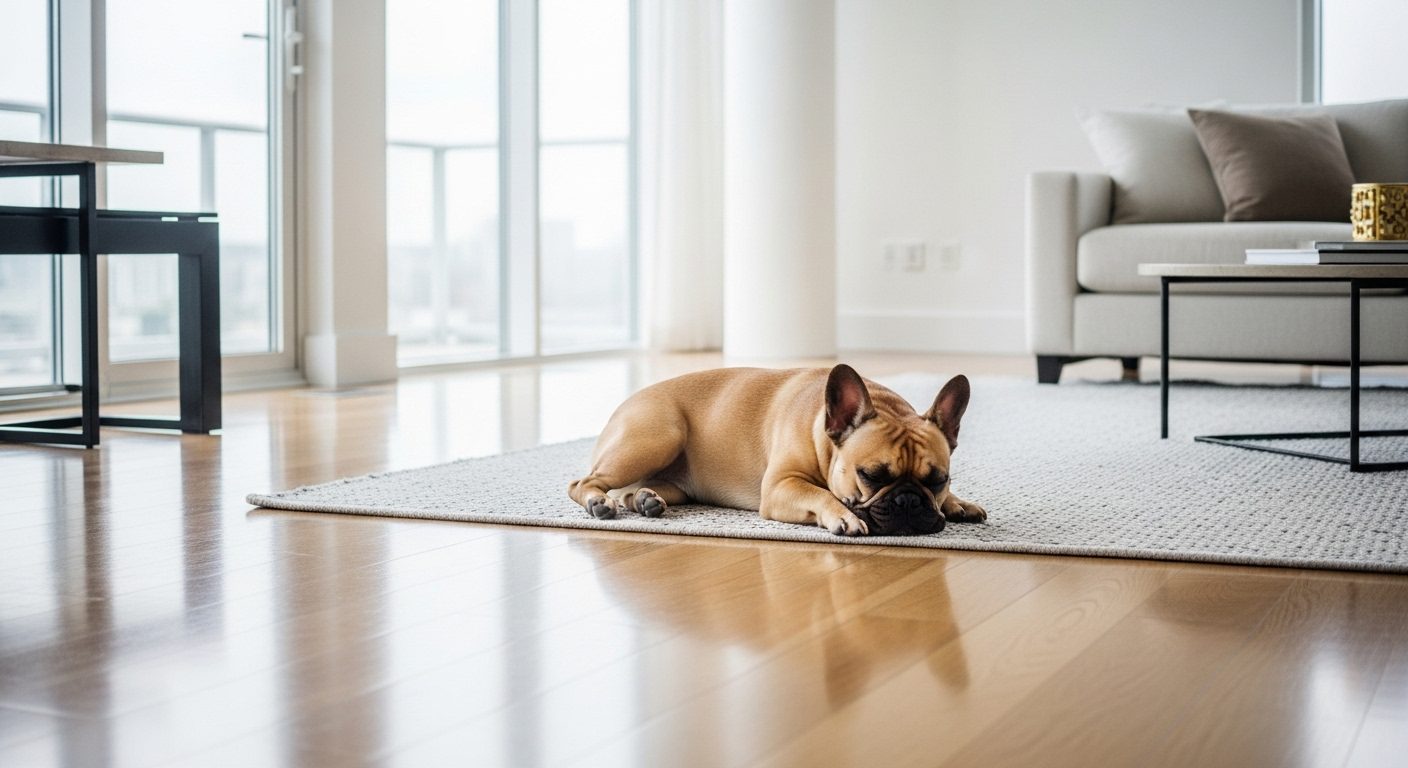
The aesthetic appeal of a luxury urban apartment often centers heavily on its flooring. Wide-plank French oak, polished concrete, and high-gloss luxury vinyl tile (LVT) are the hallmarks of modern metropolitan interior design. They are sleek, easy to sanitize, and visually expand the square footage of a compact space. However, what constitutes a beautiful architectural choice for a human is often a biomechanical nightmare for a canine companion.
For a dog, navigating a polished hardwood floor is the equivalent of a human attempting to run on an ice-skating rink while wearing smooth-soled dress shoes. If you want to maintain your pet’s mobility and avoid catastrophic veterinary bills, learning how to effectively protect dog joints on hardwood floors is absolutely essential.
At Smallpetliving, we believe that bridging the gap between high-end apartment aesthetics and animal welfare is the core of responsible urban pet ownership. The sight of a dog’s legs splaying out as they scramble to greet you at the door might seem comical in a brief viral video, but the reality is far more sinister. Every slip, slide, and uncontrolled stop creates micro-traumas within your dog’s skeletal system.
Over time, these daily impacts compound, leading to chronic pain and severe orthopedic injuries. This comprehensive, evidence-based guide will provide you with seven crucial strategies—ranging from architectural modifications to localized paw management—to ensure your luxury floors do not compromise your dog’s long-term health.
The Biomechanics of Slipping: Understanding the Danger
To fully grasp why we must proactively protect dog joints on hardwood floors, we must look at canine evolutionary anatomy. Unlike cats, which have fully retractable, inward-curving claws designed to grip surfaces, dogs have blunt, non-retractable nails. In nature, dogs rely on the rough texture of earth, grass, and gravel to provide friction against their textured paw pads, while their nails dig into the dirt for propulsion.
A polyurethane-coated hardwood floor provides zero friction for the paw pads and actively deflects the nails. When a dog slips on wood, the force is immediately transferred from the foot directly up into the major joints. According to orthopedic specialists at the American College of Veterinary Surgeons (ACVS), acute slipping is a primary catalyst for Cranial Cruciate Ligament (CCL) tears—the canine equivalent of an ACL tear in humans.
Furthermore, the constant muscular tension required just to stand up or walk slowly on a slick surface causes deep muscle fatigue and accelerates the progression of existing conditions like Hip Dysplasia and Patellar Luxation (floating kneecaps), particularly in popular apartment breeds like French Bulldogs, Yorkshire Terriers, and Pomeranians.
1. Strategic Textile Integration: The Washable Rug Revolution
The most immediate and structurally effective way to protect dog joints on hardwood floors is to introduce high-friction pathways throughout your apartment. However, we understand that you do not want to cover your expensive flooring with wall-to-wall carpeting.
The Landing Zone Protocol
Instead of carpeting the entire room, you must engineer “safe zones” in high-impact areas.
- The Sofa and Bed: Dogs frequently jump on and off furniture. The landing impact on bare hardwood is devastating to their front shoulders. Place a thick, textured rug directly beneath any furniture your dog is allowed to access.
- The Washable Mandate: In an apartment, hygiene is paramount. Invest in high-end, machine-washable rug systems (such as Ruggable). These systems feature a heavy-duty, non-slip rubber pad that grips the hardwood securely, covered by a stylish, easily removable top layer that can be tossed into your apartment’s washing machine to manage dander and odors.
2. Canine Podiatry: Advanced Paw Pad Management
If the environment cannot be fully carpeted, you must modify the dog’s primary point of contact: their paws. Excess fur growing between the toes acts like a built-in pair of slippery wool socks.
The Friction Optimization Routine
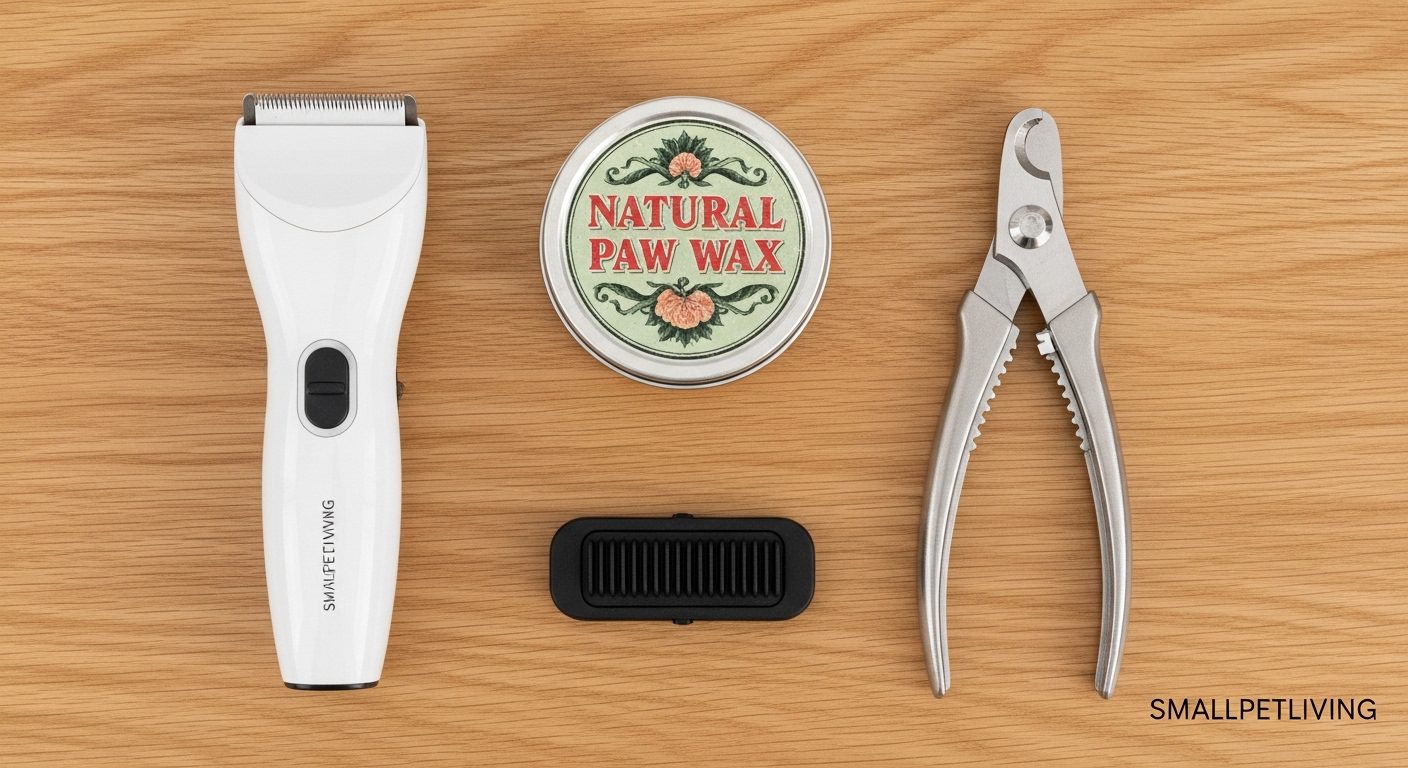
- Strategic Trimming: Invest in a small, quiet, battery-operated pet trimmer. Every two weeks, carefully shave the excess hair growing between your dog’s paw pads so that the textured, rubbery skin of the pad makes direct contact with the floor.
- Hydration and Waxes: Dry, cracked paw pads lose their natural grip. Apply a high-quality, pet-safe paw wax (like Musher’s Secret) once a week. This creates a semi-tacky, breathable barrier that significantly increases traction on slick surfaces without staining your expensive flooring or leaving sticky residues.
3. Orthopedic Grips: The “ToeGrip” Solution
Many pet owners attempt to use rubberized dog socks or booties indoors to protect dog joints on hardwood floors. However, dogs regulate their body temperature primarily through their paw pads; covering them constantly in a warm apartment can lead to overheating and distress. Furthermore, socks tend to twist around, putting the non-slip grip on top of the foot.
The Targeted Alternative
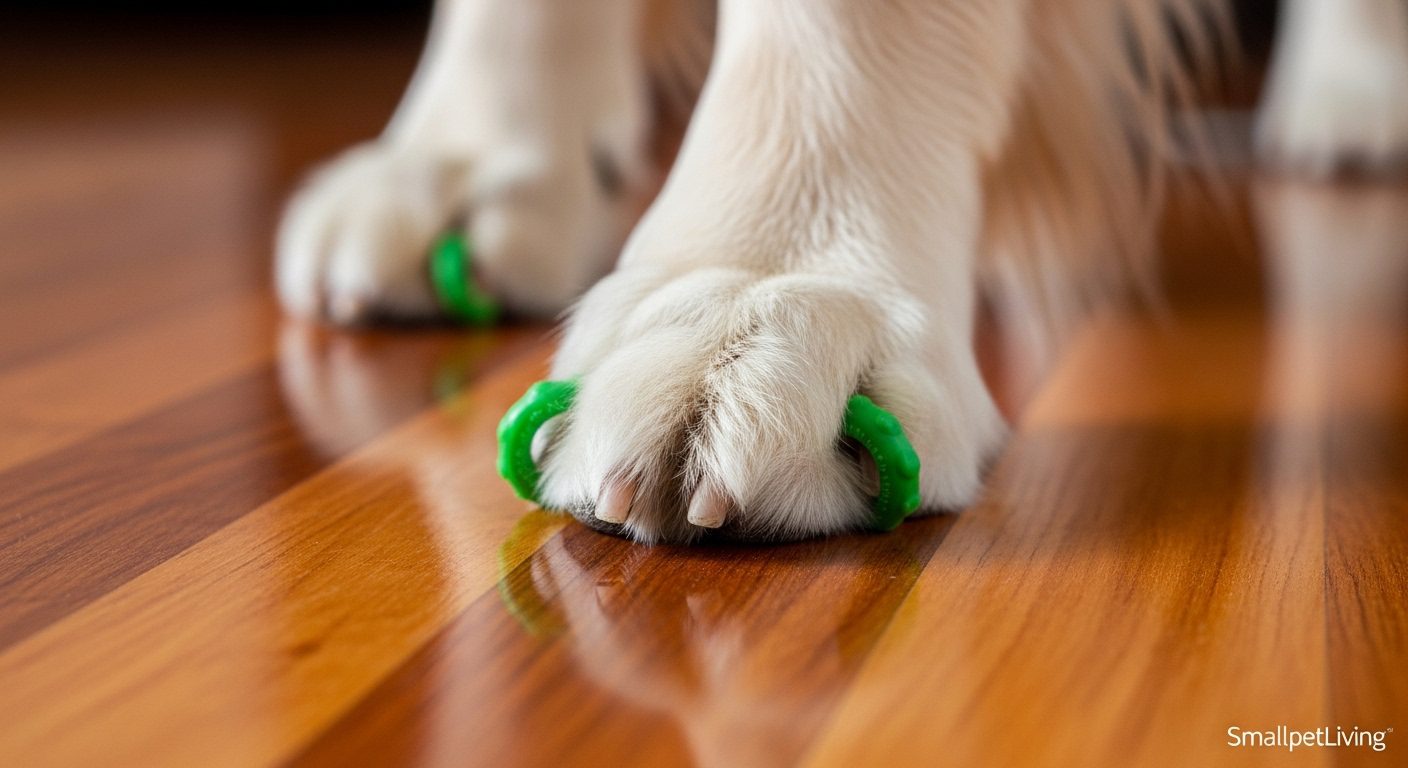
Veterinary medicine has introduced a brilliant alternative: rubberized nail grips (such as Dr. Buzby’s ToeGrips). These are tiny, heavy-duty natural rubber cylinders that slide directly onto the dog’s toenails.
- The Mechanics: When the dog walks and their nail touches the hardwood, the rubber cylinder grips the floor instantly, providing the traction that the slick wood denies. They are virtually invisible, do not interfere with the dog’s natural gait, and allow the paw pads to breathe normally.
4. Vertical Space Management: Ramps Over Stairs
As discussed in our broader guides on apartment dog management, vertical space is a challenge. Jumping off a mattress or a high sofa onto a hard surface generates a kinetic impact equal to several times the dog’s body weight. This is the exact moment when CCL tears and spinal disc herniations (IVDD) occur, especially in long-backed breeds like Dachshunds and Corgis.
Implementing the Descent Ramp
To effectively protect dog joints on hardwood floors, you must eliminate the jump entirely.
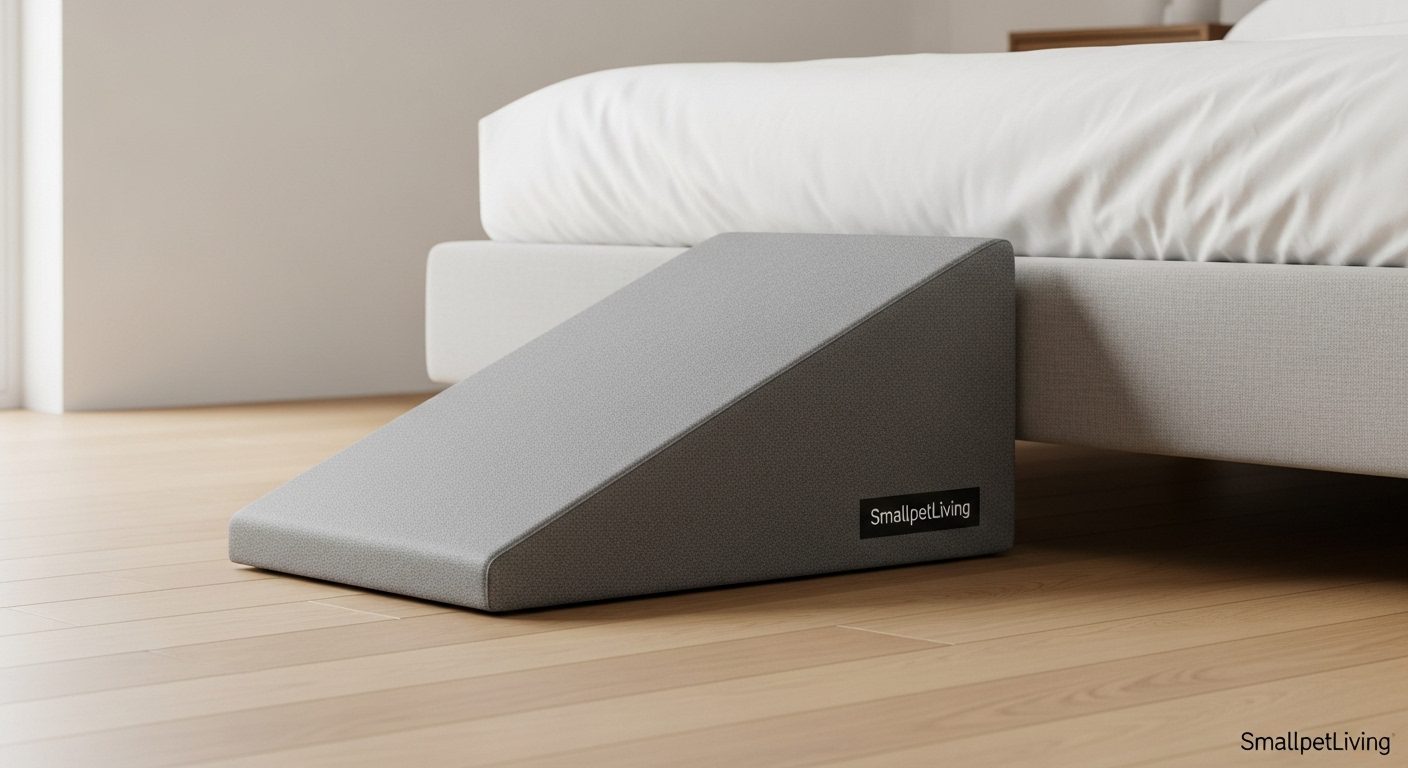
- Ramps vs. Stairs: While pet stairs are popular, ramps are vastly superior for joint health. Stairs still require the dog to absorb impact on each step downward. A high-density foam ramp, covered in a high-traction microfiber fabric, allows the dog to smoothly slide down from the bed to the floor without any sudden jolts to their skeletal system. Ensure the ramp has a gentle incline (no steeper than 18 to 25 degrees) to prevent them from simply running down it too fast.
5. The “Click Test”: Strict Nail Trimming Protocols
The length of your dog’s nails directly dictates their posture and their ability to grip the floor. If you can hear a distinct “click-click-click” when your dog walks across the living room, their nails are far too long.
Postural Distortion
Long nails hit the hardwood before the paw pad does. Because the nail cannot grip the wood, it pushes the dog’s toes upward. This unnatural angle forces the dog to shift their weight backward onto their heels, fundamentally altering their skeletal alignment and placing intense, chronic strain on their hips and spine.
- The Solution: To properly protect dog joints on hardwood floors, nails must be trimmed or filed with a rotary grinder (like a Dremel) every 10 to 14 days. The nail should hover just millimeters above the floor when the dog is standing naturally, allowing the fleshy paw pad to do its job of providing traction.
6. Chondroprotective Supplementation: Building Internal Armor
While modifying the apartment environment is crucial, you must also fortify the dog’s internal structure. When a slip inevitably happens, a joint surrounded by healthy, robust cartilage can absorb the shock far better than a degraded, arthritic joint.
The Medical Defense
Consult your veterinarian about integrating high-end chondroprotective supplements into their daily routine.
- The Ingredients: Look for clinically backed formulations containing high levels of Glucosamine Hydrochloride, Chondroitin Sulfate, MSM, and Omega-3 fatty acids (specifically from wild salmon or green-lipped mussels). These compounds actively reduce joint inflammation, increase synovial fluid viscosity (the “oil” in the joints), and help repair micro-damage caused by daily life on hard surfaces.
7. Weight Management: The Ultimate Joint Saver
Perhaps the most overlooked strategy to protect dog joints on hardwood floors in an urban environment is weight management. In a small apartment without a backyard, dogs burn fewer baseline calories.
The Physics of Obesity
Every single pound of excess body fat places exponentially more strain on a dog’s joints, ligaments, and tendons. If an overweight dog slips on a hardwood floor, the kinetic force pulling their knee joint laterally is massive, almost guaranteeing a tear.
- The Urban Diet: You must strictly measure their daily caloric intake. Ditch the “free-feeding” bowl and transition to puzzle feeders that slow down their eating and burn mental energy. Keeping your dog lean and heavily muscled is the greatest orthopedic insurance policy you can provide.
Engineering a Safe Urban Habitat
Learning how to protect dog joints on hardwood floors requires a shift from reactive care to proactive architectural engineering. By acknowledging that a luxury urban apartment is an unnatural biomechanical environment for a canine, you can take the necessary steps to safeguard their mobility. Through the strategic placement of high-friction washable rugs, diligent paw pad maintenance, the implementation of descent ramps, and strict weight management, you neutralize the daily micro-traumas associated with city living. You do not have to sacrifice the elegance of your home to provide a safe habitat. With the right tools and veterinary foresight, your dog will navigate your apartment with confidence, comfort, and lasting orthopedic health.
Frequently Asked Questions (FAQ)
Q: Are certain hardwood floor finishes less slippery for dogs? A: Yes. High-gloss polyurethane finishes are the most dangerous. If you own the apartment and are renovating, opt for “wire-brushed,” “hand-scraped,” or matte-finish engineered hardwoods. These textures provide microscopic grooves that offer slightly more resistance for a dog’s paw pads compared to a glass-like glossy finish.
Q: Can I use human anti-slip sprays on my hardwood floors to help my dog? A: It is generally not recommended. Many commercial anti-slip sprays designed for humans leave a sticky, chemical residue that can ruin the finish of expensive luxury flooring. Furthermore, dogs lick their paws constantly; ingesting these industrial chemicals can lead to severe gastrointestinal toxicity. Stick to modifying the dog’s paws or using rugs.
Q: My dog hates having their paws touched. How can I apply paw wax or trim the hair? A: Desensitization is key. Start by simply touching their paw for one second while offering a high-value treat (like peanut butter on a lick mat). Over weeks, gradually increase the duration. If trimming with scissors is too dangerous because they kick, use a quiet, vibrating beard trimmer. If all else fails, have your groomer perform a “pad shave” every month.
Q: Are dog socks with rubber grips safe to leave on while I am at work? A: No. Dogs sweat and regulate their body heat through their paw pads. Leaving tight socks on for 8 to 10 hours in a climate-controlled apartment can cause them to overheat, and the trapped moisture can lead to severe yeast infections between their toes. Only use socks for short, supervised periods.
Q: How do I know if my dog has already injured their joint from slipping? A: Dogs are stoic and hide pain well. Look for subtle signs: a reluctance to jump onto the sofa, a slight “bunny hop” when running, licking their wrists or knees obsessively, or a localized clicking sound when they walk. A torn CCL often presents as the dog holding one hind leg completely off the floor (“toe-touching”). Immediate veterinary x-rays are required.
Q: What is the difference between Glucosamine and Omega-3 supplements for my dog? A: Glucosamine and Chondroitin serve as the literal building blocks to repair and maintain the cartilage matrix inside the joint. Omega-3 fatty acids (EPA and DHA) are potent natural anti-inflammatories that reduce the swelling and pain in the joint capsule. For maximum orthopedic protection, they should be used together.
Q: Do puppy pads make the floor more slippery? A: Yes, the plastic backing on standard puppy pads offers zero traction on hardwood floors. If a puppy runs onto a pad, it will slide like a surfboard, causing a dangerous crash. Always place a silicone, non-slip tray underneath your indoor grass pads or puppy training mats to anchor them securely to the floor.
Q: Are stairs or ramps better for small dogs in apartments? A: Ramps are unconditionally better for orthopedic health. Stairs, even small pet stairs, require the dog to absorb concussive impact on their front elbows and shoulders with every downward step. A ramp allows for a smooth, sliding descent that distributes the force evenly, making it critical for breeds prone to spinal issues like Dachshunds and French Bulldogs.
You Might Also Like
- 7 Lifesaving Strategies for Apartment Pet Emergency Evacuation
- 7 Proven Ways to Calm Apartment Cat Separation Anxiety
- 7 Best Low-Shedding Dog Breeds for Apartments
About Smallpetliving
Smallpetliving is the premier digital authority for high-end urban pet ownership. We specialize in providing evidence-based safety strategies, architectural-friendly gear, and advanced management protocols tailored specifically for high-density, high-rise environments. Our mission is to bridge the gap between luxury metropolitan interior design and world-class animal welfare, ensuring your pet enjoys a long, healthy, and uncompromising life in the city.