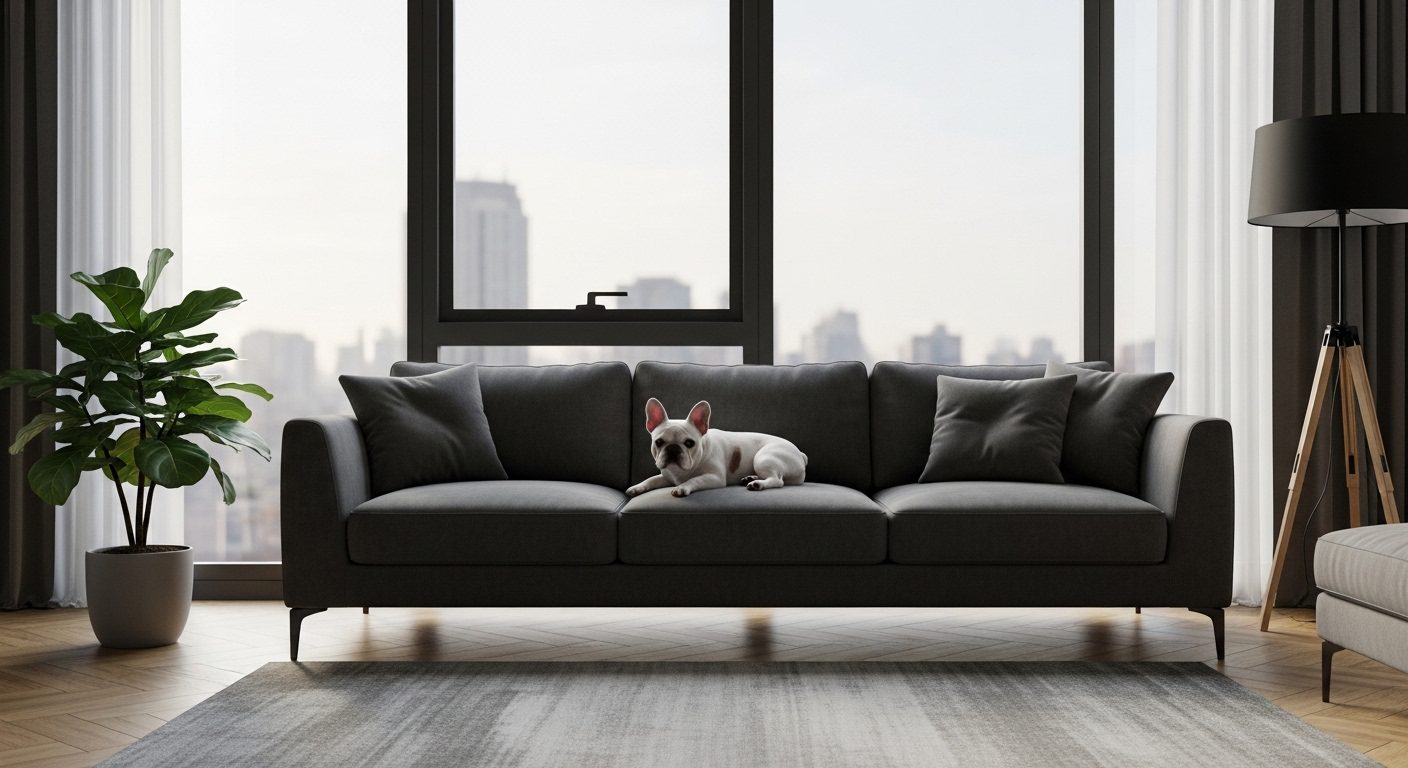
Living in a high-rise apartment or a compact urban studio presents a unique set of challenges for pet ownership. The most common misconception among new owners is that a dog’s suitability for small spaces is determined solely by its physical size. In reality, a dog’s energy drive and barking tendencies are the true metrics of apartment compatibility.
Choosing a high-energy breed for a confined space often leads to “kennel stress,” destructive behavior, and noise complaints from neighbors. To thrive in the “Smallpetliving” lifestyle, you must prioritize breeds that are genetically predisposed to a sedentary lifestyle. This guide explores the top 10 low-energy small dog breeds for apartments, backed by temperament data and urban living requirements.
The Science of Low-Energy Breeds
According to canine behaviorists and organizations like the American Kennel Club (AKC), energy levels are a byproduct of a breed’s historical purpose. Terriers were bred to hunt and dig, making them naturally high-strung. In contrast, “companion breeds” were specifically developed to sit on laps and provide calm company.
For an apartment to remain a sanctuary, you need a breed with a low “reactivity threshold.” This means the dog doesn’t bark at every footstep in the hallway or pacing in the unit above. High-density living requires a pet that views your sofa as its primary kingdom.
Top 10 Low-Energy Breeds for Small Spaces
1. The French Bulldog
The French Bulldog is the undisputed king of apartment dogs. Because they are brachycephalic (flat-faced), they are physically incapable of sustained high-intensity exercise. Their thick, sturdy frames are designed for lounging rather than leaping.
- Apartment Advantage: They are famously “quiet” dogs, rarely barking unless there is a significant reason.
2. Cavalier King Charles Spaniel
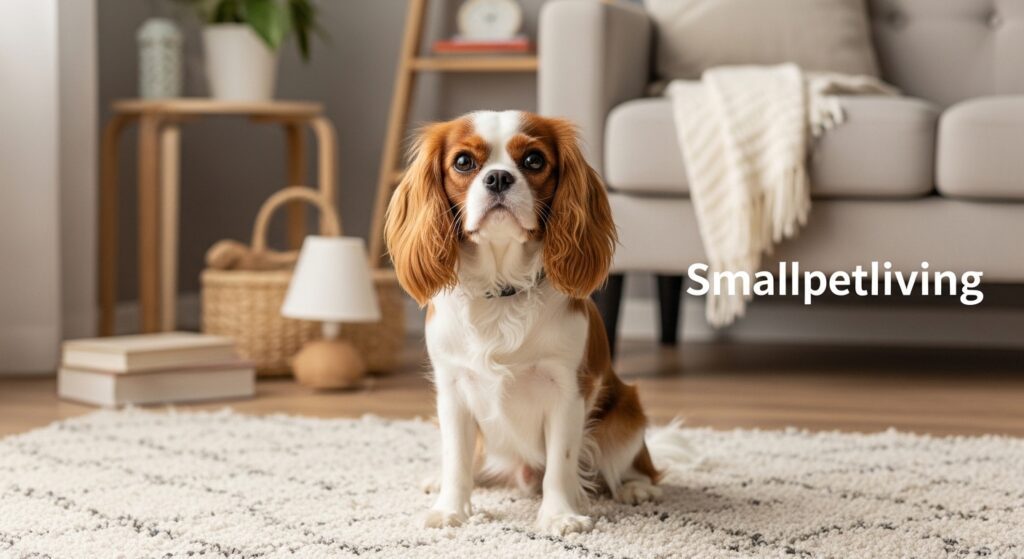
This breed was designed for royalty, specifically to be lap warmers. The Cavalier is an “adaptable” energy dog. If you take them for a walk, they are happy; if you stay on the couch for eight hours, they are even happier.
- Apartment Advantage: Their desire for human proximity makes them less likely to suffer from separation anxiety in small quarters.
3. The Pug
Pugs are essentially small comedians who sleep 14 hours a day. While they have short bursts of energy (the “Pug Zoomies”), these usually last less than five minutes and require very little floor space.
- Apartment Advantage: Their exercise needs can be met entirely indoors through light play.
4. Pekingese
Bred for ancient Chinese royalty, the Pekingese behaves with a level of dignity that is perfect for a quiet flat. They are independent and highly sedentary.
- Apartment Advantage: They are naturally “homebodies” and don’t feel the urge to explore large territories.
5. Shih Tzu
The Shih Tzu’s name means “Little Lion,” but they are anything but fierce. They were bred solely to be companions. Unlike working breeds, they have zero hunting drive.
- Apartment Advantage: They are remarkably affectionate and content with the boundaries of a studio apartment.
6. Japanese Chin
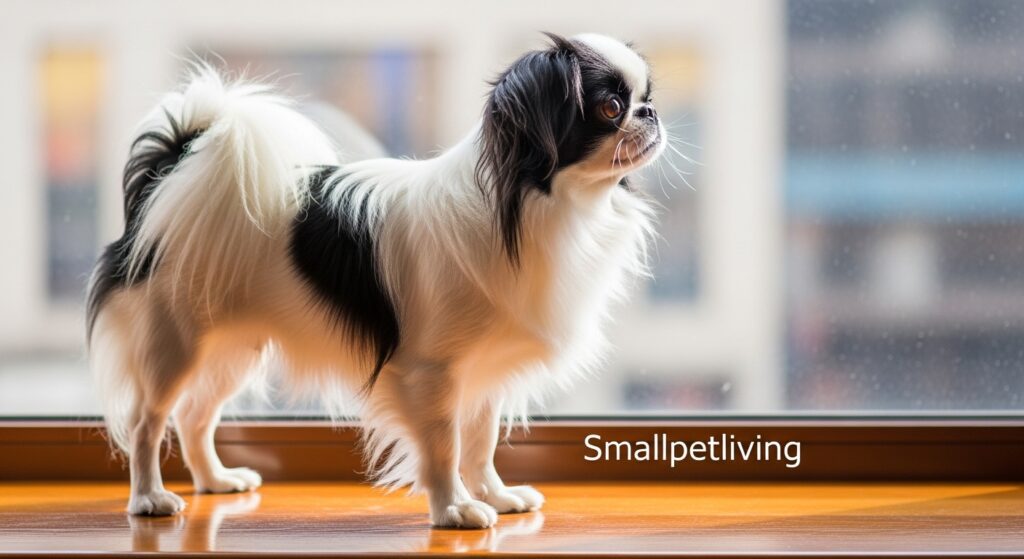
The Japanese Chin is often described as “cat-like.” They are known for climbing to the highest point of a sofa and cleaning themselves quietly. They move with grace and rarely knock over apartment decor.
- Apartment Advantage: One of the quietest breeds in existence, perfect for buildings with paper-thin walls.
7. Havanese
While the Havanese is social and cheerful, their energy is easily managed. They are small enough that a game of “fetch” in a hallway provides a full day’s workout.
- Apartment Advantage: They are highly trainable, allowing you to manage their behavior in shared spaces like elevators.
8. Maltese
The Maltese is an elegant choice for the urbanite. They are low-shedding, which helps maintain hygiene in small spaces, and they possess a naturally calm indoor demeanor.
- Apartment Advantage: Their compact size makes them easy to transport in pet carriers through busy city streets.
9. Bolognese
Often confused with the Bichon Frise, the Bolognese is much more serious and far less hyperactive. They are devoted to their owners and prefer a slow-paced life.
- Apartment Advantage: They are not prone to the “yappiness” often associated with small white dogs.
10. Affenpinscher
Known as the “Monkey Dog” due to their facial expressions, the Affenpinscher is surprisingly laid back for a dog of its appearance. They are sturdy, quiet, and content with short city walks.
- Apartment Advantage: Their brave yet calm nature makes them excellent companions for those living alone in large cities.
Essential Gear for Calm Apartment Dogs
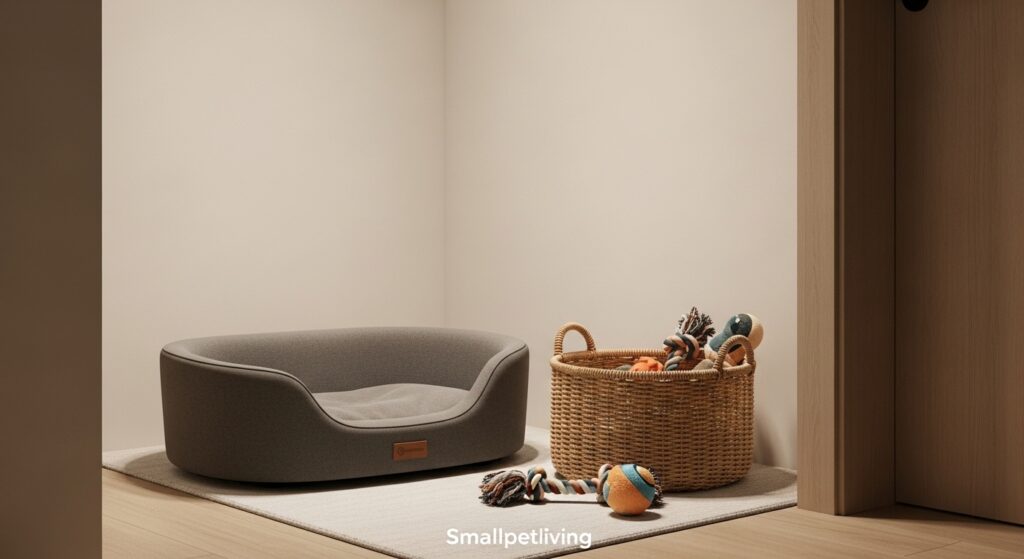
Even the most sedentary dog needs a structured environment to maintain its mental health. When living in a confined space, your gear should focus on maximizing comfort without creating clutter.
| Breed | Activity Level | Barking Tendency | Best Feature |
|---|---|---|---|
| French Bulldog | Very Low | Quiet | Extremely docile |
| Cavalier King Charles | Low | Moderate | Affectionate lap dog |
| Japanese Chin | Sedentary | Very Low | Cat-like grace |
| Pug | Low | Low | Minimal space needs |
| Shih Tzu | Very Low | Moderate | Zero hunting drive |
Recommended Setup:
- Orthopedic Bedding: Since low-energy dogs spend more time resting, a high-quality bed is vital for joint health.
- Scent Mats (Snuffle Mats): For breeds that can’t walk long distances, 10 minutes of “scent work” provides the same mental exhaustion as a long hike.
Optimizing Small Spaces for Dog Mental Health
A low-energy dog doesn’t mean a “no-effort” dog. To prevent your pet from becoming restless in a studio or one-bedroom flat, consider these urban-specific strategies:
- Vertical Enrichment: Use furniture that allows your dog (if safe for their joints) to look out a window. This provides “passive stimulation.”
- Sound Conditioning: Apartments are full of strange noises. Using a white noise machine can help a quiet dog remain calm when neighbors are in the hallway.
- Routine Consistency: Small dogs thrive on predictability. Consistent potty and feeding times reduce the anxiety that leads to vocalization.
For more specific tips on setting up your space, see our previous guide on How to Set Up a Cat-Friendly Studio Apartment, as many of the zoning principles apply to dogs as well.
Matching Your Lifestyle to the Right Breed
Selecting from the best low-energy small dog breeds for apartments is the foundation of a successful urban life. By prioritizing temperament and energy levels over aesthetics, you ensure a harmonious environment for both you and your neighbors. Remember, a dog doesn’t need a backyard to be happy; they simply need a space that respects their biological needs and a companion who understands the nuances of city living.
About Smallpetliving
Smallpetliving is the premier digital resource for pet owners navigating the complexities of high-density urban environments. We specialize in evidence-based advice for maximizing the well-being of animals in small spaces, ensuring that modern city living and pet ownership can coexist beautifully.