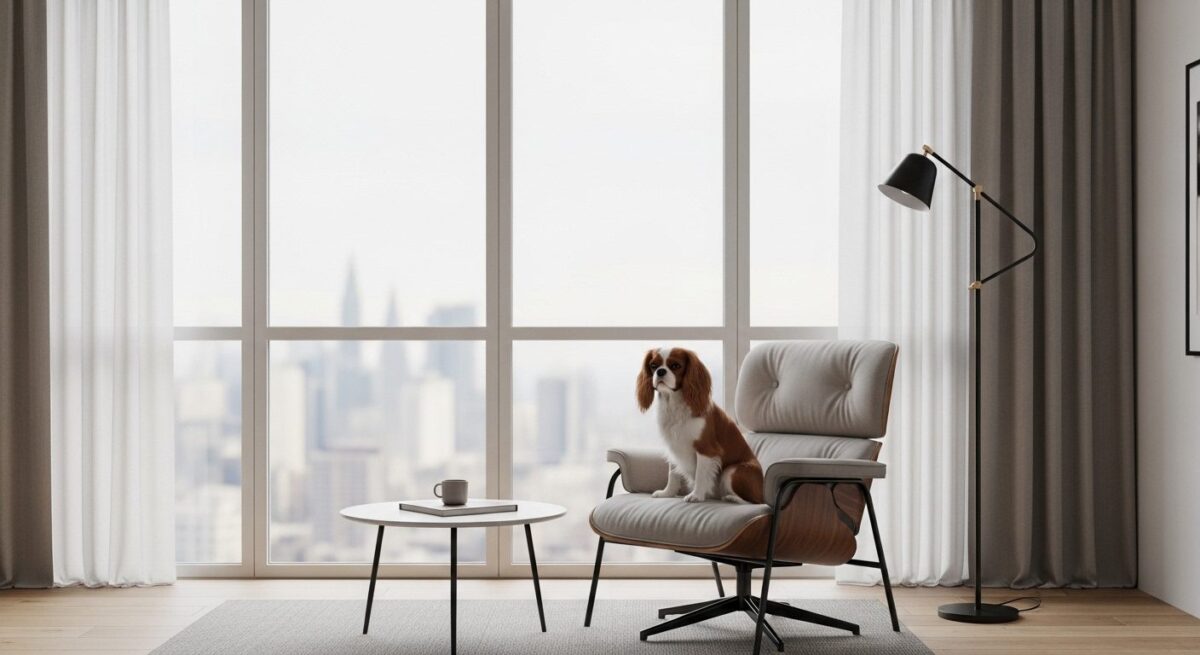
Implementing effective anti-bark training for apartment dogs is the single most important step for maintaining a peaceful urban lifestyle. For a city dog owner, the sound of a sudden, sharp bark isn’t just a noise—it’s a spike in cortisol that echoes through thin walls. In the delicate ecosystem of high-density living, where only a few inches of drywall or a shared ventilation duct separates your living room from your neighbor’s home office, a vocal pet is more than a nuisance; it is a liability. Persistent barking can lead to strained neighborly relations, hefty homeowners association (HOA) fines, or even the devastating threat of an eviction notice.
However, at Smallpetliving, we believe that a quiet dog is not a “suppressed” dog, but a confident and settled one. Excessive barking in apartments is rarely an act of defiance; it is almost always a reaction to environmental stimuli, boredom, or underlying anxiety. By mastering anti-bark training for apartment dogs, you are not just silencing a sound—you are teaching your pet how to navigate the complex acoustic landscape of the city with calm and composure.
The Science of Urban Barking: Why Apartments are Different
In a suburban home, a dog might bark at a squirrel 50 feet away in the backyard. In an apartment, the triggers are much closer and more invasive. The muffled “thud” of footsteps from the unit above, the mechanical chime of the elevator, or the distorted echoes of voices in a shared hallway are all perceived as immediate territorial threats.
According to behavioral research from the American Kennel Club (AKC), dogs in high-rise environments suffer from “stimulus stacking.” This occurs when multiple minor stressors—a delivery person at 10 AM, a neighbor vacuuming at 11 AM, and a siren at noon—accumulate until the dog reaches a threshold where they can no longer remain calm. Effective training must address this accumulation by lowering the dog’s overall arousal levels.
7 Strategies for a Harmonious, Quiet Apartment
1. The Hallway Counter-Conditioning Protocol
This is the single most effective tool for “Alert Barking.” We want to physically re-wire your dog’s brain to view hallway noises as a positive signal rather than a threat.
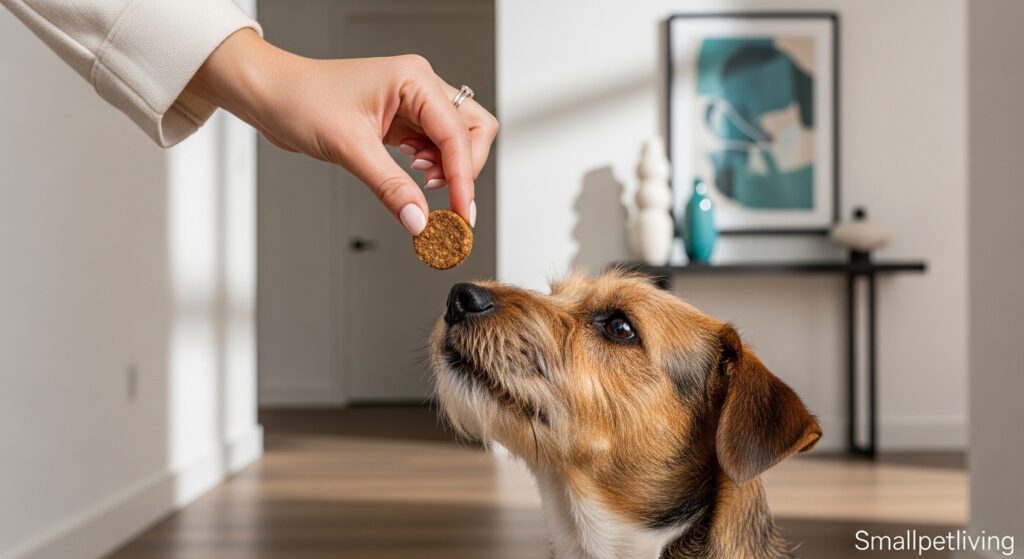
- The Technique: You must catch the dog in the “anticipation window”—the two seconds after they hear a noise but before they bark. The moment a hallway noise occurs, toss a high-value treat (like freeze-dried liver) on their bed.
- The Goal: You are shifting the dog’s emotional state from “Defense Mode” to “Reward Mode.” Eventually, when they hear the elevator ding, they will look at you for a treat instead of rushing the door.
2. Acoustic Management and Sound Masking
In a silent apartment, every pin drop is a trigger. To reduce barking, you must raise the “ambient floor” of the home.
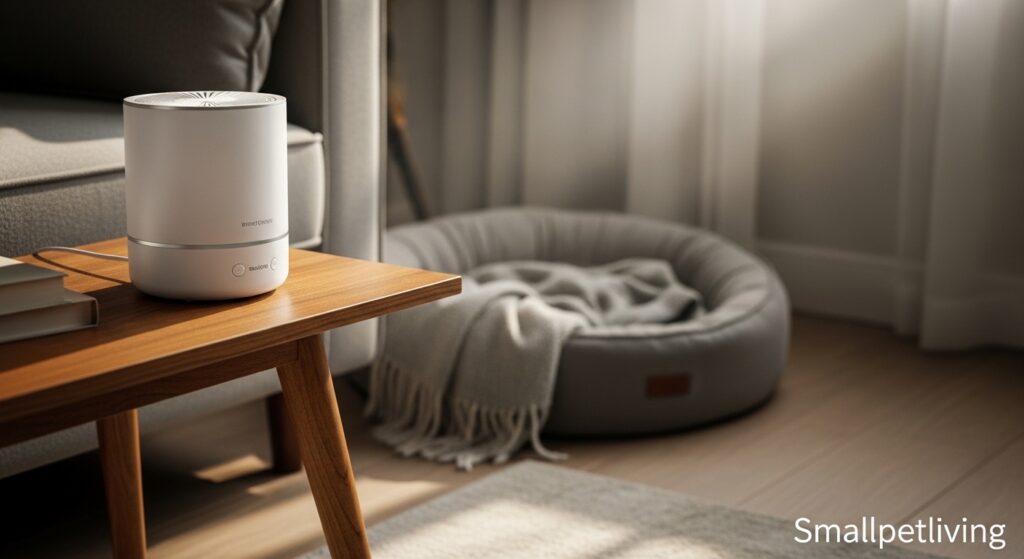
- The Solution: Place a high-quality white noise machine or a heavy-duty box fan near the front door or the wall shared with the hallway.
- Pro Tip: Research suggests that classical music or “bio-acoustic” music specifically designed for dogs can lower heart rates and reduce vocalizations by up to 70% in confined spaces.
3. Visual Desensitization (The “Out of Sight” Rule)
Many apartment dogs are “visual barkers.” They react to shadows moving under the door or reflections in the window.
- The Solution: Install frosted privacy film on the lower half of windows so the dog can see the sky but not the pedestrians. For the front door, use a heavy “draft stopper” to block the view of moving feet in the hallway. If they can’t see the trigger, the stimulus stack is significantly reduced.
4. The “Speak” and “Quiet” Command Loop
Teaching a dog to bark on command is the most effective way to teach them to stop. It provides a structured “off switch.”
- The Steps: First, trigger a bark (a knock on a table works well) and label it “Speak.” While the dog is barking, show them a high-value treat. The moment they stop barking to sniff the treat, say “Quiet.”
- Professional Insight: Reward the duration of the silence. Start with 2 seconds of quiet, then 5, then 10. This builds “vocal impulse control.”
5. High-Intensity Mental Fatigue (Scent Work)
A tired dog is a quiet dog, but physical exercise isn’t always enough in an apartment. Mental fatigue is more effective at preventing “boredom barking.”
- The Activity: Engagement toys like snuffle mats or “frozen” slow-feeders require intense focus. 15 minutes of scent work is neurologically equivalent to an hour of walking. When a dog’s brain is tired, their reactive threshold for barking is significantly higher.
6. Creating a “Safe Zone” Sanctuary
Dogs often bark because they feel the need to patrol the entire apartment. By restricting their access to the “entry zone” during high-traffic hours, you reduce their stress.
- The Setup: Use a pressure-mounted baby gate to keep the dog in a quiet bedroom or den away from the front door during the day. Fill this “Safe Zone” with comforting scents and their favorite bed.
7. Data-Driven Monitoring (The Tech Advantage)
You cannot fix what you cannot measure. Most apartment owners are unaware of how much their dog barks while they are at work.
- The Tool: Use a pet camera with “Barking Alerts.” This allows you to track the exact time of the triggers. Does your dog bark at the noon mail delivery? Or when the neighbor comes home at 5 PM? Knowing the “when” allows you to schedule your training sessions or white noise timers more effectively.
The Neighbor Liaison: Managing Your Reputation
In an apartment, your neighbor’s patience is your most valuable asset. If your dog is in training, be proactive:
- The Note: Leave a friendly note for your immediate neighbors. Explain that you are working with a trainer and provide your phone number.
- The Peace Offering: A small gift or a coffee card goes a long way in buying you the 4-6 weeks of time needed for the training to fully take hold.

Silence Through Confidence
Mastering anti-bark training for apartment dogs isn’t about silencing your dog’s personality; it’s about providing them with the tools to feel safe in a noisy, crowded environment. When a dog understands that the hallway noises are irrelevant, their stress levels drop, and your apartment finally becomes the quiet sanctuary you both deserve.
Frequently Asked Questions (FAQ)
Q: Will my dog bark more because the apartment is small? A: No. Square footage is rarely the cause of barking. The proximity to shared walls and hallways is the trigger. A dog in a 500 sq. ft. studio can be just as quiet as a dog in a mansion if they feel secure in their environment.
Q: Is a “Bark Collar” a good idea for apartment living? A: At Smallpetliving, we advise against shock or vibration collars for alert barking. These devices often increase a dog’s anxiety, confirming their belief that the hallway noises are “scary” because they result in a physical correction.
Q: My dog only barks when I leave. Is that alert barking? A: No, that is likely separation anxiety. This requires a different protocol involving “gradual departures” and desensitization to your keys and coat.
Q: How do I stop my dog from barking at the balcony window? A: Use “Window Film” to block the direct line of sight to moving objects below, and ensure the dog has a comfortable “den” away from the window where they can retreat.
Q: Can white noise really make that much of a difference? A: Yes. It smooths out the “spikes” in sound. A dog’s hearing is significantly more sensitive than ours; white noise helps blend the neighbor’s door slam into a constant, non-threatening hum.
You Might Also Like
- 10 Best Low-Energy Small Dog Breeds for Apartments
- 5 Best Indoor Grass Pads for Apartment Dogs
- 7 Best Low-Shedding Dog Breeds for Apartments: The Ultimate Clean Home Guide
- 7 Best Small Dog Accessories for Tight Spaces: The Essential Minimalist Guide
About Smallpetliving
Smallpetliving is the ultimate resource for high-end urban pet ownership. We curate expert advice and product recommendations designed to help pets thrive in modern, limited-space environments.