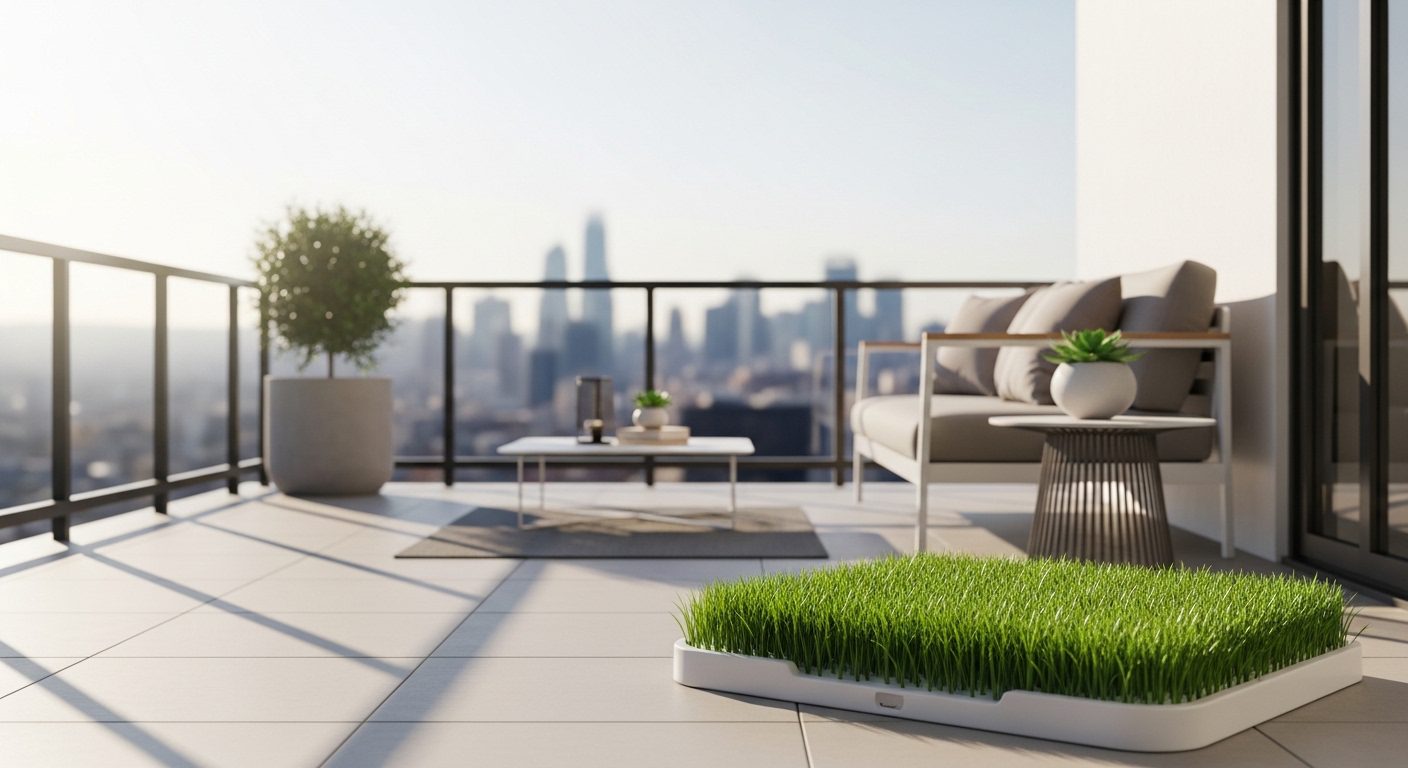
For the modern urban pet owner living in high-density cities like New York, Chicago, or San Francisco, the logistics of a simple “potty break” can be surprisingly complex. Living in a high-rise building or a compact studio means that every trip outside involves elevators, long hallway encounters, and the unpredictability of city weather. Whether you are dealing with a senior dog with limited mobility, a young puppy in the middle of housebreaking, or a grueling professional schedule that keeps you away from home, the traditional outdoor routine isn’t always feasible. This has made indoor grass pads for apartment dogs a mandatory tool for maintaining a harmonious home.
However, the primary barrier for most owners is the “smell factor.” In a small space, a poorly managed potty area can quickly compromise your apartment’s air quality, leading to lingering ammonia scents that are impossible to ignore. To thrive in the Smallpetliving lifestyle, you need more than just a place for your dog to go; you need a high-performance system engineered to kill odors, manage moisture, and integrate seamlessly into your modern interior design.
The Science of Odor Management in Small Spaces
To solve the problem of indoor odors, we must first understand the chemistry behind them. The distinct, pungent smell associated with dog waste is primarily caused by the breakdown of urea into ammonia. This process, known as urea hydrolysis, is driven by urease-producing bacteria found in the environment. In a confined apartment, these gases accumulate rapidly.
Traditional plastic pee pads are often the worst offenders. While they absorb liquid, they do nothing to neutralize the pH of the urine. The liquid sits inside the synthetic fibers, allowing ammonia gas to volatilize and fill your room. High-quality indoor grass pads for apartment dogs utilize superior methods to combat this:
- Biological Neutralization: Real sod (living grass) contains natural microbes and soil elements that actively break down urea. The grass literally “eats” the nitrogen, using it as a fertilizer while neutralizing the scent at a molecular level.
- Mechanical Encapsulation: Synthetic systems use sloped drainage and specialized enzymatic powders or gel-pods that turn liquid into an odorless solid, trapping the gasses before they circulate.
According to veterinary hygiene protocols published by experts at PetMD, maintaining a clean indoor potty area is not just about convenience—it is essential for preventing respiratory irritation in both pets and humans living in high-rise environments.
Detailed Reviews: The 5 Best Indoor Grass Systems for US Apartments
1. Fresh Patch: The Hydroponic Gold Standard
Fresh Patch is the pioneer of the real-grass movement in the US. Unlike typical sod from a local garden center which contains heavy dirt and bugs, this grass is grown hydroponically.
- Performance: The living grass acts as a natural carbon filter. It absorbs odors effortlessly, and since it is dirt-free, it doesn’t track mud across your hardwood floors.
- The Apartment Fit: It comes in a fully recyclable cardboard tray. Every two to four weeks, you simply roll up the old patch and replace it with a fresh one. It is the ultimate “set it and forget it” hygiene solution.
2. PetSafe Pet Loo: The Engineering Leader
For owners who prefer a one-time investment over a monthly subscription, the Pet Loo is the top-tier synthetic choice. It is a reinforced plastic structure designed for long-term urban use.
- Performance: The secret is the “Wee Sponge” powder. You place a scoop in the collection pod, and it instantly turns urine into an odorless gel.
- The Apartment Fit: Its sturdy design can handle dogs up to 100 lbs, making it one of the few reliable options for larger dogs living in city flats.
3. DoggieLawn: Custom Sizing for Every Studio
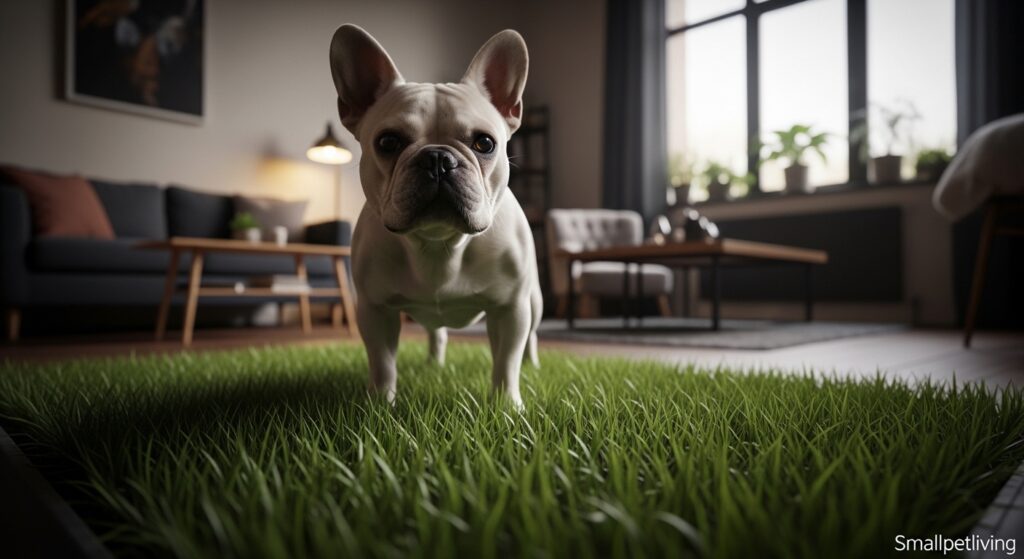
DoggieLawn offers a similar real-grass experience but shines in its customization. For “small” breeds that are on the larger side, like Pugs or French Bulldogs, standard pads can feel cramped.
- Performance: Their grass is specifically selected for high-traffic durability. It remains green and absorbent even with frequent use.
- The Apartment Fit: They offer flexible shipping intervals, allowing you to sync deliveries with your dog’s specific biological needs.
4. BarkPotty: The Antimicrobial Bark Alternative
If you want the benefits of natural materials without the weight of living sod, BarkPotty is the middle ground. It uses a proprietary blend of real bark and wood chips held together by a net.
- Performance: Bark is naturally antimicrobial. It inhibits the growth of bacteria that cause odor, allowing the pad to last up to a full month without smelling.
- The Apartment Fit: It is the most lightweight and discreet option, perfect for tiny “studio” layouts where every inch of floor space matters.
5. Pick for Life: The Three-Layer Budget Hero
For owners looking for a professional-grade option on a budget, the Pick for Life system is the best synthetic alternative. It uses a triple-layer approach: grass, a drainage grate, and a high-capacity tray.
- Performance: The elevated grate ensures that the dog’s paws are never in contact with the liquid, which is the primary cause of “wet paw” tracking on apartment furniture.
- The Apartment Fit: Its compact design fits perfectly in bathrooms or small laundry alcoves.
The Master Training Manual: Transitioning to Indoor Grass
Even the best indoor grass pads for apartment dogs are useless if your dog refuses to use them. For a dog accustomed to the street, the concept of a “bathroom” inside a house is counter-intuitive. Follow this 4-step protocol for success:
Step 1: The Scent Trigger
Dogs are olfactory-driven. To signal that the grass pad is the designated spot, take a paper towel and dab it on a bit of their urine from an outdoor walk. Place that towel underneath the grass layer of your new system. This tells their brain, “This is the spot.”
Step 2: High-Probability Windows
Lead your dog to the pad during “high-probability” times: immediately after waking up, 20 minutes after eating, or after a vigorous play session. Use a consistent command like “Go Potty.”
Step 3: Positive Reinforcement (The Treat Rule)
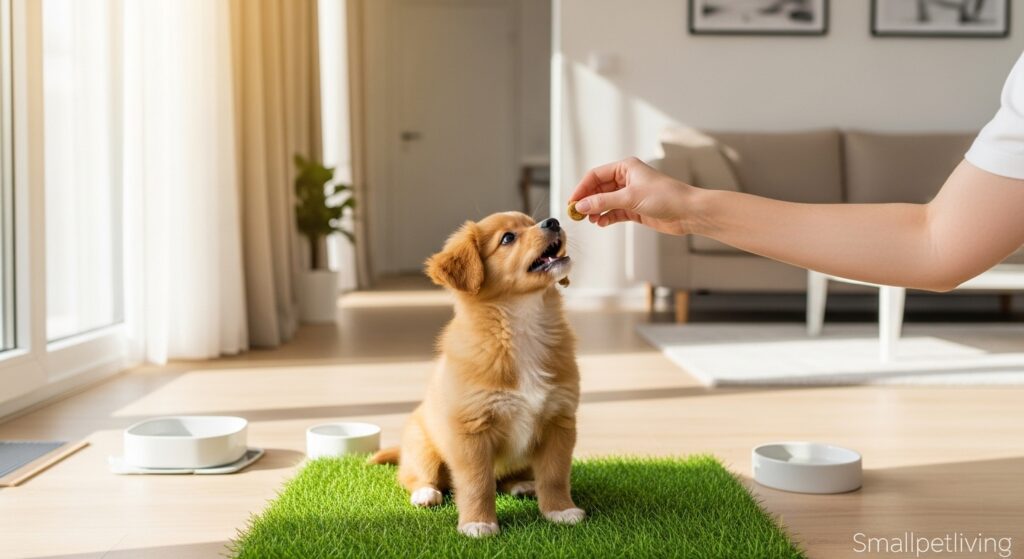
The second they finish using the pad, reward them with a high-value treat. In an apartment, you want to build a positive association with the indoor spot so they don’t develop anxiety about the lack of an immediate walk.
Hygiene and Maintenance: The Apartment Protocol
Maintaining a scent-free home requires a strict protocol. In a confined space, negligence leads to lingering smells.
The Power of Enzymatic Cleaners
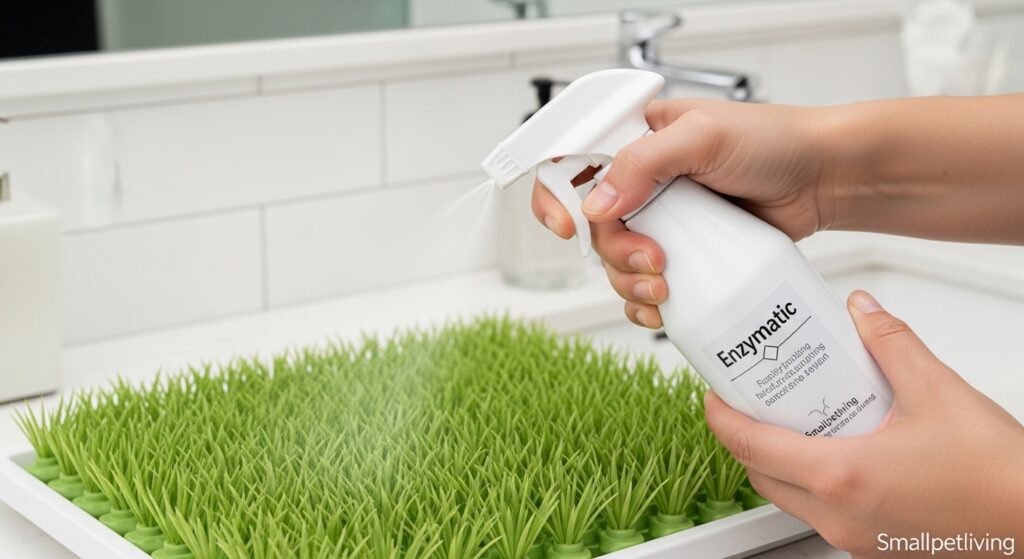
When cleaning synthetic systems, avoid ammonia-based products. Since urine contains ammonia, using these cleaners tricks your dog into “marking” the spot again. Always use an enzymatic cleaner. These products contain proteins that literally “eat” the organic matter in urine.
Strategic Placement for Airflow
Always place your potty system in a “high-flow” area. Near a balcony door or an open window is ideal. In apartments without good natural ventilation, place a small HEPA air purifier within 5 feet of the pad to capture any stray particles.
Frequently Asked Questions (FAQ)
Q: Will using an indoor grass pad make my dog start peeing on my rugs? A: No. Dogs are tactile learners. Because these systems use real or synthetic grass, they learn to associate the specific texture of the blades with potty time. This is why grass pads are far superior to cloth-based pee pads, which often feel too similar to a bathroom rug or carpet to a dog’s paws.
Q: How often should I replace a real grass pad in a small apartment? A: For a single dog in a typical urban apartment, we recommend replacing the sod every 2 weeks. If you have a balcony with excellent airflow, you can stretch this to 3 weeks, but 14 days is the “sweet spot” to ensure absolutely zero odor buildup.
Q: How do I handle solid waste when using an indoor system? A: Solid waste should be picked up immediately using biodegradable waste bags and flushed or disposed of in a sealed diaper pail (like a LitterGenie). Never leave solid waste on the grass pad, as it prevents the natural microbes from effectively neutralizing the liquid urea below.
Q: Is it safe for puppies that haven’t finished their vaccinations? A: Yes, and this is one of the primary benefits. Indoor grass pads provide a sterile, controlled environment for puppies to learn housebreaking without the risk of contracting parvovirus or other pathogens found in high-traffic city parks and sidewalks.
Q: Can I use one grass pad for multiple dogs? A: You can, but you must scale up the size or frequency. If you have two small dogs, we recommend either upgrading to an “XL” size (like DoggieLawn’s largest option) or moving to a weekly replacement schedule to prevent the root system from becoming overwhelmed by nitrogen.
Reclaiming Your Urban Freedom
Implementing one of the 5 best indoor grass pads for apartment dogs is about more than just convenience; it is about reclaiming your time and ensuring your pet’s comfort. By choosing a system that prioritizes biological odor control and engineering, you can enjoy the companionship of your dog without the stress of the 2 AM elevator ride.
You Might Also Like
- 10 Best Low-Energy Small Dog Breeds for Apartments
- How to Set Up a Cat-Friendly Studio Apartment
- Quiet Cat Toys for Thin-Wall Apartments
- 7 Best Small Dog Accessories for Tight Spaces: The Essential Minimalist Guide
About Smallpetliving
Smallpetliving is the premier resource for urban pet owners. We provide expert-backed strategies for raising happy, healthy pets in small spaces, ensuring that modern city living and animal well-being can coexist beautifully.